
Entertainment: Box Office Report: ‘Black Phone 2’ Opens With $27 Million, Leading a Quiet October Weekend
- InsightTrendsWorld

- Oct 21
- 6 min read
What is the “Horror Resurgence” Trend: Smart scares and franchise familiarity fuel theatrical recovery in a cautious box office climate.
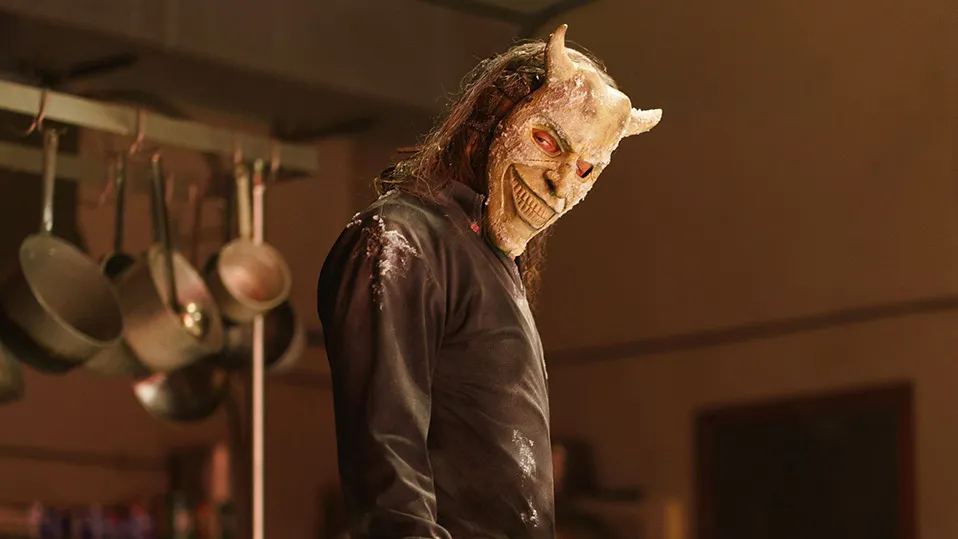
Fear finds footing: Universal and Blumhouse’s Black Phone 2 debuted to $27.3 million across 3,411 theaters, marking the top performance in a subdued October weekend. The result outpaces its 2022 predecessor by roughly $4 million, signaling audience appetite for contained, character-driven horror even as overall box office momentum lags.
Strategic sequelization: While the first Black Phone helped reignite post-pandemic horror attendance, its follow-up underscores the enduring commercial logic of low- to mid-budget horror IPs — cost-efficient, globally scalable, and emotionally consistent.
Genre as stability: Amid volatile blockbuster economics and weakened tentpole turnout, horror continues to anchor studio portfolios. Blumhouse’s business model—low investment, high ROI—remains one of the few consistent theatrical success formulas.
Muted marketplace: With competition thin and October box office down 11% year-over-year, Black Phone 2’s performance is both a win and a warning: theatrical recovery now relies less on scale and more on genre reliability and timing precision.
Why it is the Topic Trending: Horror once again proves it’s recession-proof while studios recalibrate expectations for mid-budget success.
Market dominance: Black Phone 2’s $27 million debut made it the weekend’s clear No. 1, overshadowing Disney’s Tron: Ares ($11.1M, down 66%) and Lionsgate’s Good Fortune ($6.2M).
Audience consistency: Despite only modest critical response (B CinemaScore), Black Phone 2 maintained steady weekend word-of-mouth, buoyed by Blumhouse’s brand credibility and Ethan Hawke’s return as “The Grabber.”
Economic contrast: While major tentpoles like Tron: Ares and One Battle After Another struggle to recoup nine-figure budgets, horror’s low-cost efficiency highlights the genre’s strategic advantage in 2025’s risk-averse studio economy.
Cultural timing: Launching at the start of spooky season gave Black Phone 2 a clear lane, reinforcing the annual October window as horror’s most reliable theatrical real estate.
Overview: Horror franchises remain Hollywood’s most bankable mid-tier strategy.
In a fragmented content landscape, Black Phone 2 represents a microcosm of post-pandemic box office economics — dependable genre IP, mid-budget discipline, and global scalability. Blumhouse and Universal once again prove that fear travels faster, cheaper, and more profitably than spectacle.
Detailed Findings: Anatomy of a modern horror hit in a cooling theatrical market.
The Numbers Tell the Story
Black Phone 2 earned $27.3 million domestic and $15.5 million international, for a global debut of $42.8 million.
Produced for $30 million (up from the original’s $18M), the film’s cost-to-return ratio still positions it for profitability by Week 3.
While not a breakout hit, it topped a quiet October frame—with total domestic grosses down 20% compared to pre-pandemic 2019.
The Blumhouse Blueprint Still Works
Blumhouse continues to leverage lean production budgets and built-in psychological hooks rather than star-driven risk.
Recent misses (Wolf Man, M3GAN 2.0) briefly shook confidence, but Black Phone 2’s showing restores momentum ahead of Five Nights at Freddy’s 2 in December.
The company’s durability lies in efficient scalability—profiting where big studios overspend.
Comparative Context: 2022 vs. 2025
The original Black Phone ($23M debut) opened in a crowded landscape against Top Gun: Maverick and Elvis.
In contrast, Black Phone 2 launched with minimal competition—showing how seasonal targeting and reduced saturation can amplify returns.
Despite similar grosses, the sequel ranks higher because the entire market shrank, not because horror demand weakened.
The Rest of the Chart
#2 – Tron: Ares (Disney): $11.1M (-66% from last weekend), domestic total $54.6M; global $103M. Cost: $180M. Tracking toward underperformance.
#3 – Good Fortune (Lionsgate): $6.2M debut. Directed by and starring Aziz Ansari, with Keanu Reeves and Seth Rogen. Strong reviews but limited traction.
#4 – One Battle After Another (Warner Bros.): $3.75M, domestic total $61M, global $162M. Critical acclaim may salvage awards value despite financial loss.
#5 – Roofman (Focus): $3.7M, 55% drop, modest $15.5M domestic total.
#6 – Truth and Treason (Angel Studios): $2.7M debut, audience grade “A.”
Specialty titles like Luca Guadagnino’s After the Hunt and Jafar Panahi’s It Was Just an Accident struggled to find commercial traction despite critical pedigree.
Key Success Factors of the Trend: Budget control, brand trust, and audience ritual.
Budget control: Horror’s profitability thrives on low-cost efficiency.
Brand trust: Blumhouse name recognition ensures baseline turnout.
Audience ritual: Horror seasonality builds recurring annual engagement.
Emotional engagement: Fear remains the most primal—and communal—theatrical emotion.
Key Takeaway: Horror is Hollywood’s safest bet in an unstable market.
Low risk, high consistency: Modest production costs cushion volatility.
Demographic diversity: Horror attracts cross-generational, multicultural audiences.
Theatrical resilience: Horror fans still prefer big-screen experiences for shared fear.
Core Consumer Trend: “Communal Fear” – audiences crave shared, emotional release in uncertain times.
After years of isolation, moviegoers use horror to reconnect through adrenaline and catharsis—turning fear into a collective ritual.
Description of the Trend: Horror remains the emotional anchor of the theatrical experience.
From franchise fatigue to genre fidelity: Audiences trust fear more than spectacle.
From CGI to character: Psychological realism now drives horror success.
From solo streaming to group viewing: Fear thrives in social settings, not isolation.
Key Characteristics of the Trend: Tactile, emotional, communal, and cyclical.
Tactile: Practical effects and realism over digital excess.
Emotional: Rooted in vulnerability, not just violence.
Communal: Designed for theaters, not living rooms.
Cyclical: Horror resets every generation with new archetypes.
Market and Cultural Signals Supporting the Trend: Horror stabilizes the box office ecosystem.
Seasonal dominance: October remains the most reliable month for mid-budget hits.
Streaming fatigue: Audiences seek immersive, real-time reactions.
Studio strategy: Blumhouse and A24 lead in low-cost, prestige horror hybrids.
Cultural reflection: Fear becomes metaphor for collective anxiety—economic, environmental, political.
What is Consumer Motivation: Emotional purge, community, and thrill management.
Catharsis: Fear provides psychological release from daily tension.
Connection: Shared viewing builds belonging in chaotic times.
Control: Horror offers safe confrontation of danger and death.
What is Motivation Beyond the Trend: Seeking authenticity through adrenaline.
Raw emotion: Viewers want unscripted reactions, not overproduced calm.
Moral exploration: Horror lets audiences wrestle with guilt, survival, and consequence.
Cultural metaphor: Monsters become mirrors for societal fears.
Description of Consumers: “Adrenaline Realists” – social, emotionally literate, and loyalty-driven.
Emotional mindset: Fear as entertainment therapy.
Behavioral drivers: Prefer communal, event-based viewings.
Cultural influence: Shape horror discourse on TikTok and Reddit.
Consumption habits: Mix of theatrical loyalty and streaming rewatching.
Detailed Consumer Summary: “Adrenaline Realists” make horror the heartbeat of the box office.
Who they are: Ages 16–40, diverse, digitally engaged.
What is their gender: Balanced demographic with strong female horror engagement.
What is their income: Broad range, with high frequency of moviegoing.
What is their lifestyle: Social, expressive, and drawn to visceral emotion.
What is their mindset: Seek fear as a safe, shared thrill.
How the Trend Is Changing Consumer Behavior: Horror becomes cultural connection, not niche escapism.
From solitude to solidarity: Viewers prefer theater crowds for emotional intensity.
From content overload to genre loyalty: Fear cuts through fatigue.
From passivity to participation: Horror fans fuel word-of-mouth virality.
Implications of Trend Across the Ecosystem: Fear sustains theatrical relevance.
For Consumers: Provides release and excitement in uncertain times.
For Studios: Offers reliable revenue amid blockbuster volatility.
For Theaters: Reinforces collective moviegoing as emotional event.
Strategic Forecast: Horror will remain Hollywood’s most profitable and adaptable genre.
Short-term (2025–2026): Blumhouse, A24, and Neon dominate mid-budget space.
Medium-term (2027–2030): Prestige horror expands into global franchise universes.
Long-term (2030+): Horror becomes the backbone of theatrical sustainability.
Areas of Innovation (Implied by Trend): Immersive horror, data-driven release strategy, and global genre fusion.
Immersive formats: 4D horror and VR extensions enhance physical fear response.
Data-driven scheduling: Studios optimize release windows for emotional engagement.
Global storytelling: Fusion of Asian, Latin American, and Western horror styles.
Psychological depth: Elevated horror meets emotional realism.
Summary of Trends: Fear. Frugality. Familiarity. Fortitude.
Black Phone 2 underscores why horror remains the economic and emotional spine of modern cinema—a genre where every scream counts twice: once at the box office, and once in cultural memory.
Core Consumer Trend: “Communal Fear” – shared emotion in an uncertain world.
Core Social Trend: “Emotional Release Culture” – audiences use horror as therapy.
Core Strategy: “Micro-Budget, Macro-Impact” – scaling profit through precision horror.
Core Industry Trend: “Theatrical Survivalism” – horror as the stable pillar of cinema.
Core Consumer Motivation: “Controlled Fear” – seeking safe danger to feel alive.
Trend Implications for Consumers and Brands: Fear remains the most bankable emotion.
Black Phone 2 proves again that horror doesn’t need superheroes or spectacle—it needs heartbeat and honesty. In an unpredictable industry, the scariest genre is also the safest bet.
Final Thought (Summary):
With $27 million in domestic grosses and $42.8 million worldwide, Black Phone 2 opens the Halloween season by reaffirming horror’s rule over risk. In a box office haunted by volatility, fear—crafted smartly and priced wisely—remains Hollywood’s most dependable scream.


Comments