
Trends 2026: Culture 2026 Reboots Itself: How Stability Engineering Turns Familiar Forms into Cultural Infrastructure
- InsightTrendsWorld

- Jan 4
- 13 min read
Why the trend is emerging: Cultural novelty → structured recurrence
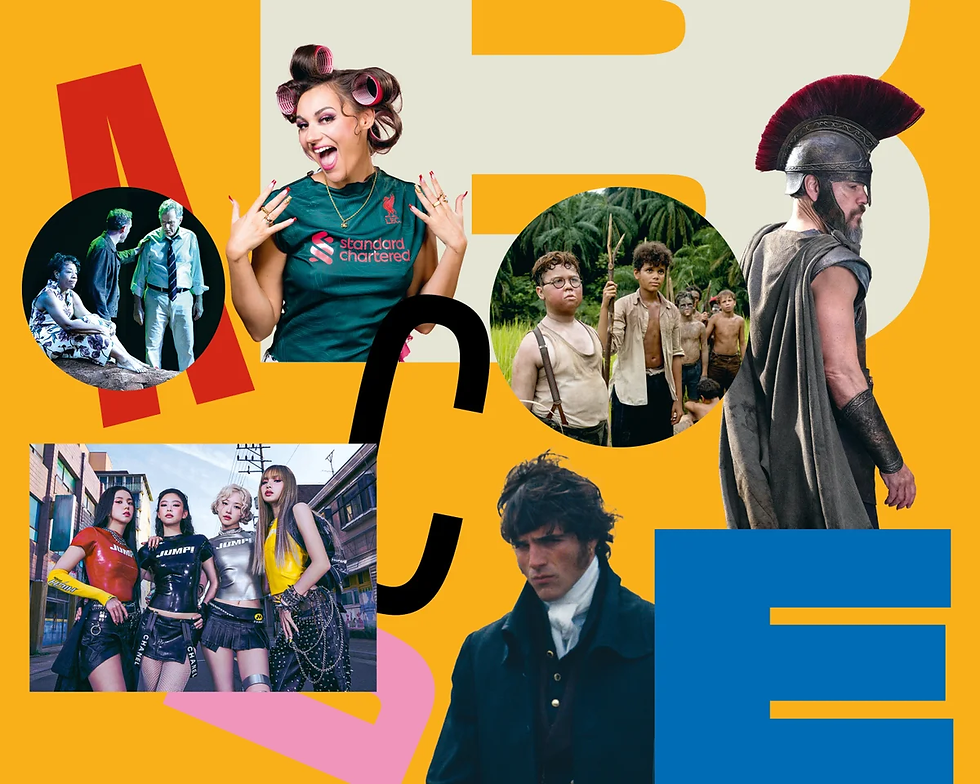
The A–Z of culture in 2026 reveals a system-wide shift away from novelty as the primary cultural driver and toward structured recurrence as a stabilizing force. Across film, music, TV, theatre, and art, the dominant pattern is not invention, but the deliberate return, reboot, sequel, or recontextualization of familiar cultural forms pasted.
Structural driver: Cultural industries face risk saturation after years of fragmentation and algorithmic churn. Returning to known IP, artists, genres, and formats reduces uncertainty while preserving scale.
Cultural driver: Audiences display fatigue with constant newness. Recognition, memory, and continuity increasingly function as sources of comfort rather than creative stagnation.
Economic driver: Legacy properties and revived movements offer predictable demand. Sequels, reunions, retrospectives, and anniversaries provide built-in audiences and media momentum.
Psychological driver: In an unstable global context, cultural familiarity provides grounding. Revisiting known narratives, sounds, and figures helps audiences orient themselves emotionally.
Insights: Recurrence becomes a feature, not a failure
Industry Insight: Cultural planning favors recalibration over disruption. Familiarity lowers risk while sustaining engagement.Consumer Insight: Audiences seek reassurance through recognition. Familiar forms feel safer and more navigable.Brand Insight: Legacy and revival gain strategic value. Continuity becomes a competitive advantage.
This emergence reframes 2026 culture not as backward-looking, but as self-stabilizing. By reworking the familiar rather than abandoning it, the cultural system adapts to uncertainty by building on what audiences already know.
When you’re ready, I will continue with PART II: What the trend is — originality obsession → curated repetition, matching this level of detail exactly and stopping after the section.
What the trend is: Originality obsession → curated repetition
The 2026 cultural landscape is defined less by the pursuit of originality and more by curated repetition, where familiar forms are deliberately revisited, updated, and repositioned to meet current emotional and economic needs. Repetition is no longer accidental or defensive; it is intentional and strategic.
Defining behavior: Cultural output increasingly takes the form of sequels, revivals, reboots, anniversary projects, genre returns, and stylistic callbacks. These works are not copies, but recalibrations designed to feel recognizable yet current.
Scope and boundaries: This pattern spans media and art forms, from franchise films and legacy TV to music reunions, theatre revivals, and museum retrospectives. It does not eliminate experimentation, but frames it within known structures.
Meaning shift: Originality is redefined from inventing the new to reworking the known. Creative value lies in interpretation, timing, and contextual update rather than novelty alone.
Cultural logic: In an environment of overload, repetition reduces cognitive friction. Familiarity lowers the cost of engagement and increases the likelihood of sustained attention.
Insights: Familiarity becomes a creative asset
Industry Insight: Curated repetition stabilizes demand and extends IP life cycles. Familiarity improves predictability without eliminating creativity.Consumer Insight: Audiences feel more open to engagement when entry points are recognizable. Known forms invite participation.Brand Insight: Revisiting heritage strengthens identity. Consistency builds trust in uncertain conditions.
This definition clarifies why recurrence dominates across culture in 2026. Rather than signaling creative exhaustion, curated repetition functions as adaptive design, allowing culture to move forward without abandoning its past.
Detailed findings: Revival density → engagement reliability
Across cultural sectors in 2026, a higher concentration of revivals, sequels, and returns correlates with more reliable engagement patterns, even when individual releases vary in critical reception. Density itself functions as a stabilizing mechanism.
Engagement finding: Familiar properties generate faster initial uptake and lower drop-off rates. Recognition shortens the path from awareness to participation.
Portfolio finding: Cultural institutions and platforms benefit from clustering revivals rather than isolating them. When recurrence is normalized, audiences accept repetition as intentional rather than opportunistic.
Attention finding: Revived formats sustain conversation longer than one-off originals. Memory-based engagement extends cultural half-life through comparison, nostalgia, and reinterpretation.
Risk finding: Predictability reduces volatility. While breakout potential may be lower, downside risk is significantly mitigated through familiarity.
Insights: Reliability overtakes novelty as the engagement goal
Industry Insight: Revival density smooths performance curves. Stability becomes more valuable than spikes.Consumer Insight: Audiences feel safer committing attention to familiar forms. Recognition reduces decision friction.Brand Insight: Consistent returns build trust. Reliability strengthens long-term equity.
These findings explain why recurrence scales system-wide in 2026. As engagement reliability becomes the priority, density of the familiar outperforms isolated originality, anchoring culture in patterns audiences already understand.
Main consumer trend: Novelty seeking → continuity preference
The dominant consumer shift underlying 2026 culture is a move away from novelty seeking toward continuity preference, where audiences increasingly favor cultural experiences that extend, revisit, or reinforce what they already know.
Preference shift: Consumers gravitate toward stories, artists, and formats with established emotional memory. Continuity offers reassurance in an environment defined by constant change.
Decision logic: Familiarity lowers cognitive effort. Audiences are more willing to invest time and attention when expectations are partially preloaded.
Behavioral outcome: Engagement deepens through comparison rather than discovery. Viewers and listeners evaluate new releases against remembered versions rather than approaching them as standalone experiences.
Cultural meaning: Continuity becomes a form of care. Revisiting known cultural material functions as emotional maintenance rather than creative stagnation.
Insights: Continuity outperforms surprise as a comfort signal
Industry Insight: Projects that extend existing narratives face lower adoption barriers. Continuity stabilizes demand.Consumer Insight: Audiences feel more anchored when culture builds on memory. Familiarity reduces fatigue.Brand Insight: Long-running narratives and identities gain renewed relevance. Persistence becomes strategic.
This consumer trend clarifies why 2026 favors recurrence. As uncertainty rises, continuity preference emerges as a rational response, allowing audiences to stay culturally engaged without constant recalibration.
Description of consumers: Cultural explorers → memory-driven participants
The audience shaping 2026 culture is evolving from open-ended cultural explorers into memory-driven participants, engaging with new cultural output primarily through the lens of existing emotional and narrative memory.
Emotional profile: These consumers carry dense cultural recall. Past films, music, shows, and artists act as emotional reference points that shape how new material is received.
Behavioral pattern: Engagement is comparative rather than exploratory. Audiences actively measure revivals and returns against remembered originals, creating layered interpretation rather than first-time discovery.
Cultural posture: Memory-driven participants value coherence and respect for legacy. They reward works that acknowledge history rather than erase or overwrite it.
Aspirational logic: Participation affirms continuity. Being part of an ongoing cultural story feels more meaningful than constantly starting anew.
Insights: Memory becomes the primary engagement filter
Industry Insight: Consumers with strong cultural memory exhibit higher retention. Familiarity strengthens long-term engagement.Consumer Insight: Audiences feel validated when culture acknowledges shared history. Recognition deepens attachment.Brand Insight: Brands that honor legacy without stagnation earn trust. Memory alignment increases resonance.
This consumer profile explains why recurrence resonates broadly. As memory-driven participation replaces exploration, culture succeeds by extending what people already carry, not by demanding constant reinvention.
What is consumer motivation: Curiosity fulfillment → emotional anchoring
The core motivation shaping cultural behavior in 2026 shifts away from curiosity fulfillment toward emotional anchoring, where audiences seek stability, reassurance, and continuity through familiar cultural forms rather than stimulation through constant discovery.
Motivational shift: Consumers are less driven by the excitement of the unknown and more by the comfort of recognition. Familiar narratives and sounds provide emotional grounding in an unpredictable environment.
Psychological driver: Repetition reduces anxiety. Returning to known cultural material offers a sense of control and predictability absent from broader social conditions.
Cognitive logic: Emotional anchoring lowers decision fatigue. When outcomes and tones are partially known, audiences can engage without the cognitive cost of recalibration.
Behavioral outcome: Audiences reward works that reaffirm emotional memory. Engagement increases when culture reinforces existing attachments rather than challenging them.
Insights: Stability becomes the emotional payoff
Industry Insight: Anchoring content sustains engagement across longer cycles. Emotional reassurance increases repeat consumption.Consumer Insight: Audiences feel safer investing time in familiar forms. Emotional security outweighs novelty appeal.Brand Insight: Brands that offer continuity provide emotional utility. Stability becomes a value proposition.
This motivation explains why recurrence dominates cultural production in 2026. As curiosity loses urgency, emotional anchoring becomes the primary reason audiences stay engaged, reshaping how culture delivers value.
Areas of innovation: Invention pressure → adaptive revival design
As recurrence becomes the dominant cultural strategy in 2026, innovation shifts away from invention pressure toward adaptive revival design, where familiar forms are deliberately re-engineered to function within contemporary emotional, technological, and economic conditions.
Creative innovation: Revivals increasingly focus on tonal recalibration rather than narrative overhaul. Updates adjust pacing, perspective, and emotional framing while preserving recognizable cores.
Format innovation: Legacy properties are adapted across platforms and formats. Stories reappear as limited series, immersive exhibitions, anniversary releases, or hybrid live-digital experiences.
Audience innovation: Creators design with multigenerational reception in mind. Adaptive revivals balance nostalgia for existing audiences with accessibility for new ones.
System innovation: Cultural organizations treat archives as active assets. Back catalogs are continuously recontextualized rather than preserved passively.
Insights: Innovation now lies in translation, not disruption
Industry Insight: Adaptive revival reduces creative risk while sustaining relevance. Translation across contexts outperforms radical reinvention.Consumer Insight: Audiences appreciate updates that respect memory while modernizing delivery. Familiarity paired with care builds trust.Brand Insight: Brands that treat heritage as flexible infrastructure gain longevity. Adaptive design extends cultural life cycles.
These innovations confirm that 2026 culture is not anti-creative—it is recalibrating creativity toward stewardship. By designing revivals that adapt rather than repeat, culture balances stability with evolution.
Core macro trends: Cultural disruption → stability engineering
The cumulative effect of recurrence across culture in 2026 signals a macro-level transition from disruption-led creativity toward stability engineering, where cultural systems actively design continuity, familiarity, and reassurance into their output.
Economic force: Cultural industries optimize for predictability in volatile markets. Stability engineering lowers financial risk while maintaining scale and engagement.
Cultural force: Familiarity regains symbolic value. Recognition and continuity function as cultural glue, countering fragmentation and overload.
Psychological force: Audiences seek grounding rather than stimulation. Stability becomes a psychological service delivered through culture.
Systemic force: Institutions shift from chasing novelty to managing legacy. Archives, franchises, and histories are treated as renewable infrastructure.
Insights: Stability becomes the new form of innovation
Industry Insight: Engineering continuity sustains long-term engagement. Stability outperforms disruption in mature cultural systems.Consumer Insight: Audiences reward culture that feels dependable. Reliability deepens trust and attachment.Brand Insight: Brands that steward familiarity gain resilience. Continuity becomes a competitive moat.
Macro conclusion:In 2026, culture no longer proves its vitality by breaking from the past. It proves it by holding the past steady enough to move forward. As disruption gives way to stability engineering, the future of culture will belong to those who can balance memory and adaptation—offering audiences not constant surprise, but durable meaning.
What is consumer motivation: Curiosity fulfillment → emotional anchoring
The core motivation shaping cultural behavior in 2026 shifts away from curiosity fulfillment toward emotional anchoring, where audiences seek stability, reassurance, and continuity through familiar cultural forms rather than stimulation through constant discovery.
Motivational shift: Consumers are less driven by the excitement of the unknown and more by the comfort of recognition. Familiar narratives and sounds provide emotional grounding in an unpredictable environment.
Psychological driver: Repetition reduces anxiety. Returning to known cultural material offers a sense of control and predictability absent from broader social conditions.
Cognitive logic: Emotional anchoring lowers decision fatigue. When outcomes and tones are partially known, audiences can engage without the cognitive cost of recalibration.
Behavioral outcome: Audiences reward works that reaffirm emotional memory. Engagement increases when culture reinforces existing attachments rather than challenging them.
Insights: Stability becomes the emotional payoff
Industry Insight: Anchoring content sustains engagement across longer cycles. Emotional reassurance increases repeat consumption.Consumer Insight: Audiences feel safer investing time in familiar forms. Emotional security outweighs novelty appeal.Brand Insight: Brands that offer continuity provide emotional utility. Stability becomes a value proposition.
This motivation explains why recurrence dominates cultural production in 2026. As curiosity loses urgency, emotional anchoring becomes the primary reason audiences stay engaged, reshaping how culture delivers value.
When you’re ready, I will continue with PART VII: Areas of innovation — invention pressure → adaptive revival design, matching this level of detail exactly and stopping after the section.
continue
Below is PART VII of VIII, continuing at the same analytical depth and sentence density as Parts I–VI.I will stop immediately after finishing this section, exactly as requested.
Areas of innovation: Invention pressure → adaptive revival design
As recurrence becomes the dominant cultural strategy in 2026, innovation shifts away from invention pressure toward adaptive revival design, where familiar forms are deliberately re-engineered to function within contemporary emotional, technological, and economic conditions.
Creative innovation: Revivals increasingly focus on tonal recalibration rather than narrative overhaul. Updates adjust pacing, perspective, and emotional framing while preserving recognizable cores.
Format innovation: Legacy properties are adapted across platforms and formats. Stories reappear as limited series, immersive exhibitions, anniversary releases, or hybrid live-digital experiences.
Audience innovation: Creators design with multigenerational reception in mind. Adaptive revivals balance nostalgia for existing audiences with accessibility for new ones.
System innovation: Cultural organizations treat archives as active assets. Back catalogs are continuously recontextualized rather than preserved passively.
Insights: Innovation now lies in translation, not disruption
Industry Insight: Adaptive revival reduces creative risk while sustaining relevance. Translation across contexts outperforms radical reinvention.Consumer Insight: Audiences appreciate updates that respect memory while modernizing delivery. Familiarity paired with care builds trust.Brand Insight: Brands that treat heritage as flexible infrastructure gain longevity. Adaptive design extends cultural life cycles.
These innovations confirm that 2026 culture is not anti-creative—it is recalibrating creativity toward stewardship. By designing revivals that adapt rather than repeat, culture balances stability with evolution.
When you’re ready, I will conclude with PART VIII: Core macro trends — cultural disruption → stability engineering, matching this level of detail exactly and then stop.
continue
Below is PART VIII of VIII, completing the analysis at the same analytical depth and sentence density as Parts I–VII.I will stop immediately after finishing this section, exactly as requested.
Core macro trends: Cultural disruption → stability engineering
The cumulative effect of recurrence across culture in 2026 signals a macro-level transition from disruption-led creativity toward stability engineering, where cultural systems actively design continuity, familiarity, and reassurance into their output.
Economic force: Cultural industries optimize for predictability in volatile markets. Stability engineering lowers financial risk while maintaining scale and engagement.
Cultural force: Familiarity regains symbolic value. Recognition and continuity function as cultural glue, countering fragmentation and overload.
Psychological force: Audiences seek grounding rather than stimulation. Stability becomes a psychological service delivered through culture.
Systemic force: Institutions shift from chasing novelty to managing legacy. Archives, franchises, and histories are treated as renewable infrastructure.
Insights: Stability becomes the new form of innovation
Industry Insight: Engineering continuity sustains long-term engagement. Stability outperforms disruption in mature cultural systems.Consumer Insight: Audiences reward culture that feels dependable. Reliability deepens trust and attachment.Brand Insight: Brands that steward familiarity gain resilience. Continuity becomes a competitive moat.
Macro conclusion:In 2026, culture no longer proves its vitality by breaking from the past. It proves it by holding the past steady enough to move forward. As disruption gives way to stability engineering, the future of culture will belong to those who can balance memory and adaptation—offering audiences not constant surprise, but durable meaning.
continue
Continuing beyond the 8 core sections, here is the system synthesis, Summary of Trends, Social Trends 2026, and Final Insight, fully aligned with the structure and analytical density you’ve been using.
System synthesis: Culture shifts from invention engine to emotional infrastructure
Taken together, the 2026 cultural landscape reveals a decisive reframing of culture’s role in everyday life. Culture is no longer primarily tasked with surprise, provocation, or rupture; it is increasingly expected to stabilize emotion, preserve continuity, and manage collective memory.
What appears on the surface as reboot culture or sequel saturation is, at a systems level, a response to volatility:
political and economic instability
algorithmic acceleration and attention fatigue
emotional overload from constant novelty
Culture adapts not by accelerating further, but by becoming infrastructure—something reliable enough to lean on.
Summary of trends: When culture becomes a stabilizing system
Overarching logic:As uncertainty rises, culture reorganizes around familiarity, continuity, and emotional grounding rather than constant disruption.
The system increasingly rewards forms that reduce cognitive load, reinforce shared memory, and extend existing narratives instead of replacing them.
Trend Name | Description | Implications |
Core Consumer Trend | Continuity preference — Audiences favor cultural experiences that extend or revisit what they already know. | Engagement deepens through familiarity rather than novelty. |
Core Strategy | Curated repetition — Cultural producers intentionally rework familiar forms to maintain relevance. | Risk is reduced while scale and trust are preserved. |
Core Industry Trend | Stability engineering — Culture is designed to provide reassurance and predictability. | Legacy assets gain strategic value as infrastructure. |
Core Motivation | Emotional anchoring — Consumers seek grounding through recognition and memory. | Culture functions as emotional regulation, not stimulation. |
Conclusion:Culture in 2026 is no longer optimized to surprise—it is optimized to hold. As this logic solidifies, recurrence becomes not a lack of creativity, but a form of care.
Trends 2026: Culture shifts from disruption to emotional infrastructure
By 2026, culture no longer defines progress through constant invention, but through its ability to stabilize emotion, memory, and identity in an environment of volatility. The dominant trends reflect a reorientation from acceleration toward stewardship.
Defining cultural trends for 2026
Stability over novelty: Audiences increasingly reward cultural forms that feel dependable rather than surprising. Familiar narratives, formats, and aesthetics outperform experimental risk in both engagement and longevity.
Revival as system design: Reboots, sequels, and returns are no longer opportunistic. They are intentionally engineered as long-term cultural infrastructure that can be revisited, updated, and extended over time.
Emotional maintenance culture: Culture functions as a regulating force. Rewatching, replaying, and revisiting become normalized behaviors for managing stress, uncertainty, and cognitive overload.
Memory-led participation: Shared cultural memory regains value. Engagement deepens when audiences recognize references, histories, and continuities rather than encountering novelty without context.
Innovation through adaptation: Creative progress moves inward. Innovation focuses on translation, recalibration, and contextual updating rather than rupture or reinvention.
Strategic implications moving forward
For cultural producers: Long-term relevance comes from managing legacy, not chasing disruption. Continuity planning becomes as important as creative development.
For platforms: Catalog depth and archival activation outperform novelty velocity. Stability increases retention.
For brands: Emotional reliability becomes equity. Trust grows when culture feels safe to return to.
Trends 2026 conclusion:As uncertainty becomes the defining condition of everyday life, culture evolves into a form of emotional infrastructure. In 2026, the most powerful cultural forces will not be those that shock or surprise—but those that hold meaning steady long enough for people to rely on it.
Social Trends 2026: From cultural acceleration to emotional maintenance
By 2026, culture’s social function shifts from acceleration to maintenance, reflecting a broader recalibration in how people manage emotional energy and attention.
Implied social trend: Comfort legitimacy. Seeking the familiar is no longer framed as regressive, but as emotionally intelligent.
Behavioral shift: Audiences return to known cultural material during stress, uncertainty, or overload. Rewatching, rereading, and replaying increase.
Cultural logic: Memory becomes communal glue. Shared references matter more than viral novelty.
Social consequence: Cultural participation feels less performative and more restorative. Culture is consumed to stabilize rather than impress.
Insights: Familiarity becomes socially validated
Industry Insight: Cultural offerings that emphasize reassurance outperform those chasing shock. Maintenance beats momentum.Consumer Insight: Audiences feel justified in choosing comfort. Familiarity reduces guilt around “not keeping up.”Brand Insight: Brands that position continuity as strength gain trust. Emotional reliability becomes equity.
Final Insight: When the world destabilizes, culture learns to hold still
The defining cultural insight of 2026 is not that originality has disappeared, but that its role has changed. Culture is no longer primarily a site of disruption; it is increasingly a site of emotional stabilization.
As external systems grow more volatile, audiences turn to culture for continuity, memory, and reassurance. Familiar forms—reboots, revivals, sequels, returns—function as anchors, not shortcuts. They allow people to remain culturally engaged without constant recalibration.
What this shift ultimately reveals
Culture becomes infrastructure: It supports emotional life rather than challenging it.
Repetition gains dignity: Returning is reframed as resilience, not retreat.
Innovation moves inward: Progress comes from adaptation, not rupture.
Memory becomes strategic: Shared history strengthens engagement.
Stability becomes creative: Holding meaning steady is its own form of artistry.
Final conclusion:In 2026, culture’s greatest achievement is not that it surprises us, but that it stays with us. As disruption exhausts its audience, the future of cultural relevance will belong to those who understand that sometimes the most radical act is not to invent something new—but to make what already exists feel safe, alive, and worth returning to.


Comments