


Biblical Wellness and Faith-Based Nutrition Culture Are Reshaping Modern Healthy Eating
- InsightTrendsWorld

- May 13
- 11 min read
Food Is Becoming a Spiritual Identity System
Healthy eating is increasingly becoming tied to spirituality, emotional healing, and moral identity rather than nutrition alone. Biblical eating reflects a growing movement where consumers use scripture-based food habits, whole foods, and fasting practices as forms of wellness, discipline, and self-improvement.
The trend is growing alongside distrust of processed foods, MAHA-style wellness discourse, and social-media-driven clean eating culture. Biblical eating appeals because it reframes simple and minimally processed foods as spiritually meaningful, emotionally grounding, and culturally authentic. As a result, food choices increasingly function as both health decisions and identity signaling systems.
Trend Overview: Faith-Based Wellness Becoming Mainstream Lifestyle Culture
What is happening — Influencers and Christian wellness creators are increasingly promoting biblical eating through whole foods, fasting habits, and scripture-inspired nutrition content.➡️ implication: Wellness increasingly merges with spiritual identity.
Why it matters — Consumers increasingly seek emotional meaning and moral structure within health and lifestyle habits.➡️ implication: Food increasingly becomes tied to belief systems.
Cultural shift — Audiences are moving away from institutional nutrition advice toward creator-led and values-based wellness ecosystems.➡️ implication: Trust increasingly shifts toward relatable lifestyle creators.
Consumer relevance — Biblical eating offers simplicity, emotional reassurance, and structured discipline within modern wellness culture.➡️ implication: Spiritually framed wellness increasingly strengthens engagement.
Market implication — Faith-driven wellness creators increasingly monetize guides, coaching, fasting systems, and nutrition communities.➡️ implication: Spiritual wellness increasingly becomes a creator-economy category.
Trend Description: How Biblical Eating Became a Viral Wellness Movement
Context — Christian creators are increasingly using TikTok, Facebook, and wellness platforms to promote scripture-based eating and minimally processed foods.➡️ implication: Faith communities increasingly shape digital wellness culture.
How it works — Influencers combine nutrition advice with scripture, fasting, and emotionally driven lifestyle storytelling.➡️ implication: Wellness increasingly becomes spiritually narrative-driven.
Key drivers — MAHA discourse, anti-processed-food sentiment, fasting culture, GLP-1 diet behavior, and wellness skepticism accelerated the movement.➡️ implication: Alternative health culture increasingly fuels faith-based wellness.
Why it spreads — Biblical eating feels simple, emotionally meaningful, disciplined, and culturally authentic.➡️ implication: Meaning-driven wellness increasingly strengthens social-media virality.
Where it is seen — TikTok wellness culture, Christian creator ecosystems, Facebook groups, fasting communities, and clean-eating discourse.➡️ implication: Digital faith communities increasingly amplify wellness trends.
Key Players & Innovators — Christian wellness influencers, biblical-diet authors, fasting advocates, and scripture-based nutrition creators shaped the movement.➡️ implication: Creator-led health ecosystems increasingly influence food behavior.
Future — Faith-based wellness may increasingly expand into supplements, meal systems, fitness routines, wellness apps, and spiritually integrated health brands.➡️ implication: Religious wellness increasingly evolves into scalable lifestyle infrastructure.
Insight: Wellness Culture Is Becoming Increasingly Values-Driven
Biblical eating reflects the rise of faith-driven wellness ecosystems rooted in simplicity, discipline, and spiritual meaning.
Consumers increasingly seek emotionally grounding and morally structured approaches to health and nutrition.
Wellness culture is evolving toward creator-led, belief-based, and identity-driven lifestyle systems.
Faith-based nutrition increasingly strengthens community identity, emotional reassurance, and behavioral discipline within wellness culture.
The future of health culture may increasingly depend on combining spiritual meaning, clean eating, and emotionally resonant lifestyle storytelling into scalable wellness ecosystems.
Why Biblical Eating Is Exploding: Wellness Anxiety, Moral Identity, and Clean-Food Culture Converging
Consumers Want Food That Feels Emotionally and Spiritually Safe
Biblical eating is rapidly gaining popularity because consumers increasingly seek food systems that feel emotionally trustworthy, morally structured, and spiritually grounding. Modern wellness culture is becoming increasingly shaped by distrust of processed foods, exhaustion with conflicting nutrition advice, and rising interest in “natural” living and disciplined self-improvement.
At the same time, social media increasingly rewards creators who combine health advice with emotional certainty, identity signaling, and lifestyle storytelling. Biblical eating aligns naturally with this environment because it frames whole foods and fasting not only as healthy habits, but as spiritually meaningful acts connected to purity, discipline, and personal transformation. As a result, food increasingly becomes both a wellness behavior and a belief-driven lifestyle system.
Elements Driving the Trend: Clean Eating, Faith Identity, and Wellness Skepticism Reshaping Food Culture
• Driver 1: Distrust of Processed Foods Intensifying➡️ Consumers increasingly seek “natural” and minimally processed alternatives.
• Driver 2: MAHA and Anti-Industrial Food Discourse Expanding➡️ Wellness culture increasingly criticizes additives, chemicals, and ultraprocessed foods.
• Driver 3: Faith-Based Identity Culture Growing Online➡️ Religious creators increasingly integrate spirituality into lifestyle and wellness content.
• Driver 4: Creator-Led Wellness Replacing Institutional Trust➡️ Audiences increasingly trust relatable influencers over traditional health authorities.
• Driver 5: Discipline and Self-Optimization Culture Rising➡️ Consumers increasingly view food habits as tools for emotional control and self-improvement.
Virality of Trend: Biblical Eating Turning Wellness Into Lifestyle Identity
The trend spreads rapidly because biblical eating combines clean eating, emotional storytelling, spirituality, and lifestyle aspiration into one highly shareable content format. When consumers encounter scripture-based food routines online, they react not only to the recipes themselves, but to the emotional meaning attached to simplicity, purity, and self-discipline.
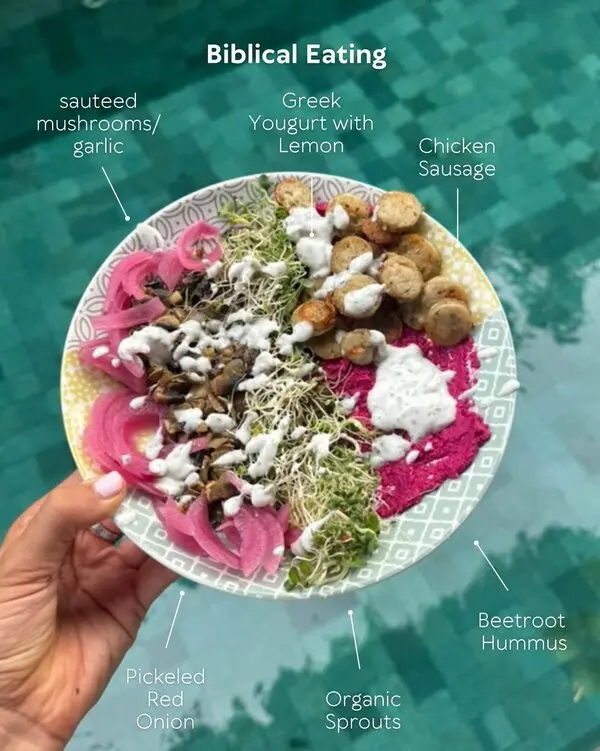
At the same time, the visual simplicity of homemade meals, fasting routines, bone broth, sourdough bread, and locally sourced foods fits naturally within TikTok and Instagram wellness aesthetics. This transforms biblical eating into a scalable digital lifestyle ecosystem fueled by emotional reassurance, creator trust, and identity-driven participation.
Consumer Reception: Audiences Embracing Spiritually Framed Wellness and Simpler Food Systems
Consumers are responding positively to biblical eating because it feels emotionally grounding and easier to understand than highly technical nutrition culture. Many audiences appreciate the combination of spirituality, simplicity, and clean-food messaging.➡️ implication: Emotional clarity increasingly strengthens wellness engagement.
Consumers are also embracing the movement because it aligns with growing frustration around processed foods and modern food systems.➡️ implication: Food skepticism increasingly drives alternative wellness adoption.
At the same time, audiences enjoy the sense of discipline and identity connected to spiritually framed eating habits.➡️ implication: Wellness increasingly functions as lifestyle self-definition.
Consumer Description: Values-Driven Consumers Seeking Wellness, Simplicity, and Spiritual Alignment
These consumers are wellness-oriented and digitally engaged audiences who increasingly approach health through emotional meaning, spirituality, and lifestyle identity rather than nutrition science alone. They are highly responsive to content that feels disciplined, emotionally reassuring, and morally grounded.➡️ implication: Wellness increasingly overlaps with belief systems.
Rather than seeking purely performance-driven diets, these consumers value authenticity, simplicity, emotional healing, and spiritually framed self-improvement. Many also use wellness habits as visible signals of lifestyle values and identity.➡️ implication: Food choices increasingly function as cultural identity markers.
Demographics: Wellness-Oriented and Faith-Driven Digital Audiences
These audiences are primarily younger and middle-aged consumers active within TikTok wellness culture, Christian creator communities, fasting ecosystems, and clean-eating discourse. They value emotional honesty, simplicity, self-discipline, and natural-lifestyle aesthetics more than institutional nutrition frameworks alone.
Age: 20–45
Gender: Strong female skew with growing male wellness participation
Income: Broad middle-income and lifestyle-oriented consumers
Education: Wellness followers, Christian audiences, creator-economy consumers, clean-eating communities, self-improvement audiences
Lifestyle: Consumers Turning Food Into Wellness and Spiritual Ritual
These consumers spend significant time within digital wellness ecosystems shaped by nutrition content, fasting discourse, homemaking culture, fitness routines, and spiritually framed self-improvement systems. They enjoy routines that feel intentional, calming, and identity-driven.
Viewing behavior: Heavy engagement with wellness TikTok, Christian lifestyle content, fasting videos, meal-prep culture, and natural-living creators
Media behavior: Active across TikTok, Instagram Reels, Facebook wellness groups, YouTube wellness channels, and Christian digital communities
Lifestyle habits: Home cooking, fasting routines, supplement usage, wellness journaling, local-food consumption, spiritually framed self-improvement
Decision drivers: Simplicity, purity, emotional reassurance, discipline, authenticity
Values: Faith, self-control, wellness, intentionality, natural living
Expectation shift: Preference for emotionally meaningful and values-based wellness systems rather than purely scientific health frameworks
Consumer Motivation: Seeking Purity, Emotional Control, and Spiritual Wellness Through Food
• Wanting emotionally reassuring and “clean” food systems➡️ Consumers increasingly seek simple and minimally processed eating habits.
• Participating in spiritually framed self-improvement culture➡️ Food increasingly functions as emotional and moral discipline.
• Seeking wellness routines tied to identity and meaning➡️ Consumers increasingly value lifestyle systems that feel purposeful and structured.
• Wanting greater control over health and food choices➡️ Distrust in industrial food systems increasingly strengthens alternative wellness adoption.
Why Trend Is Growing: Wellness Skepticism, Spiritual Identity, and Simplicity Aligning Simultaneously
The trend is gaining popularity because it combines clean eating, emotional reassurance, spirituality, and lifestyle discipline into one scalable wellness ecosystem.
• Emotional driver: Desire for emotionally grounding and morally structured wellness habits➡️ Consumers increasingly seek food systems tied to meaning and self-control.➡️ This strengthens engagement with biblical eating culture.
• Industry context: Wellness culture increasingly moving toward “natural” and minimally processed lifestyles➡️ Anti-industrial-food sentiment increasingly shapes consumer behavior.➡️ This amplifies creator-led nutrition ecosystems.
• Audience alignment: Younger consumers preferring identity-driven and creator-led wellness systems➡️ Social-media wellness increasingly rewards emotional storytelling and lifestyle authenticity.➡️ This aligns naturally with faith-based eating culture.
• Motivation alignment: Desire to maximize health, emotional wellbeing, and spiritual discipline through food➡️ Biblical eating creates emotionally meaningful and structured wellness routines.➡️ This increases participation and long-term lifestyle adoption.
Insight: Wellness and Spiritual Identity Are Increasingly Merging
Biblical eating reflects the rise of faith-driven wellness ecosystems rooted in simplicity, discipline, and emotional meaning.
The trend scales because consumers increasingly seek emotionally grounding, values-based, and identity-driven approaches to nutrition.
The value lies in combining clean eating, spirituality, and lifestyle storytelling into one scalable wellness system.
The implication is a future where wellness brands increasingly compete through belief systems, emotional reassurance, and creator-led lifestyle ecosystems.
It reveals that modern health culture increasingly rewards meaning, simplicity, and moral identity signaling over purely scientific nutrition messaging alone.
Trends 2026: Faith-Based Wellness and Meaning-Driven Nutrition Reshaping Food Culture
Wellness Is Becoming a Belief System
Food culture is increasingly shifting away from purely scientific nutrition frameworks toward emotionally meaningful and identity-driven wellness systems where spirituality, morality, and lifestyle discipline shape eating behavior. Biblical eating reflects this transformation by turning clean eating into a faith-centered ritual tied to emotional healing, self-control, and spiritual alignment rather than health optimization alone.
At the same time, consumers increasingly reward wellness systems that feel emotionally reassuring, culturally authentic, and easy to integrate into everyday life. Audiences no longer want overwhelming or contradictory nutrition advice — they increasingly seek simplified frameworks connected to purpose and personal values. The result is a wellness landscape where food increasingly functions as emotional identity infrastructure rather than dietary behavior alone.
Trend Elements: Faith-Based Wellness Culture Reshaping Modern Nutrition
• Spiritually framed wellness systems➡️ Consumers increasingly connect food habits to emotional and moral wellbeing.
• Creator-led nutrition ecosystems➡️ Influencers increasingly replace institutions as trusted wellness authorities.
• Anti-processed-food culture➡️ Consumers increasingly reject industrialized and highly processed food systems.
• Faith-driven self-optimization➡️ Spiritual discipline increasingly overlaps with wellness and productivity culture.
• Meaning-based nutrition behavior➡️ Consumers increasingly seek emotional and symbolic value from food choices.
• Fasting and discipline culture➡️ Structured eating rituals increasingly strengthen identity and self-control.
• Natural-living lifestyle growth➡️ Simple and minimally processed lifestyles increasingly shape wellness aesthetics.
• Emotion-first health storytelling➡️ Wellness creators increasingly market emotional transformation over nutrition science.
• Community-based wellness participation➡️ Shared belief systems increasingly strengthen lifestyle adherence and engagement.
• Moralized food consumption➡️ Food choices increasingly function as reflections of personal virtue and values.
Trend Table: Faith-Based Wellness Reshaping Food and Lifestyle Culture
Trend Name | Description | Strategic Implications |
Biblical Wellness Culture | Scripture-based eating becoming mainstream wellness behavior | Spirituality increasingly shapes nutrition culture |
Meaning-Driven Nutrition | Consumers seeking emotional and symbolic value from food | Purpose increasingly drives dietary behavior |
Creator-Led Health Systems | Influencers replacing institutional nutrition authority | Trust increasingly shifts toward digital creators |
Anti-Processed-Food Movement | Clean eating tied to moral and emotional purity | Simplicity increasingly shapes wellness branding |
Faith-Based Self-Optimization | Wellness routines integrated with spiritual discipline | Religion increasingly overlaps with lifestyle culture |
Emotion-First Wellness | Emotional healing prioritized over scientific complexity | Emotional reassurance increasingly drives engagement |
Fasting Lifestyle Expansion | Structured fasting becoming identity-driven behavior | Discipline increasingly functions as wellness currency |
Natural-Living Digital Culture | Homemade and minimally processed lifestyles gaining visibility | Authenticity increasingly shapes food aesthetics |
Lifestyle Morality Signaling | Consumers expressing values through food choices | Food increasingly becomes cultural identity infrastructure |
Community Wellness Ecosystems | Shared wellness participation strengthening loyalty | Community increasingly supports long-term adoption |
Summary of Trends: Wellness Becoming Emotional and Spiritual Infrastructure
• Main Trend➡️ Faith-based and emotionally meaningful wellness systems are reshaping modern nutrition culture.
• Social Trend➡️ Consumers increasingly seek wellness habits tied to identity, discipline, and emotional reassurance.
• Industry Trend➡️ Creator-led and values-based wellness ecosystems increasingly influence food behavior.
• Main Strategy➡️ Emotional meaning and lifestyle simplicity increasingly generate stronger wellness engagement than scientific complexity alone.
• Main Consumer Motivation➡️ Consumers seek purity, self-control, emotional healing, and spiritual alignment through food.
Cross-Industry Expansion: Faith-Based Wellness Expanding Beyond Food Culture
The spiritually driven wellness culture shaping biblical eating is increasingly influencing supplements, fitness, mental wellness, homemaking content, skincare, lifestyle apps, and productivity systems. Consumers increasingly reward products and routines that feel emotionally intentional, morally grounded, and spiritually aligned rather than purely performance-focused.
At the same time, belief-driven lifestyle ecosystems are reshaping broader expectations around wellness itself. Audiences increasingly expect health systems to provide emotional meaning, identity reinforcement, and community belonging alongside physical benefits.
Expansion Factors: Meaning-Driven Wellness Reshaping Consumer Ecosystems
• Faith-based supplement growth➡️ Spiritual wellness increasingly overlaps with functional health products.
• Creator-led fasting ecosystems➡️ Influencers increasingly monetize structured discipline and fasting systems.
• Emotionally driven fitness culture➡️ Exercise increasingly integrates spirituality and mindset messaging.
• Natural-lifestyle product expansion➡️ Consumers increasingly seek minimally processed and “pure” lifestyle products.
• Digital faith-community growth➡️ Online spiritual communities increasingly amplify wellness participation.
• Wellness journaling and ritual behavior➡️ Structured self-reflection increasingly supports lifestyle discipline systems.
• Homemaking and slow-living culture➡️ Cooking from scratch increasingly functions as emotional and moral identity signaling.
• Spiritual productivity systems➡️ Wellness routines increasingly overlap with self-improvement and habit culture.
• AI-powered wellness coaching➡️ Personalized faith-based and lifestyle-oriented wellness guidance may increasingly scale digitally.
• Purpose-driven health branding➡️ Wellness brands increasingly compete through emotional storytelling and values alignment.
Insight: Wellness Culture Is Becoming Increasingly Meaning-Driven
Biblical eating reflects the rise of faith-centered wellness ecosystems rooted in simplicity, discipline, and emotional reassurance.
The trend scales because consumers increasingly seek identity-driven, emotionally meaningful, and spiritually aligned approaches to health.
The value lies in combining nutrition, spirituality, and lifestyle storytelling into one scalable wellness framework.
The implication is a future where wellness brands increasingly compete through community, belief systems, and emotionally resonant lifestyle ecosystems.
It reveals that modern food culture increasingly rewards meaning, intentionality, and values-based consumption over purely scientific nutrition structures alone.
Innovation Opportunities: How Brands Can Build Faith-Driven and Meaning-Based Wellness Ecosystems
Emotional Meaning Is Becoming the New Wellness Currency
The rise of biblical eating shows that consumers increasingly reward wellness systems that provide emotional reassurance, spiritual alignment, and lifestyle structure alongside physical health benefits. Modern audiences no longer engage with food purely through calories or nutrition science — they increasingly seek routines that feel intentional, emotionally grounding, and connected to personal identity and belief systems.
At the same time, creator-led wellness culture is transforming how consumers discover and trust health advice. Influencers who combine relatable storytelling, spiritual framing, and clean-living aesthetics increasingly outperform traditional institutional messaging online. This creates opportunities for brands to build emotionally resonant wellness ecosystems centered around simplicity, ritual, discipline, and values-driven lifestyle participation.
Innovation Directions: Faith-Based Wellness and Meaning-Driven Nutrition Reshaping Strategy
• Spiritually integrated wellness platforms➡️ Wellness ecosystems increasingly combine nutrition, mindfulness, and faith-driven lifestyle routines.
• Creator-led nutrition communities➡️ Influencers increasingly build monetized health ecosystems around identity and trust.
• Faith-based meal and fasting systems➡️ Structured eating programs increasingly integrate spiritual and emotional framing.
• Natural-lifestyle product ecosystems➡️ Consumers increasingly seek minimally processed and emotionally “pure” wellness products.
• Emotion-first health coaching➡️ Wellness guidance increasingly prioritizes emotional reassurance and lifestyle simplicity.
• Community-centered wellness engagement➡️ Shared values increasingly strengthen participation and long-term lifestyle adoption.
• Digital faith and wellness subscriptions➡️ Apps increasingly combine scripture, fasting, meal planning, and self-improvement systems.
• Slow-living and homemaking integration➡️ Cooking from scratch increasingly functions as lifestyle aspiration and identity signaling.
• Purpose-driven health branding➡️ Wellness brands increasingly compete through values, meaning, and emotional storytelling.
• AI-powered personalized wellness rituals➡️ AI may increasingly create customized health systems tied to habits, spirituality, and emotional goals.
Summary of the Trend: Wellness Becoming Lifestyle and Identity Infrastructure
• Trend essence — Biblical eating reflects the rise of faith-driven and emotionally meaningful wellness culture.
• Key drivers — Anti-processed-food sentiment, MAHA discourse, creator-led wellness, fasting culture, and spiritual self-improvement.
• Key players — Christian wellness influencers, fasting advocates, biblical-diet authors, and creator-driven nutrition communities.
• Validation signals — Rapid social-media growth, monetized wellness coaching, viral scripture-based eating content, and increasing engagement with faith-driven nutrition.
• Why it matters — Consumers increasingly seek wellness systems that combine emotional reassurance, identity, and spiritual meaning.
• Key success factors — Simplicity, authenticity, emotional storytelling, creator trust, discipline, and community participation.
• Where it is happening — TikTok wellness culture, Christian creator ecosystems, Facebook communities, fasting discourse, and natural-living content spaces.
• Audience relevance — Wellness-oriented and values-driven consumers increasingly seek emotionally grounding and spiritually aligned lifestyle systems.
• Social impact — Food culture is shifting toward emotionally meaningful, creator-led, and belief-based wellness ecosystems.
Conclusion: Wellness Culture Is Becoming Increasingly Spiritualized
Insights: Biblical eating reflects the rise of faith-driven wellness ecosystems where nutrition becomes emotional, spiritual, and identity-centered. Industry Insight: Wellness brands increasingly compete through creator trust, emotional reassurance, and values-based lifestyle systems rather than scientific messaging alone. Consumer Insight: Audiences increasingly seek simplicity, discipline, spiritual meaning, and emotionally grounding routines through food and wellness habits. Social Insight: Modern wellness culture increasingly rewards intentionality, clean-living aesthetics, and belief-driven lifestyle participation over institutional health frameworks alone. Cultural/Brand Insight: The future of wellness branding will increasingly depend on building emotionally resonant, community-driven, and spiritually meaningful lifestyle ecosystems rooted in simplicity, trust, and purpose.


Comments