
Coachella Style Shifts From Authentic Expression To Hyper-Curated Uniformity
- InsightTrendsWorld

- 3 days ago
- 12 min read
Coachella style evolves into a curated, influencer-led aesthetic dominated by sameness
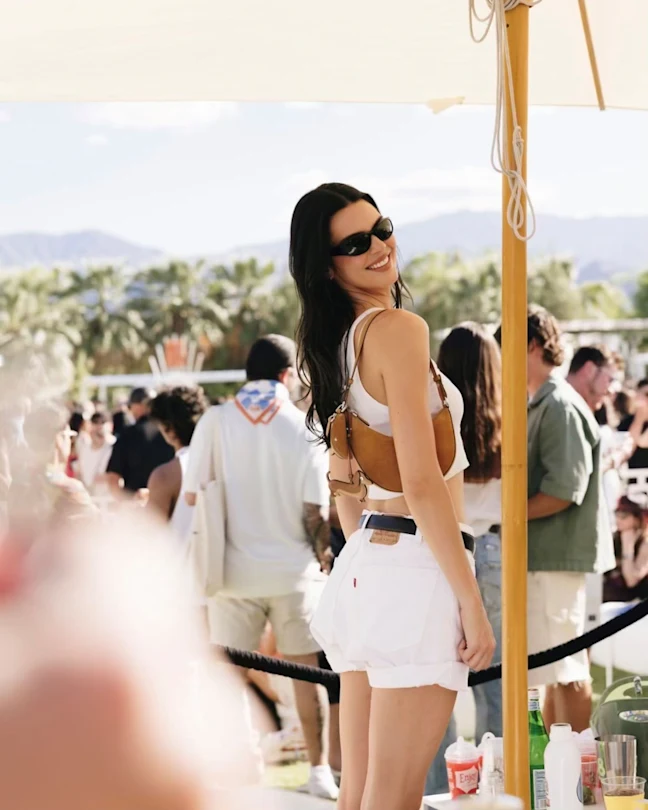
The fashion landscape at Coachella 2026 reveals a significant shift where festival style is no longer about individuality but about curated, influencer-driven aesthetics. Figures like Kendall Jenner, alongside Kylie Jenner and Kourtney Kardashian, exemplify a polished, minimal look that dominates the scene. Instead of experimental or spontaneous outfits, festival fashion now leans toward safe, repeatable formulas—denim cut-offs, sheer tops, cowboy boots, and curated accessories. This creates a visual uniform that prioritizes camera-readiness over originality. As a result, festival style becomes predictable and highly stylized.
This trend reflects a broader transformation where festivals function as content production environments rather than purely cultural or musical experiences. Influencer culture and brand partnerships drive outfit choices, with luxury labels and stylists playing a central role in shaping appearances. Compared to earlier eras—defined by icons like Kate Moss or Vanessa Hudgens—today’s looks feel more manufactured and less organic. This positions festival fashion as part of a commercialized, digital-first ecosystem.
Key Performance Drivers: Forces Behind The Shift In Festival Fashion
• Influence of social media and influencer culture
• Rise of brand partnerships and sponsorships
• Demand for camera-ready, shareable outfits
• Growth of luxury fashion presence at festivals
• Standardization of “festival aesthetics”
• Celebrity-driven style replication
• Integration of fashion and content creation
• Shift from authenticity to curation
• Increased role of stylists and designers
• Pressure to maintain visual consistency online
These drivers show that festival fashion is becoming commercialized, curated, and content-driven. The focus is on visibility and brand alignment.
Insight: Festival Fashion Is Losing Individuality As It Becomes A Content Strategy
This shift shows that style is increasingly driven by digital performance. It matters because originality is being replaced by uniformity. It creates value by aligning fashion with content and branding. Over time, curated aesthetics will dominate festival culture.
Why The Trend Is Emerging: Social Media Pressure, Brand Commercialization, And Influencer Culture Are Driving Uniformity
The shift toward curated festival fashion at Coachella 2026 is largely driven by the influence of social media platforms and the pressure to create visually optimized content. Attendees—especially celebrities like Kendall Jenner—are no longer dressing purely for self-expression but for maximum digital impact across platforms like Instagram and TikTok. This encourages safe, recognizable outfits that perform well visually and align with established trends. As a result, experimentation decreases while repeatable aesthetics increase. This transforms fashion into a performance for digital audiences.
At the same time, the growing presence of luxury brands and sponsorships is reshaping festival style. Designers and stylists now curate looks in advance, turning appearances into strategic brand moments rather than spontaneous fashion choices. Compared to earlier eras influenced by figures like Kate Moss, where style felt more organic and unpolished, today’s looks are highly controlled. Additionally, influencer culture reinforces this uniformity, as trends spread quickly and are replicated widely. This convergence of digital pressure, commercial influence, and trend replication is driving the shift.
Key Drivers: Cultural And Behavioral Forces Behind The Trend
• Pressure to create shareable, high-performing content
• Influence of social media algorithms and visibility
• Growth of brand sponsorships and partnerships
• Increased role of stylists and curated looks
• Replication of celebrity and influencer outfits
• Standardization of festival fashion aesthetics
• Shift from self-expression to performance
• Expansion of luxury fashion in festival spaces
• Desire for visual consistency across platforms
• Decline of spontaneous and experimental styling
These drivers show that festival fashion is shaped by digital performance and commercialization. The focus is on visibility and brand alignment.
Virality of Trend: Celebrity Influence And Replication Drive Adoption
The trend spreads quickly because celebrity outfits are widely shared and replicated, creating a cycle of uniformity and reinforcing dominant aesthetics.
Where It Is Seen: Music Festivals, Social Media, And Celebrity Culture
• Music festivals like Coachella
• Social media platforms (Instagram, TikTok)
• Celebrity and influencer appearances
• Fashion brand activations and collaborations
• Street style and festival coverage
This visibility shows that the trend spans fashion, media, and entertainment ecosystems.
Insight: Fashion Trends Are Being Driven By Digital Performance Rather Than Personal Expression
This shift shows that style is becoming more strategic. It matters because originality is being replaced by optimization. It creates value by aligning fashion with visibility. Over time, performance-driven fashion will shape cultural aesthetics.
Description Of The Consumers: Content-Driven Festival Goers And Trend-Following Style Adopters
The primary audience shaping this shift at Coachella 2026 is “Content-Driven Festival Goers”—individuals who attend events not only for music but to create and share visually appealing content. Influenced by figures like Kendall Jenner, these consumers are typically aged 18–35 and prioritize outfits that are camera-ready, aesthetically consistent, and aligned with trending styles. Their fashion choices are strategic, designed to perform well on platforms like Instagram and TikTok. For them, festivals function as content production environments. This shifts the focus from personal expression to digital visibility.
The secondary audience is “Trend-Following Style Adopters”, a broader group that replicates looks seen on celebrities and influencers. Inspired by curated appearances from figures such as Kylie Jenner and Kourtney Kardashian, they adopt predefined festival aesthetics rather than creating original styles. This group values belonging and trend alignment, often choosing outfits that fit within the established Coachella “uniform.” Their behavior reinforces the cycle of style standardization and replication. This expands the trend across a wider audience.
Audience Profile: Demographics And Behavioral Patterns Driving The Trend
• Age: 18–35 core; extended reach 16–40
• Gender: Balanced, slightly female-skewed
• Income: Mid to high (spending on fashion and experiences)
• Education: Digitally fluent, trend-aware
• Lifestyle: Social, experience-driven, image-conscious
• Behavior: Content creation, outfit planning, trend replication
• Viewing Habits: Social media, celebrity style, festival coverage
• Decision Drivers: Aesthetics, visibility, trend relevance
• Media Consumption: Instagram, TikTok, fashion platforms
• Values: Visibility, belonging, style
• Buying Behavior: Invests in trend-aligned, event-specific outfits
• Expectation Shift: Preference for camera-ready and shareable fashion
These consumers prioritize visibility, aesthetics, and trend alignment. Their behavior reflects a shift toward fashion as digital content.
Insight: Consumers Are Using Fashion As A Tool For Digital Identity And Visibility
This shift shows that style is becoming performative. It matters because visibility drives fashion choices. It creates value by aligning clothing with content creation. Over time, digital identity will shape how consumers dress.
Main Audience Motivation: Visibility, Social Validation, And Trend Alignment Drive Festival Fashion Choices
The primary motivation behind the curated fashion shift at Coachella 2026 is the desire for visibility and social validation in a highly digital environment. For content-driven attendees inspired by figures like Kendall Jenner, outfits are carefully selected to perform well on social media platforms, ensuring engagement through likes, shares, and comments. This transforms fashion into a tool for personal branding, where appearance directly impacts online presence. As a result, consumers prioritize aesthetic consistency and recognizability over experimentation. This creates a strong incentive to follow established trends.
At the same time, consumers are motivated by the need for belonging and cultural relevance. Replicating styles seen on celebrities such as Kylie Jenner and Kourtney Kardashian allows individuals to feel part of a shared cultural moment. The fear of standing out in the “wrong” way encourages adherence to a safe, widely accepted aesthetic. Additionally, brand collaborations and curated looks add a layer of aspiration and status signaling. This combination of visibility, validation, and belonging drives the trend.
Key Motivations: Emotional And Behavioral Drivers Behind The Trend
• Desire for social media visibility and engagement
• Need for social validation and recognition
• Motivation to build a personal brand through fashion
• Desire to fit into trending aesthetics
• Fear of standing out in a negative way
• Influence of celebrity and influencer styling
• Aspiration toward luxury and curated looks
• Engagement with shared cultural moments
• Preference for safe, proven outfit formulas
• Focus on aesthetic consistency and polish
These motivations show that consumers prioritize visibility, belonging, and validation. The focus is on fashion as a tool for digital performance.
Insight: Fashion Motivation Is Shifting From Self-Expression To Social Validation
This shift shows that style is becoming strategic rather than personal. It matters because visibility influences decision-making. It creates value by aligning fashion with digital engagement. Over time, validation-driven fashion will dominate festival culture.
Trends 2026: Festival Fashion Is Becoming Uniform, Polished, And Content-Optimized
The evolution of style at Coachella 2026 reflects a defining 2026 shift where festival fashion is no longer about individuality but about curated, repeatable aesthetics optimized for digital platforms. Influenced by celebrities like Kendall Jenner, outfits now follow a recognizable formula—minimal basics, sheer layers, and Western-inspired accessories—creating a visual uniform across attendees. This reduces experimentation while increasing consistency and shareability. As a result, festival style becomes predictable yet highly polished. This marks a transition from organic expression to strategic styling.
At an industry level, this trend highlights the growing dominance of content-driven fashion ecosystems. Brands, stylists, and influencers collaborate to create looks that function as marketing assets, blurring the line between personal style and advertising. Compared to earlier eras shaped by figures like Kate Moss or Vanessa Hudgens, where festival fashion felt more spontaneous, today’s looks are highly controlled and commercially aligned. The integration of luxury fashion into festival spaces further reinforces this shift. This positions festival fashion as a hybrid of entertainment, branding, and digital content creation.
Trend Elements: Uniformity, Curation, And Digital Optimization Shaping Festival Fashion
• Rise of standardized festival aesthetics (“uniform dressing”)
• Growth of content-optimized, camera-ready outfits
• Influence of celebrity and influencer styling
• Expansion of brand collaborations and sponsorships
• Emphasis on minimal, polished looks over experimentation
• Integration of luxury fashion into festival culture
• Shift toward repeatable and recognizable outfit formulas
• Decline of spontaneous and organic styling
• Focus on visual consistency across social platforms
• Transformation of festivals into content creation environments
These elements show that festival fashion is becoming curated, commercialized, and digitally driven. The focus is on visibility and brand alignment.
Trend Table: Festival Fashion Is Shifting Toward Curated And Content-Driven Models
Trend Name | Description (Insight-Led) | Strategic Implications |
Main Trend | Curated, uniform festival fashion | Design collections aligned with recognizable aesthetics |
Social Trend | Content-driven style | Create outfits optimized for social media visibility |
Industry Trend | Commercialization of festival fashion | Integrate brands and partnerships into styling |
Main Strategy | Standardize aesthetics for scalability | Develop repeatable, trend-aligned designs |
Main Consumer Motivation | Visibility, validation, and belonging | Deliver aspirational, shareable fashion |
Related Trend 1 | Influencer-led styling | Leverage celebrity and influencer partnerships |
Related Trend 2 | Luxury-fashion integration | Position high-end brands within festival culture |
Related Trend 3 | Digital-first fashion consumption | Align design with online engagement metrics |
Insight: Festival Fashion Is Becoming A Strategic, Content-Driven System Rather Than A Form Of Self-Expression
This shift shows that fashion is being shaped by digital platforms. It matters because visibility influences design and adoption. It creates value by aligning style with content and branding. Over time, curated and performance-driven fashion will define festival culture.
Strategic Implications: Brands Must Balance Commercial Visibility With Authenticity And Differentiation
The evolution of festival fashion at Coachella 2026 signals that brands must rethink how they engage with culture, content, and consumer expectations. While curated, influencer-led aesthetics—popularized by figures like Kendall Jenner—offer strong visibility, over-reliance on uniform styling risks consumer fatigue and loss of originality. Brands should move beyond simply replicating trends and instead create distinctive, experience-driven fashion narratives that stand out within a saturated visual landscape. This means investing in unique design, storytelling, and limited-edition drops that break away from sameness. As a result, differentiation becomes a key competitive advantage.
At the same time, brands must integrate authenticity and cultural relevance into their strategies. Consumers are increasingly aware of over-commercialization and may gravitate toward styles that feel genuine and less manufactured—echoing earlier festival influences seen with icons like Kate Moss. Balancing polished, shareable looks with elements of individual expression and spontaneity can help brands maintain credibility. Additionally, designing products that enable personal styling and customization can reintroduce individuality into festival fashion. This creates a model where success depends on combining visibility with authenticity.
Insight: Competitive Advantage Will Come From Reintroducing Originality Into A Highly Curated Fashion Landscape
This shift shows that uniformity creates opportunity for differentiation. It matters because consumers seek authenticity alongside visibility. It creates value by combining creativity with cultural relevance. Over time, brands that balance curation with individuality will lead festival fashion.
Final Insights: Festival Fashion Is At A Crossroads Between Commercialization And Authentic Self-Expression
The evolution of style at Coachella 2026 highlights a critical turning point where festival fashion is increasingly driven by commercialization, digital performance, and curated aesthetics. Influenced by figures like Kendall Jenner, the dominance of polished, repeatable looks has created a visual uniform that prioritizes visibility over individuality. While this approach maximizes social media impact and brand integration, it risks diluting the creative and expressive roots of festival culture. As a result, fashion at festivals is becoming more predictable and less experimental. This reflects a broader tension between authenticity and optimization.
Execution will determine how this trend evolves. Brands and consumers that reintroduce personal expression, spontaneity, and diversity in styling will stand out in an increasingly saturated environment. At the same time, maintaining the benefits of digital visibility and cultural relevance will remain essential. The future of festival fashion will depend on finding a balance between curation and creativity, ensuring that style remains both engaging and meaningful. This signals a new phase where authentic differentiation becomes the ultimate form of influence.
Key Takeaways: Strategic Learnings From The Coachella Fashion Shift
• Festival fashion is becoming curated and uniform
• Social media drives style standardization
• Celebrity influence shapes trend adoption
• Commercialization reduces individual expression
• Visibility and engagement guide fashion choices
• Luxury brands are increasingly integrated into festivals
• Consumers seek belonging through trend alignment
• Opportunity exists for differentiation and originality
• Authenticity is becoming a competitive advantage
• Balance between creativity and curation is critical
These takeaways show that success depends on how well brands and consumers navigate the balance between visibility and individuality. The focus is shifting toward authentic, standout expression within a curated landscape.
Insights: Festival Fashion Is Becoming A Battle Between Visibility And Authenticity
Insights: Festival fashion is evolving into a curated, content-driven ecosystem.Industry Insight: Brands must balance visibility with originality.Consumer Insight: Consumers seek both belonging and self-expression.Social Insight: Social media drives uniformity and trend replication.Cultural/Brand Insight: Authenticity is emerging as the key differentiator.
Insight: The Future Of Festival Fashion Lies In Reclaiming Individuality Within A Digital-First Culture
This shift shows that fashion is at a cultural crossroads. It matters because authenticity drives long-term relevance. It creates value by combining creativity with visibility. Over time, individuality will redefine festival fashion.
Innovation Platforms: Fashion Innovation Is Driven By Content Optimization, Influencer Systems, And Experience-Led Styling
The transformation of festival fashion at Coachella 2026 shows that innovation is increasingly built around content optimization and influencer-driven systems. Outfits are no longer designed solely for wearability—they are created to perform visually across digital platforms, ensuring maximum engagement. Celebrities like Kendall Jenner become central nodes in this system, where styling, branding, and content creation are tightly integrated. This shifts innovation from product design to experience and visibility engineering. As a result, fashion becomes a tool for digital storytelling and audience engagement.
At the same time, experience-led styling is emerging as a key innovation layer. Brands are designing complete fashion moments, including outfits, environments, and activations that work together to create shareable experiences. Festival spaces become platforms for immersive brand storytelling, where consumers participate as both audience and content creators. This creates a closed-loop system where content drives visibility, which drives demand, which fuels further content creation. This signals a future where innovation platforms are defined by integration across fashion, media, and experience design.
Innovation Drivers: Key Forces Powering Festival Fashion Innovation
• Development of content-optimized fashion design
• Integration of influencer and celebrity ecosystems
• Focus on visual performance and shareability
• Growth of experience-led fashion activations
• Expansion of brand storytelling through styling
• Creation of closed-loop content and commerce systems
• Emphasis on curated, cohesive aesthetics
• Alignment with digital-first consumer behavior
• Use of festivals as live marketing platforms
• Shift toward fashion as media and communication
These drivers show that innovation is becoming content-driven, system-based, and experience-focused. The goal is to create fashion that performs across physical and digital environments.
Insight: Innovation Platforms Are Turning Fashion Into A Content And Experience Engine
This shift shows that fashion innovation is no longer product-centric. It matters because visibility drives demand. It creates value by linking style with storytelling. Over time, content-driven innovation will define the fashion industry.
Cross-Industry Expansion: Festival Fashion Is Converging With Media, Entertainment, And Advertising Ecosystems
The transformation of fashion at Coachella 2026 highlights how festival style is no longer confined to fashion—it is now deeply integrated with media, entertainment, and advertising ecosystems. Outfits worn by figures like Kendall Jenner function as content assets, blurring the line between personal style and brand promotion. Festivals themselves operate as live media platforms, where every look is photographed, shared, and monetized across digital channels. This transforms fashion into a communication tool within a broader content economy. As a result, style becomes part of a multi-industry storytelling system.
At a broader level, this convergence reflects how consumers engage with fashion as part of their digital identity and entertainment consumption. Festival outfits are no longer just worn—they are broadcast, analyzed, and replicated, creating a feedback loop between brands, influencers, and audiences. Luxury houses, fast fashion brands, and media platforms all participate in shaping and distributing these trends. Additionally, the integration of sponsorships and brand activations positions festivals as hybrid spaces combining retail, entertainment, and advertising. This signals a future where fashion operates within a fully connected ecosystem of culture, commerce, and content.
Expansion Factors: Drivers Enabling Cross-Industry Integration And Growth
• Trend: Fashion as media and advertising platform
• Why: Consumers engage with style through digital content and storytelling
• Impact: Increased integration across fashion, media, and entertainment
• Industries: Fashion, media, advertising, entertainment
• Strategy: Design fashion for visibility and content performance
• Consumers: Digital-first, content-driven audiences
• Demographics: 18–35, global, socially active
• Lifestyle: Experience-driven, image-conscious
• Buying Behavior: Influenced by visibility, trends, and cultural relevance
• Expectation Shift: Demand for multi-dimensional, shareable experiences
These factors show that festival fashion is becoming a cross-industry driver of content and cultural influence. The ability to integrate across ecosystems becomes a key source of growth and relevance.
Insight: Festival Fashion Is Becoming A Central Node In The Content And Advertising Economy
This shift shows that fashion is evolving into a media channel. It matters because visibility drives both culture and commerce. It creates value by combining style with storytelling and branding. Over time, cross-industry convergence will define the future of fashion.


This analysis of the fashion shift at Coachella is incredibly spot on and reflects a broader trend in modern culture. It is quite interesting to see how the original spirit of indie expression has been replaced by a hyper-curated influencer aesthetic that often feels repetitive. The pressure to look perfect for social media definitely leads to a loss of the raw and unique creativity that once defined festival style. To reclaim that sense of authentic personality, many fashion enthusiasts are now moving away from fast fashion trends and towards timeless investment pieces. Choosing high quality materials over trendy uniforms is a great way to return to true personal expression. For those who want to stand out with something genuine and…