
Fashion: Margot Robbie & Fall 2026 Bermuda Shorts How Knee-Length Minimalism Became the Season’s Most Ironic Cold-Weather Statement
- InsightTrendsWorld

- 2 hours ago
- 6 min read
Why the Trend Is Emerging: When climate reality clashes with seasonal fantasy
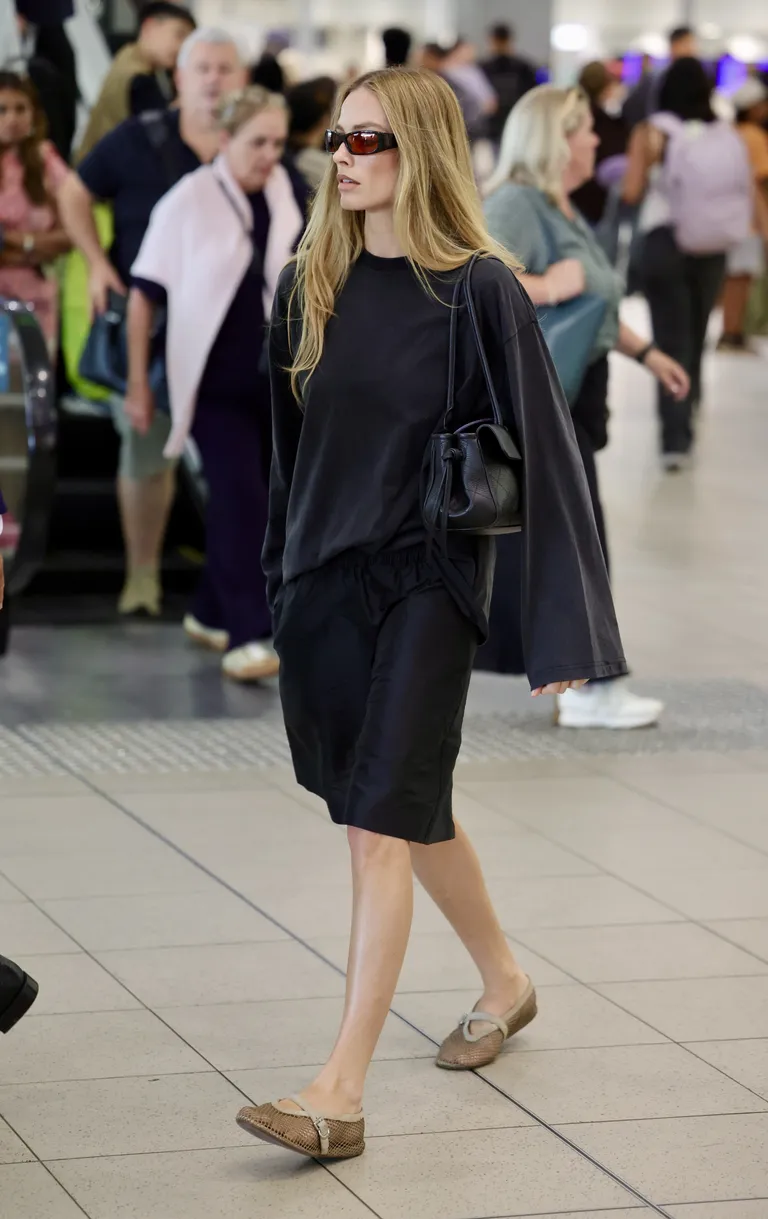
Bermuda shorts for Fall 2026 shouldn’t make sense — and that’s exactly why they do. As New York freezes under record snow and editors doom-scroll spring mood boards, Margot Robbie steps off a Sydney flight in elongated Bermuda shorts, quietly aligning with the most unexpected runway thread of the season.
• What the trend is: Knee-length, wide-leg Bermuda shorts styled in tailored or matching-set formats for fall dressing.
• Why it’s emerging now: Fashion cycles increasingly ignore literal seasonality in favor of aesthetic storytelling and silhouette experimentation.
• What pressure triggered it: Oversaturation of micro-shorts and hyper-feminine hemlines created appetite for proportion shifts.
• What old logic is breaking: The rule that fall equals full-length trousers and winter-proof layering.
• What replaces it culturally: Transitional dressing where tailoring and proportion override weather logic.
• Implications for industry: Designers reframe summer staples as year-round styling tools.
• Implications for consumers: Wardrobes become seasonally flexible rather than calendar-bound.
• Implications for media industry: Street style moments accelerate runway validation cycles.
Robbie’s Beare Park matching set — oversized sleeves, elastic waist, wide legs — delivered comfort and structure in equal measure. On the runways, Ulla Johnson and Joseph echoed similar silhouettes, while New York Fashion Week attendees styled Bermudas with blazers and boots, winter-proofing a summer cut.
Insights: In 2026, proportion beats temperature.
Industry Insight: Designers leverage silhouette novelty to refresh staple categories without radical reinvention. Audience Insight: Consumers crave versatile pieces that disrupt predictable seasonal dressing. Cultural / Brand Insight: Celebrity street style continues to legitimize counter-seasonal experimentation.
This trend is trending because it feels visually new in a saturated tailoring landscape. What makes it special is its contradiction — a warm-weather cut repurposed for cold months. And in a fashion cycle driven by silhouette tension, Bermuda shorts are rewriting fall’s rulebook.
How to Benefit from Trend: When proportion becomes the new statement
The Bermuda shorts revival is not about baring legs in winter — it is about reshaping the lower half of the silhouette. What makes this trend commercially smart is that it reworks an existing wardrobe category without requiring radical fabrication innovation.
• Context (economical, global, social, local): Consumers are investing more selectively, favoring pieces that transition across seasons rather than purely seasonal buys.
• Is it a breakthrough trend in the context: Moderately disruptive — it shifts proportion expectations while staying within familiar tailoring language.
• Is it bringing novelty / innovation to consumers: Yes, through length recalibration and styling contrast (boots, blazers, structured layers).
• Would consumers adhere to it: Likely among fashion-forward urban consumers comfortable with silhouette experimentation.
• Can it create habit and how: Repeated styling via matching sets and capsule collections builds wardrobe integration.
• Will it last in time: Strong mid-cycle potential as a tailoring alternative to trousers and minis.
• Is it worth pursuing by businesses: Yes, especially for brands positioned around modern tailoring, resortwear and transitional wardrobes.
• What business areas are most relevant: Contemporary fashion, premium ready-to-wear, footwear and accessories.
• Can it make a difference in business category vs competition: Yes, it differentiates collections without major cost shifts.
• How can be implemented to daily business, what strategy should brands do: Launch co-ord sets, style with boots or loafers and market as seasonless tailoring.
• Chances of success: High when paired with strong proportion styling and celebrity validation.
• Insights: In 2026, tailoring refreshes itself through length, not fabric.
Industry Insight: Proportion shifts are lower-risk innovation levers in uncertain retail climates. Audience Insight: Consumers respond to styling cues that show practicality within experimentation. Cultural / Brand Insight: Counter-seasonal dressing reinforces fashion’s aspirational escapism.
The Bermuda moment works because it feels intentional rather than nostalgic. What makes it special is its tension — practical tailoring meeting seasonal rebellion. And when proportion becomes the conversation, a hemline can redefine an entire season.
Description of Consumers: The Seasonless Stylist
Dresses for aesthetic coherence, not weather compliance.
This consumer does not wait for the calendar to approve a silhouette. They scroll runway recaps, save street style screenshots and reinterpret trends through layering rather than literal translation. For them, Bermuda shorts are not “summer” — they are a shape to be styled.
• Demographic profile: Fashion-conscious Millennials and Gen Z urban consumers with high social media exposure.
• Life stage: Creative professionals, editors, stylists and style-aware students.
• Shopping profile: Invests in statement tailoring and versatile co-ord sets.
• Media habits: Consumes Fashion Month coverage, celebrity street style and TikTok styling hacks.
• Cultural / leisure behavior: Attends fashion weeks, pop-ups or engages with fashion digitally.
• Lifestyle behavior: Values comfort but frames it through elevated silhouettes.
• Relationship to the trend: Uses Bermuda shorts to signal fashion fluency.
• How the trend changes consumer behavior: Encourages mixing seasonal wardrobes instead of storing them.
What Is Consumer Motivation: Escapism Through Proportion
The motivation is not exposure of skin — it is exposure of intention. Wearing Bermudas in fall signals that styling decisions are deliberate, not dictated.
• Core consumer drive: Individual aesthetic control.
• Cognitive relief: Simplified outfit formulas through matching sets.
• Social depth: Visual distinction in a sea of predictable winter layers.
• Status through restraint: Longer shorts feel refined compared to micro trends.
• Emotional safety: Tailored structure balances experimental length.
• Memory creation: Celebrity sightings anchor styling inspiration.
Insights: Fashion in 2026 is less about season and more about silhouette authority.
Industry Insight: Consumers reward trends that offer styling flexibility rather than one-time novelty. Audience Insight: Fashion-forward shoppers seek shapes that subtly disrupt norms. Cultural / Brand Insight: Proportion experimentation reflects broader rejection of rigid seasonal codes.
This consumer segment is trending because fashion consumption is now global and climate-agnostic. What makes them special is their ability to treat clothing as composition rather than compliance. And in that composition, Bermuda shorts become less about weather — and more about will.
Trends 2026: The Rise of Counter-Seasonal Tailoring
Bermuda shorts in Fall 2026 are not an isolated hemline story. They reflect a broader movement where tailoring stretches across seasons, climates and expectations, challenging the traditional fashion calendar.
Main Trend: Seasonless Silhouette DressingDesigners prioritize proportion and styling over strict seasonal codes.
• Trend definition: Garments traditionally associated with one season reinterpreted for year-round wear through layering and fabrication.
• Core elements: Knee-length shorts, structured blazers, co-ord sets and footwear contrast (boots, loafers, mesh flats).
• Primary industries impacted: Ready-to-wear, footwear, outerwear and capsule wardrobe brands.
• Strategic implications: Collections designed with trans-seasonal styling versatility in mind.
• Future projections: Fall and spring wardrobes increasingly blur into hybrid capsules.
• Social trend implication: Consumers reject rigid calendar-based fashion consumption.
Related Consumer Trends: Transitional Wardrobing (season-flexible buying), Matching Set Momentum (effortless styling), and Comfort-Tailoring Fusion (structure meets ease).
Related Industry Trends: Climate-Adaptive Design (lighter fall fabrics), Runway-to-Street Acceleration (celebrity validation speed), and Proportion Innovation (length recalibration focus).
Related Social Trends: Visual Escapism (dressing against climate mood), Aesthetic Individualism (silhouette as identity), and Globalized Fashion Timing (southern hemisphere influence).
Pre-table framing: Bermuda shorts are not trending because of warmth — they are trending because of visual recalibration.
Summary of Trends Table
Description | Implication | |
Main Trend: Seasonless Silhouette | Counter-seasonal tailoring. | Extended product lifecycle. |
Main Strategy: Length Recalibration | Shift hemline proportions. | Visual novelty without reinvention. |
Main Industry Trend: Climate Flexibility | Blur seasonal collections. | Inventory adaptability. |
Main Consumer Motivation: Styling Autonomy | Dress by aesthetic, not forecast. | Increased personal expression. |
Insights: The calendar is losing authority over the closet.
Industry Insight: Brands that design for trans-seasonal styling reduce dependency on rigid fashion cycles. Audience Insight: Consumers embrace trends that feel visually new yet practically adaptable. Cultural / Brand Insight: Counter-seasonal dressing reflects broader cultural desire for flexibility and self-direction.
This trend is trending because proportion refresh feels subtle yet striking. What makes it special is its quiet rebellion — warm-weather tailoring repurposed for colder months. And as climate unpredictability meets aesthetic control, fashion’s future looks increasingly seasonless.
Final Insight: In 2026, Silhouette Outranks Season
The Bermuda shorts revival is not about summer nostalgia — it is about visual control in an unpredictable climate and fashion cycle. What makes this moment culturally sharp is that it reframes tailoring through proportion rather than fabric, allowing designers and consumers to experiment without abandoning structure.
• What lasts: Tailoring remains the backbone of modern wardrobes.
• Social consequence: Seasonal dressing becomes more symbolic than practical.
• Cultural consequence: Climate and geography lose authority over aesthetic timing.
• Industry consequence: Brands rethink fall and spring as overlapping capsules rather than opposites.
• Consumer consequence: Styling literacy becomes more valuable than trend obedience.
• Media consequence: Celebrity sightings accelerate validation of unconventional silhouettes.
Innovation Areas
• Trans-Seasonal Capsule Drops: Launch coordinated sets designed to layer across climates.
• Footwear Contrast Styling: Pair structured shorts with boots or winter accessories to normalize hybrid dressing.
• Fabric Recalibration: Introduce wool blends, heavier twills or lined versions for cooler months.
• Hemline Diversification: Offer multiple Bermuda lengths to suit varied styling preferences.
• Climate-Responsive Marketing: Position seasonless tailoring as adaptive rather than rebellious.
Insights: The most powerful trend shift of 2026 may be subtle — just a few inches of fabric.
Industry Insight: Proportion shifts offer cost-effective innovation with high visual impact. Audience Insight: Consumers increasingly define fashion identity through silhouette experimentation. Cultural / Brand Insight: In a world of climate unpredictability, aesthetic flexibility becomes aspirational.
The Fall 2026 Bermuda moment signals something larger than shorts. It signals that fashion authority is moving from weather patterns to personal intention. And when silhouette outranks season, the wardrobe becomes a canvas rather than a calendar.


Comments