
Fashion: The Body Rewrite: How Asian Designers Are Quietly Reprogramming Fashion’s Beauty Standards
- InsightTrendsWorld

- 5 hours ago
- 10 min read
Why the Trend Is Emerging: The Rise of Inclusivity‑First Design and the New Aesthetic of Real Bodies
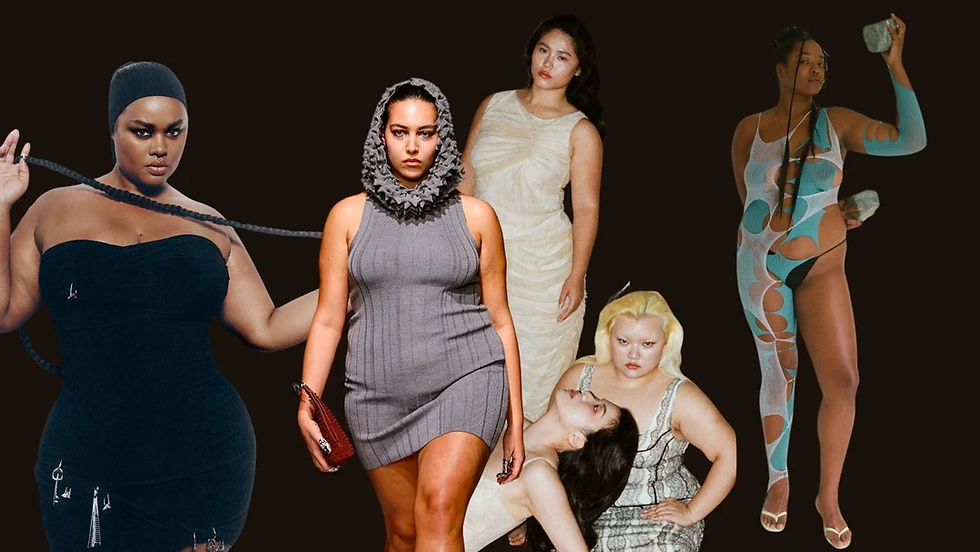
Fashion is undergoing a cultural reset as consumers reject narrow beauty ideals and demand representation that feels real, diverse, and emotionally resonant. Asian independent designers are leading this shift by embedding inclusivity directly into their design language rather than treating it as a marketing add‑on. This moment is trending because it challenges the long‑standing uniformity of global fashion — not through spectacle, but through subtle, consistent normalization of different body types. What makes this movement special is how it blends craftsmanship, cultural nuance, and progressive casting to create a new visual code for what beauty looks like on the runway.
What the trend is: A shift toward body‑inclusive fashion led by emerging Asian designers who design for movement, diversity, and real‑world silhouettes.
Why it’s emerging now: Consumers are rejecting outdated beauty standards and gravitating toward brands that reflect the bodies they actually see around them.
What pressure triggered it: The glaring lack of size inclusivity at major European fashion weeks has exposed a structural gap that independent designers are now filling.
What old logic is breaking: The idea that luxury fashion must be shown on one narrow body type is losing cultural relevance and commercial power.
What replaces it culturally: A new aesthetic where stretch, tactility, transparency, and adaptive silhouettes celebrate the body rather than discipline it.
Implications for media / industry / audience: Brands must evolve casting, product development, and visual storytelling to align with a global audience that expects inclusivity as a baseline, not a bonus.
Insight: The New Body Aesthetic — Where Inclusivity, Craft, and Cultural Relevance Redefine Fashion’s Visual Identity
Industry Insight: Designers who embed inclusivity into product development — not just casting — are shaping the next era of fashion credibility. Consumer Insight: People gravitate toward brands that reflect real bodies, real diversity, and real emotional resonance. Brand Insight: Inclusivity is no longer a marketing message; it’s a design principle that builds long‑term cultural relevance.
This movement resonates because it feels honest, grounded, and future‑facing — a quiet but powerful rewrite of fashion’s body rules. It validates the desire for representation that feels lived‑in rather than performative. And it confirms that the future of fashion belongs to designers who treat inclusivity as craft, not campaign.
Detailed Findings: Why Inclusivity‑Led Design Is Becoming Fashion’s Most Important Cultural Shift
Inclusivity is emerging as one of fashion’s most urgent priorities because consumers are increasingly rejecting outdated beauty norms that exclude the majority of real bodies. The data from major European fashion weeks exposes a structural failure — thousands of runway looks, yet only a handful of curve models — revealing a system still anchored in narrow ideals. Against this backdrop, Asian independent designers are stepping into the gap by embedding inclusivity directly into their design process, not just their casting. This moment is trending because it reframes inclusivity from a marketing gesture into a design philosophy that reshapes silhouettes, materials, and visual identity.
Findings: Asian designers are normalizing diverse body types through product design, lookbooks, and runway casting rather than relying on token representation.
Market context: Global fashion weeks continue to lag in size inclusivity, creating a cultural and commercial opening for designers who challenge the status quo.
What it brings new to the market: A design‑first approach to inclusivity — stretch, tactility, transparency, and adaptive silhouettes engineered to honor different bodies.
What behavior is validated: Consumers reward brands that reflect real bodies and reject those that cling to outdated, exclusionary beauty standards.
Can it create habit and how: Consistent representation across collections builds long‑term trust and encourages audiences to see inclusivity as the new normal.
Implications for market and consumers: Fashion must evolve beyond performative casting and integrate inclusivity into product development, brand identity, and runway storytelling.
Signals: Where Inclusivity, Craft, and Cultural Identity Converge
The cultural signals around body representation are shifting, and emerging Asian designers are at the center of this evolution.
Media signal: Fashion coverage increasingly highlights designers who challenge body norms through design innovation rather than shock value.
Cultural signal: Younger audiences reject uniform beauty ideals and gravitate toward brands that celebrate individuality and body diversity.
Audience / Behavioral signal: Consumers engage more deeply with brands that show bodies that look like theirs — not just aspirational silhouettes.
Industry / Platform signal: Independent designers gain traction on social platforms for their inclusive casting and boundary‑pushing silhouettes.
Main finding: Inclusivity is moving from runway tokenism to design‑driven transformation — and Asian designers are leading the shift.
Insight: The New Body Aesthetic — Where Inclusivity, Craft, and Cultural Relevance Redefine Fashion’s Visual Identity
Industry Insight: Designers who embed inclusivity into product development — not just casting — are shaping the next era of fashion credibility. Consumer Insight: People gravitate toward brands that reflect real bodies, real diversity, and real emotional resonance. Brand Insight: Inclusivity is no longer a marketing message; it’s a design principle that builds long‑term cultural relevance.
Asian designers resonate because they offer a new blueprint for inclusivity — one rooted in craft, cultural nuance, and quiet but powerful disruption. They validate the desire for representation that feels natural rather than performative. And they confirm that the future of fashion belongs to brands that design for the world as it is, not as it once was.
Description of Consumers: The Representation‑Hunters — A New Fashion Audience Demanding Real Bodies and Real Visibility
A new consumer group is emerging around the rise of inclusivity‑driven Asian designers, defined by their desire for fashion that reflects real bodies rather than aspirational ideals. These individuals are increasingly disillusioned with runway casting that centers thinness and uniformity, and they gravitate toward brands that normalize diverse silhouettes without turning inclusivity into a spectacle. They want fashion that feels emotionally aligned with their lived experiences — clothing that adapts to the body rather than forcing the body to adapt to the clothing. This group is driving the shift because they see inclusivity not as a trend but as a cultural correction long overdue.
Demographic profile: Primarily Gen Z and young Millennials across global cities who follow fashion, identity politics, and cultural commentary.
Life stage: Students, early‑career professionals, creatives, and digital natives navigating self‑expression, body image, and evolving personal style.
Shopping profile: Seek brands that prioritize fit, comfort, and representation; support independent designers who challenge industry norms.
Media habits: Follow emerging designers, fashion critics, and body‑positive creators on TikTok, Instagram, Xiaohongshu, and fashion subcultures.
Cultural / leisure behavior: Engage in conversations around identity, inclusivity, and cultural aesthetics; value fashion as a tool for self‑definition.
Lifestyle behavior: Build wardrobes that prioritize movement, tactility, and silhouettes that celebrate rather than conceal the body.
Relationship to the trend: See Asian designers as cultural disruptors offering the representation they’ve long been denied by Western luxury houses.
How the trend changes consumer behavior: Encourages consumers to seek out brands that reflect their bodies, support designers with inclusive values, and reject fashion imagery that feels exclusionary.
What Is Consumer Motivation: The Need for Representation, Emotional Safety, and Fashion That Honors Real Bodies
Consumers are motivated by a desire for fashion that feels human, inclusive, and emotionally safe — a stark contrast to the rigid beauty standards that have dominated global runways for decades. They want designers who understand the body as dynamic, diverse, and culturally shaped, not as a single idealized form. Asian designers resonate because they design with empathy, engineering garments that stretch, adapt, and move with the wearer. The trend resonates because it offers representation that feels natural, not performative.
Representation: Consumers want to see bodies like theirs reflected in lookbooks, runways, and product imagery.
Emotional alignment: Inclusive design makes fashion feel welcoming rather than alienating.
Cultural relevance: Designers from Asia bring new perspectives that challenge Western beauty norms.
Design empathy: Clothing engineered for real bodies signals respect, care, and modernity.
Empowerment: Wearing garments that celebrate the body boosts confidence and self‑expression.
Insight: The New Body Aesthetic — Where Inclusivity, Craft, and Cultural Relevance Redefine Fashion’s Visual Identity
Industry Insight: Designers who embed inclusivity into product development — not just casting — are shaping the next era of fashion credibility. Consumer Insight: People gravitate toward brands that reflect real bodies, real diversity, and real emotional resonance. Brand Insight: Inclusivity is no longer a marketing message; it’s a design principle that builds long‑term cultural relevance.
This consumer group resonates with the movement because it finally gives them visibility, dignity, and fashion that feels designed for their lived reality. It validates their desire for representation that is subtle, consistent, and embedded in craft. And it confirms that the future of fashion belongs to designers who treat inclusivity as a creative language, not a checkbox.
Trends 2026: When Inclusivity Becomes Fashion’s New Design Language
Fashion is entering a pivotal moment where inclusivity is no longer a marketing message but a structural expectation embedded into design, casting, and brand identity. The rise of Asian independent designers is accelerating this shift by offering a new aesthetic that celebrates real bodies through stretch, tactility, and adaptive silhouettes. This matters now because global consumers are rejecting outdated runway norms and demanding representation that feels natural, not performative. What’s shifting is the understanding that inclusivity must be engineered into garments, not added as a final‑hour casting decision — and Asian designers are proving that this approach is both culturally relevant and creatively powerful.
Main Trend: Uniform Body Ideals → Design‑Led Inclusivity
Trend definition: Fashion evolves from rigid, exclusionary silhouettes to body‑adaptive design that honors diverse shapes and identities.
Core elements: Stretch fabrics, transparency, sculptural knitwear, tactile engineering, and casting that reflects real‑world bodies.
Primary industries impacted: Fashion, luxury, runway production, digital fashion media, and regional fashion weeks.
Strategic implications: Brands must integrate inclusivity into product development, not just marketing, to maintain cultural relevance.
Future projections: Inclusive silhouettes become a global standard, influencing everything from runway casting to retail fit models.
Social trend implication: Consumers embrace fashion that celebrates individuality, body diversity, and cultural nuance.
Related Consumer Trends: Aesthetic self‑branding, multi‑fragrance ownership, celebrity‑led product discovery. Consumers curate identity through inclusive fashion choices, follow designers who reflect real bodies, and rely on culturally resonant figures to guide style decisions.
Related Industry Trends: Fashion‑beauty synergy, premiumization of mass brands, talent‑anchored campaigns. Brands merge inclusivity with luxury craftsmanship, elevate design through cultural storytelling, and build ecosystems around designers with progressive values.
Related Social Trends: Emotional self‑expression, global creative influence, the rise of sensory identity. Society embraces fashion as a tool for emotional visibility, draws inspiration from culturally diverse creators, and treats body representation as a core part of identity.
Summary of Trends Table: The New Inclusive Fashion Blueprint
Row | Description | Implication |
Main Trend: Design‑Led Inclusivity | Inclusivity shifts from casting to garment engineering and visual identity. | Brands must embed inclusivity into design, not messaging. |
Main Strategy: Body‑Adaptive Craft | Designers use stretch, tactility, and transparency to honor diverse bodies. | Creates a new aesthetic that feels modern, human, and culturally relevant. |
Main Industry Trend: Independent Designer Influence | Asian designers reshape global fashion norms through subtle, consistent representation. | Drives industry‑wide pressure for authentic inclusivity. |
Main Consumer Motivation: Representation & Emotional Alignment | Consumers want fashion that reflects their bodies and identities. | Increases loyalty toward designers who normalize diversity. |
Areas of Innovation: The New Craft of Inclusive Silhouettes
Inclusivity is driving a wave of innovation as designers rethink how garments interact with the body. This moment matters because consumers want fashion that feels expressive, adaptive, and emotionally safe — a stark contrast to the rigid silhouettes that have dominated global runways. Asian designers are leading this evolution by merging cultural nuance with technical experimentation.
Stretch‑Engineered Silhouettes: Garments designed to adapt to multiple body shapes without compromising aesthetic integrity.
Transparency & Tactility: Materials that reveal, contour, and celebrate the body rather than conceal it.
Sculptural Knitwear: Knit structures that mold to the wearer, creating inclusive fit without standardized sizing.
Cultural‑Rooted Casting: Runways featuring diverse bodies as a normalized visual language, not a statement.
Adaptive Luxury: High‑craft pieces designed for movement, comfort, and body diversity — redefining what luxury looks like.
Insight: The New Body Aesthetic — Where Inclusivity, Craft, and Cultural Relevance Redefine Fashion’s Visual Identity
Industry Insight: Designers who embed inclusivity into product development — not just casting — are shaping the next era of fashion credibility. Consumer Insight: People gravitate toward brands that reflect real bodies, real diversity, and real emotional resonance. Brand Insight: Inclusivity is no longer a marketing message; it’s a design principle that builds long‑term cultural relevance.
Inclusivity‑driven design endures because it reflects the world as it truly is — diverse, expressive, and beautifully varied. It validates the desire for representation that feels natural and embedded in craft. And it confirms that the future of fashion belongs to designers who treat inclusivity as a creative language, not a trend.
Final Insight: Why Inclusivity‑Led Design Becomes Fashion’s Most Defining Cultural Shift
Inclusivity‑driven design is becoming one of fashion’s most powerful cultural movements because consumers are demanding representation that feels real, respectful, and embedded in craft. Asian independent designers are leading this shift by engineering garments that adapt to the body rather than forcing the body to conform to outdated ideals. This moment is trending because it offers a new aesthetic language — one rooted in tactility, stretch, transparency, and cultural nuance — that feels emotionally aligned with how people want to see themselves. What makes this movement special is its quiet radicalism: instead of staging inclusivity as a spectacle, these designers normalize it through consistent design choices and casting that reflects the world as it truly is.
What lasts: Inclusivity becomes a long‑term design principle, influencing silhouettes, materials, and runway casting across global fashion weeks.
Social consequence: Consumers feel seen, validated, and emotionally connected to brands that reflect diverse bodies without tokenism.
Cultural consequence: Fashion’s visual identity shifts toward individuality, body diversity, and culturally rooted aesthetics.
Industry consequence: Brands must evolve beyond performative inclusivity and integrate representation into product development and creative direction.
Consumer consequence: Audiences gravitate toward designers who honor real bodies and reject brands that cling to exclusionary beauty norms.
Media consequence: Fashion storytelling evolves to highlight craft, identity, and representation rather than perfection and uniformity.
Insight: The New Body Aesthetic — Where Inclusivity, Craft, and Cultural Relevance Redefine Fashion’s Visual Identity
Industry Insight: Designers who embed inclusivity into product development — not just casting — are shaping the next era of fashion credibility. Consumer Insight: People gravitate toward brands that reflect real bodies, real diversity, and real emotional resonance. Brand Insight: Inclusivity is no longer a marketing message; it’s a design principle that builds long‑term cultural relevance.
Inclusivity‑led design endures because it reflects a deeper cultural desire for visibility, dignity, and fashion that honors the body rather than policing it. It validates the shift toward representation that feels natural, embedded, and emotionally grounded. And it confirms that the future of fashion belongs to designers who treat inclusivity as a creative language — one that expands beauty, expands identity, and expands who fashion is truly for.


Comments