
Food: Heat On Demand Becomes the New Amenity Standard
- InsightTrendsWorld

- 14 hours ago
- 9 min read
Why the Trend Is Emerging: Labor pressure and 24/7 lifestyles push vending beyond snacks into real meals
Hot food vending is trending not because it is futuristic, but because it solves problems that facilities, workers, and campuses can no longer ignore. What makes it special right now is that technology, labor economics, and consumer expectations have finally aligned, turning automated hot meals from a risky experiment into a credible foodservice layer.
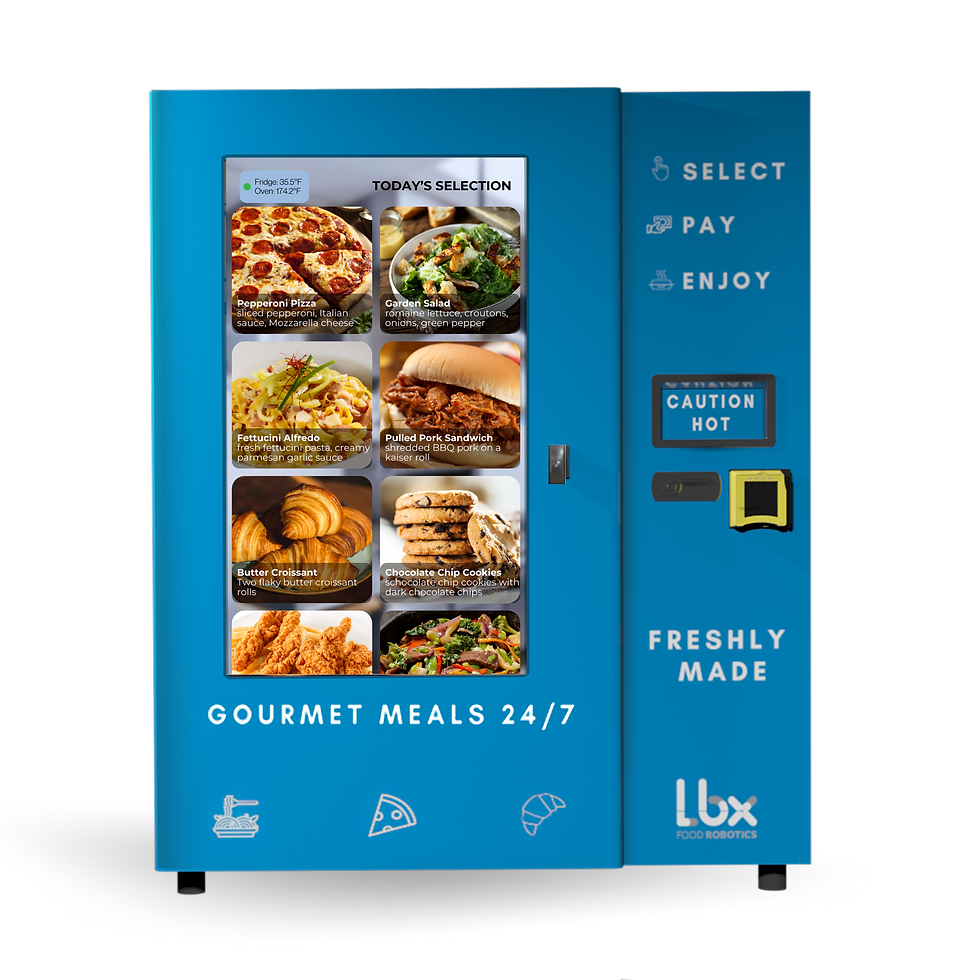
• What the trend is: Fully automated vending kiosks capable of baking, frying, steaming, or heating restaurant-quality meals on demand in under five minutes.
• Why it’s emerging now: Persistent foodservice labor shortages and cost pressures make 24/7 staffed kitchens economically unsustainable in many venues.
• What pressure triggered it: Night-shift workers, hospital staff, students, and travelers demand real hot meals during off-peak hours when traditional dining is closed.
• What old logic is breaking: Vending as a low-cost, shelf-stable snack solution is being replaced by vending as a high-value, freshly prepared meal solution.
• What replaces it culturally: “Access over ambiance” becomes the priority, where immediate availability matters more than dine-in atmosphere.
• Implications for industry: Operators gain a scalable way to extend foodservice hours without increasing headcount or kitchen footprint.
• Implications for consumers: Workers and students no longer need to leave premises at 2 a.m. for a hot meal, improving safety and satisfaction.
• Implications for media industry: Automated retail shifts from novelty coverage to serious discussion about infrastructure, food safety, and operational efficiency.
What makes this moment different from past failed attempts is technological maturity: precise refrigeration, IoT-enabled monitoring, predictive maintenance, and high-speed heating systems that deliver consistent results in minutes. Machines now reliably cook pizza, pasta, fried chicken, and breakfast sandwiches with visible preparation processes that reduce skepticism and increase perceived value. With projections placing the North American hot food vending market near $9.6 billion by 2036, the growth narrative is no longer speculative but economically grounded.
Insights: Hot food vending is trending because it fills structural availability gaps that traditional foodservice cannot economically serve.
Industry Insight: Automation is becoming an operational extension of foodservice, allowing facilities to provide round-the-clock hot meals without absorbing staffing volatility. Consumer Insight: Modern consumers expect restaurant-level quality at any hour, and when machines visibly cook food in real time, trust and willingness to pay increase. Brand / Cultural Insight: Vending’s image is shifting from cheap convenience to intelligent access point, redefining automated retail as infrastructure rather than impulse.
This trend is not about replacing restaurants but about covering the hours and locations restaurants cannot profitably operate. It feels special because it transforms a historically limited channel into a 24/7 food solution. And it is trending because real-world constraints, not hype, are driving adoption.
How to Benefit from Trend: When access becomes the value proposition, automation becomes the growth lever
Hot food vending is not just a machine investment; it is a strategic repositioning of food access as an amenity. What makes it commercially attractive is that it solves staffing gaps, extends operating hours, and monetizes previously unserved demand without expanding square footage.
• Context (economical, global, social, local): Labor shortages, wage inflation, and 24/7 work cycles are forcing facilities to rethink how they provide food without increasing operational complexity.
• Is it a breakthrough trend in context (what it brings new, does it solve something)? Yes, because it transforms unattended retail into a viable hot meal solution rather than a snack-only fallback.
• Is it bringing novelty / innovation to consumers? The visible cooking process, real-time preparation, and interactive ordering elevate vending from transactional to experiential.
• Would consumers adhere to it? Strong late-night usage data, especially on campuses and in hospitals, indicates repeated demand where alternatives are limited.
• Can it create habit and how: By anchoring itself to predictable need states such as night shifts, late study hours, and travel delays, usage becomes situationally routine.
• Will it last in time? As long as labor economics remain tight and 24-hour work patterns persist, automated meal access retains structural relevance.
• Is it worth pursuing by businesses? Higher ticket pricing comparable to quick-service restaurants improves unit economics compared to traditional vending.
• What business areas are most relevant? Hospitals, factories, airports, campuses, hotels, and transportation hubs represent high-demand, off-hour environments.
• Can it differentiate vs competition? Facilities offering hot automated meals gain an amenity advantage over sites limited to cold grab-and-go options.
• How can it be implemented, what strategy should brands follow? Focus on high-traffic underserved time windows, emphasize transparency in food safety, and integrate remote monitoring for operational reliability.
• Chances of success: High in controlled environments with predictable foot traffic and limited late-night alternatives.
What makes the model powerful is its complementary positioning: it does not directly compete with restaurants during peak hours but fills gaps when traditional foodservice closes. The combination of IoT monitoring, predictive maintenance, and integrated high-speed heating systems reduces many of the reliability risks that historically held the category back.
Insights: The real opportunity is not selling meals, but selling 24/7 food access as infrastructure.
Industry Insight: Operators who treat hot vending as an extension of facility services rather than as traditional vending will unlock stronger long-term contracts and higher per-unit returns. Audience Insight: Consumers reward reliability over novelty, and once trust in food quality is established, repeat behavior becomes situationally automatic. Cultural / Brand Insight: Automation framed as empowerment rather than replacement shifts perception from “machine food” to “always-on availability.”
This trend benefits operators who understand unmet time windows better than menu breadth. It feels special because it redefines vending’s role within property ecosystems. And it is trending because access, not ambiance, is becoming the new competitive edge.
Description of Consumers: The Always-On Workforce and Mobility Natives
Time-poor, schedule-fragmented, and access-driven.
They are not looking for culinary exploration at 2 a.m.; they are looking for reliability, warmth, and something that feels like a real meal rather than a compromise. Hot food vending is trending because it respects their constraints instead of forcing them to adapt to limited foodservice hours.
• Demographic profile: Night-shift workers, hospital staff, factory employees, students, travelers, and budget-conscious urban residents.
• Life stage: Early career professionals, shift-based workers, and students balancing irregular hours and structured responsibilities.
• Shopping profile: Convenience-first, situational buyers who prioritize proximity, speed, and guaranteed availability over brand loyalty.
• Media habits: Digitally fluent, comfortable with touchscreen ordering, contactless payments, and automated retail environments.
• Cultural / leisure behavior: Late-night study sessions, extended work shifts, travel layovers, and on-campus or on-site living.
• Lifestyle behavior: Eating at unconventional hours, relying on proximity-based food access, and optimizing time over experience.
• Relationship to the trend: They view hot vending as a solution to a problem, not as a novelty attraction.
• How the trend changes consumer behavior: Instead of leaving premises or settling for cold snacks, they integrate automated hot meals into their routine.
What Is Consumer Motivation: Access Without Compromise
The core desire is simple: warmth, immediacy, and dignity in food choices even during inconvenient hours. Hot food vending satisfies the emotional need for a “real meal” while respecting time pressure and safety constraints.
• Core consumer drive: To access hot, satisfying meals without disrupting schedules or traveling off-site.
• Cognitive relief: Eliminates the mental calculation of whether something is open, affordable, or worth the commute.
• Social depth: Enables safer on-campus and on-site environments by reducing the need to leave facilities late at night.
• Status through restraint: Choosing on-site automation reflects practicality and efficiency rather than indulgence.
• Emotional safety: Warm food during long shifts or late hours reinforces comfort and normalcy.
• Memory creation: Small rituals, like grabbing a hot pizza between shifts or after exams, anchor positive associations to place and routine.
Insights: The consumer is not chasing innovation, but certainty, and certainty is what makes hot vending sticky.
Industry Insight: Designing around predictable late-hour demand and shift-based usage unlocks stable volume rather than speculative traffic. Audience Insight: Trust builds when preparation is visible and quality is consistent, turning first-time curiosity into habitual reliance. Cultural / Brand Insight: Automated hot meals symbolize adaptation to modern schedules, reframing vending as supportive infrastructure rather than last-resort convenience.
This audience is driving growth because their needs are structurally underserved. What makes the trend powerful is that it restores choice in time windows historically neglected by foodservice. And as long as work patterns remain fragmented and round-the-clock, demand will remain durable.
Trends 2026: From Snack Machines to 24/7 Meal Infrastructure
Vending is no longer a peripheral retail format; it is evolving into a food access layer embedded inside institutions. The shift that makes this special is not about robotics spectacle but about reclassifying vending as part of essential services rather than impulse retail.
Main Trend: Cold Convenience → Automated Hot AccessVending transitions from packaged snack distribution to on-demand hot meal preparation integrated into everyday environments.
• Trend definition: Smart kiosks that refrigerate, monitor, and cook meals in real time, delivering restaurant-comparable quality without staff.
• Core elements: Precision refrigeration, IoT monitoring, integrated high-speed heating systems, touchscreen ordering, and contactless payment.
• Primary industries impacted: Foodservice, facility management, healthcare, higher education, transportation hubs, and workplace catering.
• Strategic implications: Property owners and operators treat automated hot food as an amenity upgrade rather than a vending add-on.
• Future projections: With projected North American market growth toward $9.6 billion by 2036, adoption scales across multi-site operators.
• Social trend implication: Round-the-clock access becomes an expectation in environments where work, travel, and study extend beyond traditional hours.
Related Consumer Trends: Time-Compressed Living (schedule fragmentation reality), Safety-First Mobility (on-site over off-site preference), and Reliability Over Variety (certainty-driven choice) reflect consumers prioritizing guaranteed access and situational convenience over dining experience.
Related Social Trends: 24/7 Society (nonstop economic cycles), Automation Acceptance (normalized machine interaction), and Amenity Arms Race (facilities competing through services) show how institutions adapt to constant demand and rising expectation standards.
Related Industry Trends: Labor Substitution Models (automation offsets staffing gaps), Smart Infrastructure Integration (IoT-enabled facility systems), and High-Ticket Vending Economics (restaurant-level pricing logic) signal a structural upgrade in how unattended retail generates revenue.
What makes this trajectory compelling is that it reframes vending from marginal retail to operational backbone in controlled environments. Growth concentrates in places where time windows are underserved and labor costs are high, turning machines into gap-fillers rather than competitors.
Summary of Trends Table
Description | Implication | |
Main Trend: Automated Hot Access | Vending prepares fresh meals on demand instead of dispensing packaged snacks. | Facilities treat vending as essential food infrastructure. |
Main Strategy: Amenity Extension | Automation fills off-peak and overnight service gaps. | Properties increase satisfaction without adding staff. |
Main Industry Trend: Smart Facility Integration | IoT-enabled kiosks connect to centralized monitoring systems. | Operational risk decreases while scalability increases. |
Main Consumer Motivation: Certainty and Warmth | Consumers seek reliable hot meals during inconvenient hours. | Repeat use is driven by trust and availability. |
Insights: The next phase of vending growth is not about novelty machines, but about institutionalizing automated food access.
Industry Insight: Operators who embed hot vending into long-term facility strategies rather than short-term pilots will secure defensible, contract-based growth. Audience Insight: When availability becomes predictable, automated hot food transitions from backup option to default solution. Brand / Cultural Insight: Vending’s cultural repositioning from impulse to infrastructure increases its legitimacy and pricing power.
Snack-era vending is fading into the background as hot automation steps into the foreground. The category feels different because it solves real access gaps rather than chasing tech spectacle. And as round-the-clock work patterns persist, automated hot meals become expectation rather than exception.
Final Insight: When Access Becomes the Product, Vending Becomes Infrastructure
Hot food vending is not winning because it is robotic, it is winning because it restores access where traditional foodservice retreats. What makes this moment structurally important is that vending is no longer defined by what it sells, but by when and where it shows up.
• What lasts: Demand for hot meals during off-peak hours remains constant as shift work, travel delays, and campus life continue beyond traditional dining schedules.
• Social consequence: Facilities are judged not only by location or design, but by whether they provide reliable 24/7 food access.
• Cultural consequence: Automation moves from novelty curiosity to normalized infrastructure embedded into everyday environments.
• Industry consequence: Foodservice operators rethink footprint strategy, blending staffed kitchens with automated extensions to maximize coverage.
• Consumer consequence: Late-night and shift-based eating becomes less compromised, reinforcing expectations of warmth and quality at any hour.
• Media consequence: The narrative shifts from “robot replaces worker” to “machine fills the gap,” reframing automation as complementary rather than disruptive.
Innovation Areas
• Transparent Cooking Interfaces: Incorporate viewing windows and real-time status displays to increase trust and perceived freshness.
• Dynamic Menu Rotation: Use data analytics to adjust offerings based on time of day, location type, and consumption patterns.
• Modular Kiosk Design: Develop scalable units that fit hospitals, campuses, airports, and factories with flexible footprints.
• Integrated Facility Apps: Sync vending access with workplace or campus apps for loyalty, meal plans, and pre-order capability.
• Sustainability Upgrades: Implement energy-efficient heating systems and recyclable packaging to align with institutional ESG goals.
Insights: The future advantage lies in treating hot vending as part of essential service design, not as experimental retail.
Industry Insight: Operators who integrate automation into long-term facility planning rather than isolated pilots will create defensible infrastructure assets. Audience Insight: Consumers adopt automated hot food quickly when reliability and quality meet expectation, especially in time-constrained scenarios. Cultural / Brand Insight: Reframing vending as support system rather than shortcut strengthens trust and legitimizes premium pricing.
This wave replaces snack-based vending with access-based food infrastructure. The winners are those who understand time windows better than menu breadth. The long-term advantage belongs to operators who secure institutional partnerships across healthcare, education, travel, and industrial sectors. The model can be scaled across any environment with predictable late-hour demand. And as 24/7 lifestyles continue to define modern work and mobility, the probability of sustained growth remains strong.


Comments