


From Hot Pink to ’80s Excess: Why London Fashion Week Is Rejecting Restraint

Trend: Bold Self-Expression. Fashion is turning up the volume again. At London Fashion Week SS27, hot pink, body-conscious flares, exposed lingerie, strong shoulders and ’80s excess converged with high-profile comebacks and collaborations, pointing toward an industry rediscovering the power of visibility, personality and pleasure after years of more restrained fashion codes.
Why Everyone Is Talking About It: London Fashion Week Gets Its Swagger Back
There was already unusual anticipation around London Fashion Week, fuelled by McQueen’s homecoming, Christopher Kane’s comeback at Mulberry, Marks & Spencer’s first LFW runway and H&M’s Nick Knight-imagined spectacle. British Vogue describes the resulting mood as a genuine “moment”, with international buyers more visible and excitement stretching from established names to emerging designers.
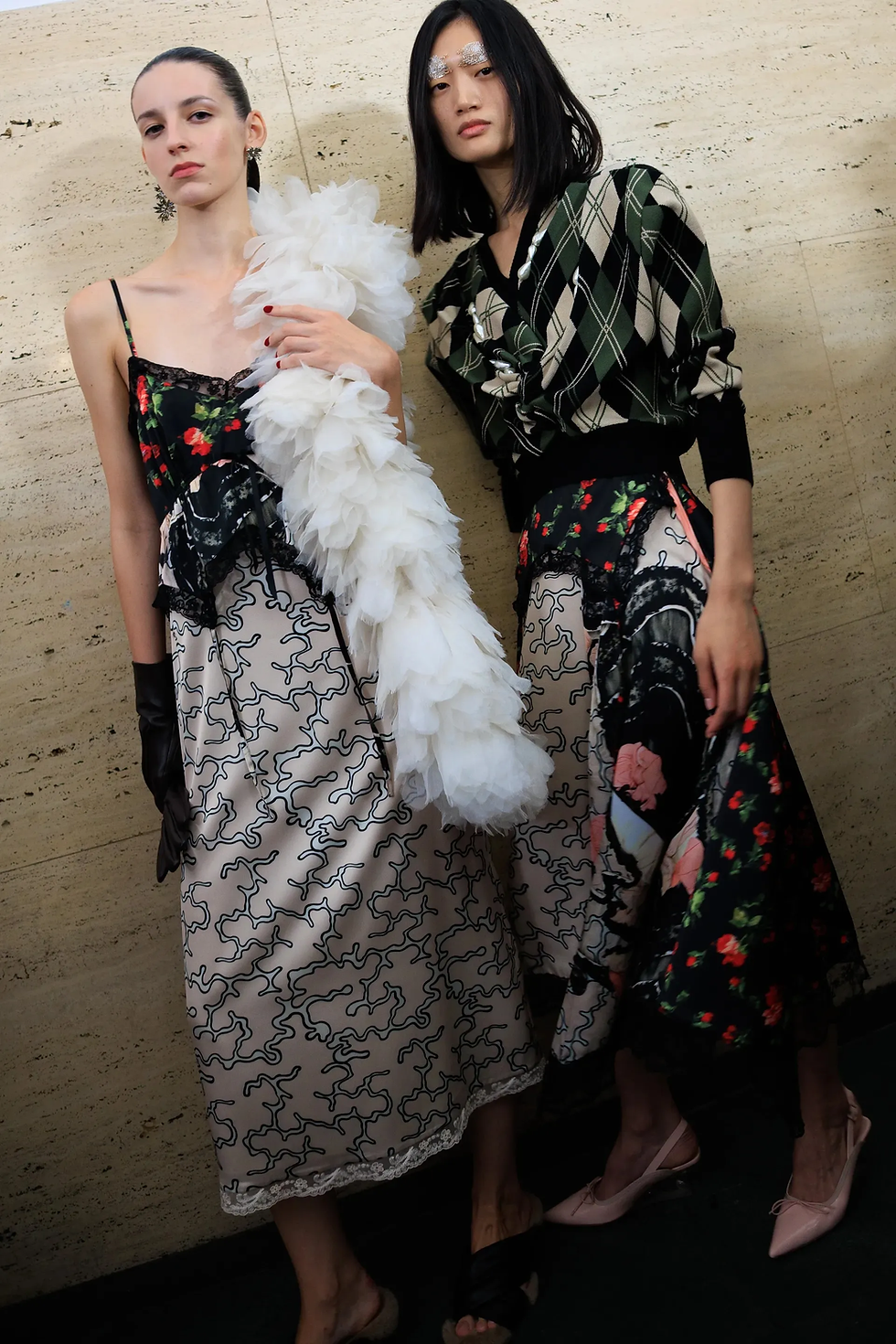
The clothes matched that energy. McQueen-influenced tight flares appeared across collections, shocking pink interrupted traditionally darker palettes, bralettes moved into visible styling, and designers looked beyond the familiar ’90s and Y2K references toward the power shoulders, saturated colours and metallic decadence of the 1980s.
RESTRAINT → EXPRESSION → EXCESS
➡️ Viral Insight: Fashion is becoming noticeable again. London SS27 turns colour, silhouette, nostalgia and attitude into tools for creating the kind of looks that demand attention rather than quietly signalling taste.
Why Consumers Are Changing: Standing Out Feels Exciting Again
After fashion cycles dominated by understatement and controlled aesthetics, the London collections suggest renewed appetite for clothes with more personality. Hot pink is deliberately difficult to ignore, tight flares change how the wearer moves, lingerie becomes outerwear and ’80s references bring back exaggerated shoulders, metallics and unapologetic colour.
The shift is ultimately about permission to be more visible. Petra Fagerström described her imagined woman as someone who allows herself pleasure “without apology”, while wanting observers to think, “I want to be her.” That captures the deeper consumer proposition behind the season: clothes can create confidence, presence and desire rather than merely conform to an accepted aesthetic.
DON’T JUST LOOK GOOD → LOOK UNFORGETTABLE
➡️ Consumer Insight: Self-expression is moving from controlled to conspicuous. Consumers are being offered fashion that encourages them to occupy more visual space through colour, shape, attitude and pleasure.
Who Is Driving This Trend: The Confident Individualists
These consumers use fashion as an active expression of personality rather than simply as a marker of good taste. They are attracted to pieces that create presence — a shocking-pink suit, an exaggerated shoulder, a low-slung flare or a visible bralette — because the wardrobe becomes part of how they communicate confidence.
They are also comfortable mixing references rather than following one tightly defined aesthetic. London SS27 combines ’80s excess, lingerie, grunge, tailoring, sportswear and designer collaborations, creating a fashion environment where individuality comes from choosing, combining and exaggerating different codes.
Core Motivations: Permission to Be Seen
Self-Expression – Show More PersonalityConsumers want to use fashion to make their individual identity immediately visible.
Confidence – Take Up More SpaceConsumers want to wear clothes that create presence and make them feel more assertive.
Pleasure – Enjoy Fashion Without ApologyConsumers want to embrace colour, sensuality and excess because dressing up can simply feel good.
Individuality – Break the UniformConsumers want to move beyond safe or predictable aesthetics and build looks that feel distinctly their own.
Attention – Give Me Something NoticeableConsumers want to wear pieces with enough visual impact to stand out in both physical and social environments.
Nostalgia – Rediscover Forgotten ExcessConsumers want to revisit expressive eras of fashion and reinterpret their most recognizable codes for the present.
➡️ Audience Insight: The confident individualist does not want fashion to disappear into the background. Clothing becomes a tool for visibility, personality and pleasure.
Why This Trend Matters Right Now: Restraint Is Losing Its Monopoly
London SS27 does not present one uniform replacement for minimalism. Instead, its significance comes from the coexistence of multiple assertive ideas: saturated pink, slim flares, exposed bras, strong shoulders, metallic footwear and ’80s references. The common denominator is visibility.
The shift also coincides with renewed energy around London itself. Major returns, emerging designers, unusual venues and more visible international buyers helped create the sense that British fashion was generating cultural excitement again rather than simply participating in another seasonal calendar.
QUIET FASHION → LOUDER PERSONALITY
➡️ Why It Matters: Fashion is rediscovering excitement as a source of value. When consumers are encouraged to notice, desire, discuss and imitate a look, visibility itself becomes commercially powerful.
Viral Potential: Bold Fashion Is Built to Be Seen
Shocking pink, extreme silhouettes, visible lingerie and exaggerated ’80s references translate immediately into recognizable imagery. Vogue notes that a fluoro-pink jacket at A Letter became one of the most photographed looks of the day, while hot pink appeared across collections including Talia Byre, Aaron Esh and Roksanda.
Collaborations add another engine for attention. Chopova Lowena with Dr Martens, Aaron Esh with On, Talia Byre with Topshop, Ahluwalia with Puma and Mowalola with Nike turn designer aesthetics into more accessible products. Vogue points to Simone Rocha’s Adidas collaboration selling out shortly before LFW as evidence of the excitement these entry-point products can generate.
SEE IT → SHARE IT → WANT IT
➡️ Viral Potential: Expressive fashion naturally creates conversation because its value depends partly on being noticed. Strong colour, recognizable references and high-profile collaborations give brands visual ideas that can move quickly from runway spectacle to social desire.
Marketing Strategy: Turn Expression Into Excitement
The opportunity is not simply to make everything louder. Brands can translate the renewed appetite for self-expression into distinctive products, accessible entry points and culturally visible moments.
Strategy Area | Opportunity |
Product – Expressive Design | Turn Up the Personality. Use stronger colour, distinctive silhouettes, visible layering and exaggerated proportions to create products with immediate identity. |
Pricing – Accessible Aspiration | Create Entry Points Into the Look. Use footwear, accessories and collaborations to give wider audiences access to designer aesthetics without requiring investment in an entire runway look. |
Promotion – Cultural Spectacle | Make Fashion Feel Like a Moment. Build launches around memorable shows, personalities, unexpected locations and visually distinctive ideas that generate conversation beyond the runway. |
Distribution – Collaboration | Connect Creativity With Scale. Partner designer identity with established footwear, sportswear and mainstream brands to take directional aesthetics to larger audiences. |
Innovation – Expressive Nostalgia | Find the Next Decade to Reinvent. Move beyond saturated ’90s and Y2K references by rediscovering overlooked eras and translating their strongest visual codes for contemporary consumers. |
➡️ Strategic Insight: Bold self-expression creates commercial value when spectacle is connected to accessibility. The runway generates desire, while collaborations and entry-point products give broader audiences a realistic way to participate.
Trend Snapshot: Fashion Turns the Volume Back Up
London Fashion Week SS27 suggests a movement away from fashion dominated by restraint toward a more expressive landscape where colour, silhouette, nostalgia and personality compete for attention.
Trend Dimension | Insight |
Broad Trend – Bold Self-Expression | Consumers are moving toward more visible, expressive and pleasure-led forms of identity, creating space for fashion that attracts attention rather than quietly blending in. |
Industry Trend – Fashion Maximalism | Fashion Gets Its Swagger Back. Hot pink, tight flares, lingerie, strong shoulders, metallics and ’80s excess point toward a more assertive fashion language. |
Lifestyle Trend – Confidence | Dress to Be Seen. Clothing becomes a way to project confidence, pleasure and individuality rather than simply demonstrate polished taste. |
Strategy – Cultural Excitement | Make Fashion Feel Like a Moment. Spectacles, comebacks, unusual settings and distinctive collections can turn fashion into cultural conversation. |
Consumer Motivation – Self-Expression | Let Me Stand Out. Consumers use bold colour, silhouette and styling to make personality more visible. |
Business Opportunity – Accessible Collaboration | Give Everyone an Entry Point. Designer collaborations with established brands can translate runway creativity into accessible, high-interest products. |
Innovation Outlook – Expressive Nostalgia | Bring Back the Past Louder. Fashion can move beyond ’90s and Y2K nostalgia by rediscovering the colour, proportions and decadence of the 1980s and other underused eras. |
➡️ Trend Snapshot Insight: BOLD SELF-EXPRESSION → FASHION MAXIMALISM → CONFIDENCE. London SS27 shows fashion moving toward greater visibility, with consumers given stronger tools to express personality through colour, silhouette, nostalgia and attitude.
Final Thoughts: Fashion Is Ready to Be Noticed Again
London Fashion Week SS27 suggests that fashion’s next chapter may be less interested in perfect restraint. Hot pink, tight flares, lingerie and ’80s excess all point toward a wardrobe designed to create presence, while the renewed excitement surrounding London itself reinforces the sense that fashion wants to feel culturally consequential again.
The opportunity extends beyond maximalism as a temporary aesthetic. What matters is the permission to experiment, exaggerate and be visible — opening space for brands to offer consumers more distinctive ways to communicate identity while turning fashion back into something people actively want to talk about.
➡️ Final Insight: Consumers are rediscovering fashion as a tool for visible self-expression rather than quiet conformity. The wider shift gives brands permission to compete through colour, personality, spectacle and distinctive design. After years of restraint, fashion’s next status signal may simply be having the confidence to be seen.


Comments