


Impact Is the New Strategy: Brands Turn Social Challenges into Scalable Business Opportunities
- InsightTrendsWorld

- Apr 25
- 8 min read
Operational Activism: Brands embed social impact directly into business infrastructure
Social responsibility becomes business strategy
The core idea of this trend is that brands are shifting from symbolic CSR efforts to operational activism, where social issues are addressed through core business models and infrastructure. The tension lies between purpose-driven messaging and real economic integration, as brands move from awareness campaigns to tangible impact.
Emotionally, this trend resonates through dignity, opportunity, and inclusion, reframing vulnerable populations as contributors rather than recipients. Culturally, it reflects a shift toward accountability and action, where consumers expect brands to play an active role in solving societal challenges. Symbolically, initiatives like Tecate’s program represent a new model where impact is embedded, not externalized.
Trend Overview: Workforce integration becomes a strategic lever for both social impact and business growth
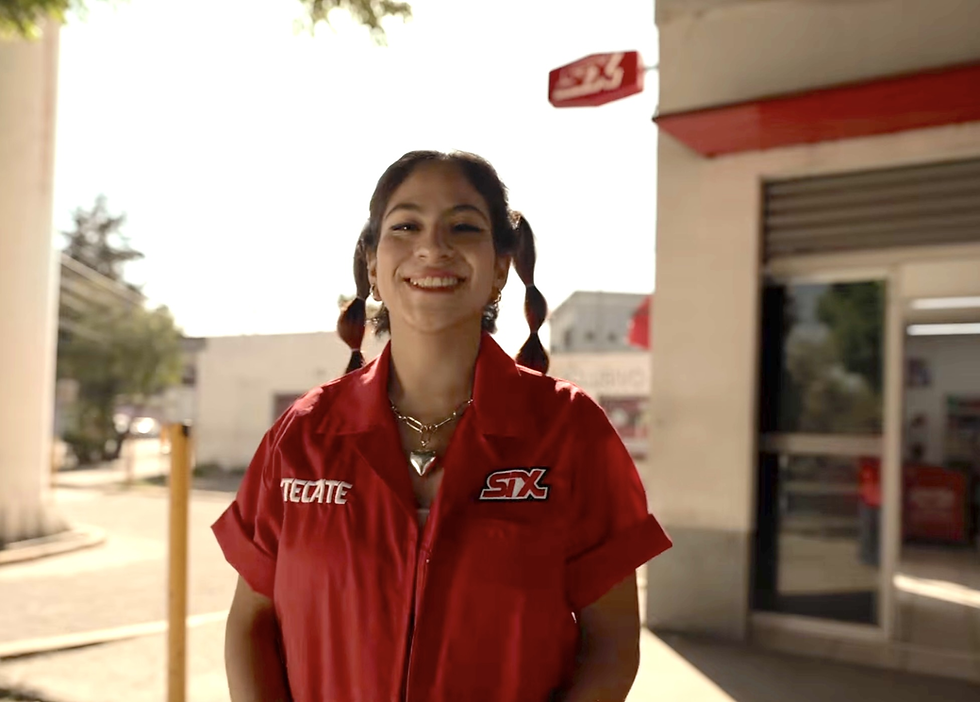
• What is happening: Brands like Tecate are integrating deported migrants into existing business ecosystems through training and employment
• Why it matters: This transforms social challenges into scalable economic opportunities
• Cultural shift: Society is moving from charity-based thinking to empowerment and inclusion
• Consumer relevance: Audiences increasingly support brands that deliver real, measurable impact
• Market implication: Companies must align social initiatives with operational strategy
Trend Description: Workforce integration, ecosystem partnerships, and infrastructure-driven impact redefine CSR
• Context: Rising migration and repatriation create economic and social challenges in local markets
• How it works: Brands partner with organizations like FUNDES and retail networks like Tiendas SIX to provide training, employment, and entrepreneurial pathways
• Key drivers: Labor shortages, social responsibility expectations, and long-term economic value creation
• Why it spreads: Integrated models create mutual benefit—social impact and business efficiency
• Where it is seen: Retail, supply chains, workforce development programs
• Key Players & Innovators: Tecate, Heineken, FUNDES
• Future: This is a long-term structural shift, redefining how companies approach social impact
Insight: The future of brand impact lies in embedding purpose into operational systems
This shows that brands are moving from symbolic responsibility to structural impact.
It matters because integrated solutions create sustainable, scalable change.
The value created is economic growth, social inclusion, and brand trust.
The future implication is that companies must design business models that inherently solve societal challenges.
Why it is Trending: Migration pressures, labor gaps, and demand for authentic impact push brands toward operational solutions
The trend is accelerating as global migration dynamics—such as the deportation of over 160,000 Mexican migrants—create urgent economic and social challenges. At the same time, industries face labor shortages and talent gaps, pushing companies to rethink workforce strategies. Brands like Tecate are responding by embedding solutions directly into their operations rather than relying on symbolic campaigns. Cultural expectations have also shifted, with consumers demanding authentic, measurable impact rather than performative purpose. From a market perspective, this creates a new model where social integration becomes a competitive advantage.
Elements Driving the Trend: Workforce integration, ecosystem partnerships, and business alignment fuel adoption
The core appeal lies in the alignment between social good and business value, making impact sustainable rather than temporary. The narrative hook is rooted in reframing displaced populations as economic contributors, not liabilities. Institutional strength plays a role, with organizations like FUNDES providing expertise in workforce integration. The format is scalable, leveraging existing infrastructure such as Tiendas SIX to create real opportunities. Additionally, the integration of training, mentorship, and employment ensures long-term outcomes rather than short-term fixes.
Virality of Trend (Social Media Coverage): Purpose-driven storytelling and systemic impact drive attention
The trend gains visibility through purpose-led narratives that highlight real-world impact, differentiating it from traditional marketing campaigns. Online discussions focus on authenticity, corporate responsibility, and the effectiveness of such initiatives. Emotional triggers include empathy, respect, and optimism, encouraging positive engagement. This creates a loop where meaningful action drives attention, and attention reinforces brand credibility.
Consumer Reception: Socially conscious audiences support brands that deliver real impact
• Consumer Description: Millennials & Gen Z (The Impact-Driven Consumers)
Demographics: Socially aware, ethically driven, and globally informed audiences
• Age: 20–45 — actively engaged with social and economic issues
• Gender: All
• Education: University educated or socially informed
• Income: Middle to upper-middle income
Lifestyle: Purpose-driven, informed, and socially engaged behavior patterns
• Shopping behavior: Prefers brands aligned with ethical and social values
• Media behavior: Consumes news, social impact content, and brand storytelling
• Lifestyle behavior: Supports causes, engages in community discussions
• Decision drivers: Authenticity, impact, transparency
• Values: Responsibility, inclusion, fairness
• Expectation shift: From brand messaging to real-world action and accountability
Consumer Motivation: Driven by trust, impact, and alignment with values
• Desire to support brands making tangible societal contributions
• Interest in initiatives that create long-term change
• Engagement with stories of empowerment and opportunity
• Preference for brands that align business with purpose
The trend is gaining popularity because: Social responsibility aligns with economic opportunity
• Migration dynamics: Workforce displacement creates urgent need for solutions
• Industry opportunity: Companies leverage untapped labor pools for growth
• Audience alignment: Consumers demand authentic, measurable impact
• Motivation alignment: Consumers are driven by ethics, trust, and social responsibility
Insight: Social impact is becoming a core driver of business strategy and consumer trust
This shows that brands are integrating purpose directly into operations rather than treating it as an add-on.
It matters because trust is increasingly built through action, not messaging.
The value created is stronger brand loyalty, workforce expansion, and social inclusion.
The implication is that companies must design impact-driven systems that deliver both social and economic value.
Trends 2026: Purpose integration, workforce inclusion, and system-level impact redefine brand strategy
The future of brand strategy will be defined by deep integration of social impact into operational systems, rather than surface-level campaigns. Companies will increasingly treat social challenges—such as migration, inequality, and workforce gaps—as opportunities for innovation and growth. Workforce inclusion will become a strategic priority, unlocking new talent pools while driving measurable impact. At the same time, partnerships between corporations, nonprofits, and local ecosystems will enable scalable, system-level solutions. Ultimately, brands will compete not only on products, but on their ability to create value across economic and social dimensions.
Trend Elements: Impact-driven business systems transforming how brands operate
• Operational impact integrationo Social initiatives are embedded into core business functions
• Workforce inclusion modelso Underserved populations are integrated into labor systems
• Ecosystem partnership frameworkso Corporations collaborate with NGOs and local networks
• Supply chain activationo Existing infrastructure is used to deliver impact
• Skill-building pipelineso Training programs prepare participants for long-term roles
• Entrepreneurship pathwayso Programs enable participants to build independent income
• Purpose-profit alignmento Social good and business outcomes reinforce each other
• Scalable impact systemso Models are designed for expansion across regions
• Trust-driven brandingo Credibility is built through measurable action
• Local economic activationo Initiatives strengthen community-level economies
Summary of Trends: Operational impact transforms brands into engines of social and economic value
Main Trend: Operational Activism — brands embed impact into business systems; strategic implication: integrate purpose into operations
Social Trend: Inclusive Growth Models — economic participation expands to underserved groups; strategic implication: build inclusive workforce strategies
Industry Trend: Purpose-Driven Infrastructure — supply chains become tools for impact; strategic implication: activate existing systems for social value
Main Strategy: Ecosystem Integration — partnerships drive scalable solutions; strategic implication: collaborate across sectors
Main Consumer Motivation: Trust Through Action — consumers value measurable impact; strategic implication: demonstrate real outcomes
Cross-Industry Expansion: Impact Economy redefining how value is created across business and society
Impact Economy is emerging as a dominant force, where businesses are evaluated not only by financial performance but by their ability to generate measurable social and economic outcomes. This shift reflects a broader expectation that companies play an active role in addressing systemic challenges, integrating purpose into their core operations rather than isolating it within CSR functions.
At its core, this movement prioritizes value creation across multiple dimensions—economic, social, and community-driven. It redefines success as the ability to generate long-term, sustainable impact while maintaining profitability. Across industries, this creates a new competitive landscape where organizations that align business strategy with societal needs gain trust, relevance, and long-term growth potential.
Expansion Factors: Impact-driven systems reshape how businesses operate and grow
• Trend: Operational Activism transforming brand strategy
• Why: Social challenges demand scalable, systemic solutions
• Impact: Stronger communities, expanded workforce participation
• Industries: Retail, manufacturing, logistics, services
• Strategy: Embed impact into core operations
• Consumers: Socially conscious, value-driven audiences
• Demographics: Millennials and Gen Z (core 20–45 audience)
• Lifestyle: Purpose-driven, informed, socially engaged
• Buying Behavior: Supports brands with measurable impact
• Expectation Shift: From CSR messaging to operational accountability
Insight: Business success will be defined by the ability to create shared economic and social value
This shows that companies are evolving into multi-dimensional value creators beyond profit.
It matters because impact is becoming a key driver of trust and differentiation.
The value created is sustainable growth, social inclusion, and long-term relevance.
The implication is that brands must build systems that deliver both economic performance and societal benefit.
Innovation Platforms: Integrated workforce ecosystems turning social challenges into scalable business infrastructure
The rise of operational activism is enabled by platforms that connect corporate infrastructure, nonprofit expertise, and local economic systems into unified impact models. Initiatives like those led by Tecate demonstrate how brands can activate existing assets—such as retail networks and supply chains—to create employment pipelines and training systems. Partnerships with organizations like FUNDES ensure that programs are not only scalable but also grounded in long-term workforce integration expertise.
At the same time, these platforms transform traditional CSR into operational frameworks, where impact is continuously generated rather than delivered through isolated campaigns. Retail ecosystems like Tiendas SIX provide the physical infrastructure for job creation, while training and mentorship systems ensure sustainability. The result is an innovation model where business growth and social impact become interdependent, creating long-term value for both companies and communities.
Innovation Drivers: Systems enabling scalable, impact-driven business models
• Infrastructure-based impact systemso Existing business networks are used to deliver social solutions
• Cross-sector partnership modelso Corporations collaborate with nonprofits and local organizations
• Workforce development pipelineso Training programs prepare participants for employment
• Retail network activationo Physical locations create accessible job opportunities
• Long-term integration frameworkso Participants are supported beyond initial hiring
• Entrepreneurship enablement systemso Pathways allow transition into independent business ownership
• Scalable expansion modelso Programs grow alongside business operations
• Purpose-profit alignment engineso Social impact directly supports business performance
• Data and outcome tracking systemso Measurable impact reinforces credibility
• Community-centered designo Programs address local economic realities
Summary of the Trend: Operational activism transforms brands into engines of inclusive growth
• Trend essence: Operational Activism turning social challenges into business opportunities
• Key drivers: Migration dynamics, labor needs, consumer expectations
• Key players: Tecate, Heineken, FUNDES
• Validation signals: Workforce programs, partnerships, measurable outcomes
• Why it matters: Business and social impact become interconnected
• Key success factors: Scalability, authenticity, operational integration
• Where it is happening: Retail, supply chains, workforce systems
• Audience Relevance: Strong among Millennials and Gen Z
• Social Impact: Increased inclusion and economic opportunity
Conclusion: Operational activism reflects a shift toward systems that create shared value at scale
Insights: Brands are evolving into platforms that generate both economic and social value through integrated systems.Industry Insight: Companies that embed impact into operations will gain competitive advantage and long-term relevance.Consumer Insight: Consumers increasingly trust brands that demonstrate real, measurable contributions to society.Social Insight: Collaborative ecosystems between business and nonprofits enable scalable solutions to systemic challenges.Cultural/Brand Insight: The rise of operational activism signals a new era where purpose is not communicated—it is executed through the core of the business.


It’s eye-opening to see how forward-thinking brands merge social good with long-term business growth, moving far beyond surface-level CSR campaigns. During brief work breaks I test powerful roguelike deck synergies and run strategies on slay the spire 2 wiki and standardize all brand impact showcase shots to matching social media aspect ratios using bulk image crop for consistent, professional blog thumbnails.
This article delivers a game-changing mindset shift for brand marketers, showing how pressing social challenges can evolve into sustainable, scalable revenue streams instead of just charity projects. I source impact campaign infographics and brand case study visuals from industry article URLs with download images from link and refine all marketing gallery assets uniformly via bulk image processing to craft polished social content for my business blog readership.
A smart take on how purpose-driven brands are finding growth by solving real-world problems—not just writing checks. For more business insights, visit slay the spire 2 wiki. Impact isn't just good ethics; it's good strategy.