
Snacking: Functional Convenience Design: Packaging Evolves to Match On-the-Go Consumption
- InsightTrendsWorld

- 16 hours ago
- 7 min read
Why The Trend Is Emerging: Everyday Frictions Are Driving Micro-Innovation in Consumption
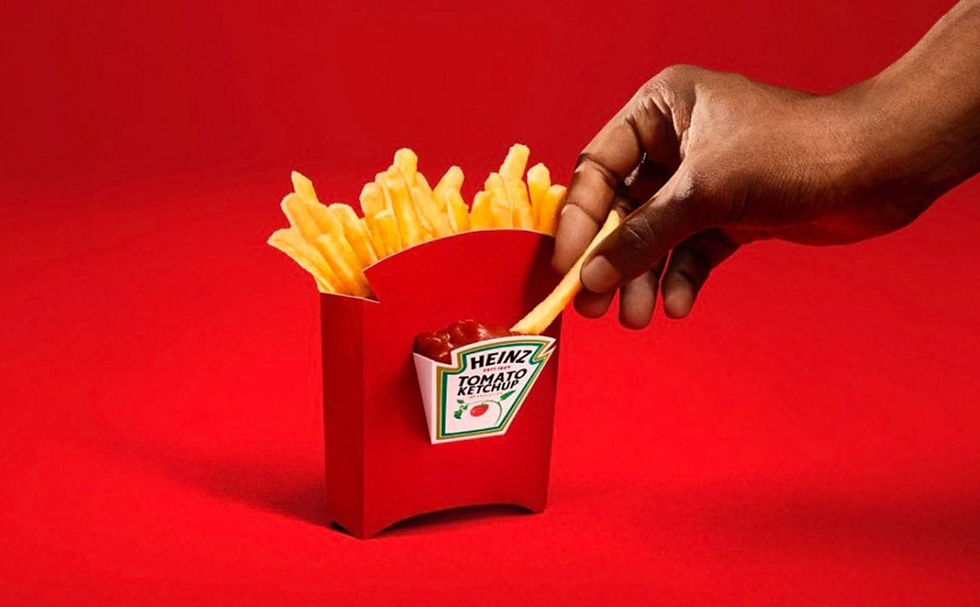
The launch of the HEINZ Dipper fry box with a built-in ketchup compartment reflects a broader shift where brands focus on solving small but universal consumer pain points through design. As eating habits move increasingly toward on-the-go, informal and mobile occasions, traditional packaging formats no longer match how consumers actually consume food. The simple act of dipping fries into ketchup—once designed for seated dining—becomes inconvenient in cars, stadiums or public spaces. By redesigning the fry box itself, HEINZ transforms packaging into a functional tool that enhances usability, signaling a wider trend where convenience-driven design becomes a core driver of product innovation.
• On-the-go consumption is increasing. More meals are eaten outside traditional dining environments.
• Small frictions create large dissatisfaction. Everyday inconveniences (spills, awkward handling) impact user experience.
• Packaging becomes part of the product. Design shifts from passive container to active utility.
• Consumer expectations evolve toward seamless experiences. Ease and cleanliness are now baseline requirements.
• Data-driven insights fuel innovation. High incidence of spills and skipped condiments signals unmet needs.
Virality of Trend (Social Media Coverage): Simple Innovations Drive Shareability
Functional yet clever packaging innovations like the HEINZ Dipper are highly shareable on social media because they solve relatable problems. Consumers often engage with content that showcases “why didn’t this exist before?” solutions, leading to organic virality. Visual demonstrations of mess-free dipping and convenience amplify engagement across platforms like TikTok and Instagram.
Where it is seen (in what industries): Convenience Design Expands Across Sectors
Quick-service restaurants: packaging innovations improve portability and ease of eating.
Food delivery platforms: packaging evolves to maintain quality and usability in transit.
Consumer packaged goods: products are redesigned for convenience and mobility.
Retail and FMCG: packaging integrates functionality beyond storage.
Sports and entertainment venues: food formats adapt to standing and mobile consumption.
The rise of functional convenience design highlights how even small innovations can drive meaningful consumer impact. As lifestyles become more mobile, brands must rethink how products are used in real-world contexts. Packaging is no longer secondary—it plays a central role in shaping the overall experience. This shift opens opportunities for brands to differentiate through usability rather than product alone.
Description Of The Consumers: The On-the-Go Convenience Seeker
The consumers driving this trend are individuals who prioritize ease, efficiency and seamless experiences in their daily routines. They frequently eat outside traditional dining settings and expect products to adapt to their lifestyles.
• Audience archetype — The Mobile Convenience Consumer. Individuals who value products that fit into fast-paced, on-the-go lifestyles.
• Demographic profile. Urban consumers, commuters, Gen Z and millennials with busy schedules.
• Core behavioural trait. They frequently eat meals in transit or in non-traditional settings.
• Core mindset. Products should adapt to their lifestyle, not the other way around.
• Emotional driver. Frustration with inconvenience motivates demand for better solutions.
• Cultural preference. They favor brands that prioritize usability and practical design.
• Decision-making pattern. Convenience and ease of use strongly influence product choice.
These consumers expect brands to anticipate their needs and remove friction from everyday experiences. Their lifestyles require products that are intuitive and efficient. As they encounter improved solutions, their expectations rise across categories. This behavior pushes brands to continuously innovate around convenience.
Main Audience Motivation: Eliminating Friction in Everyday Experiences
The core motivation behind this trend is the desire to simplify everyday actions. Consumers increasingly value products that reduce effort, save time and eliminate inconvenience, especially in routine activities like eating.
• Primary motivation. Consumers want seamless, mess-free experiences.
• Secondary motivation. Convenience enhances enjoyment and reduces frustration.
• Emotional tension. Desire for ease contrasts with existing product limitations.
• Behavioural outcome. Consumers favor products that simplify usage.
• Identity signal. Choosing convenient solutions reflects efficiency-driven lifestyles.
This motivation reflects a broader cultural shift toward efficiency and optimization. Consumers are less tolerant of friction in daily interactions and expect products to function intuitively. Even small improvements can significantly enhance perceived value. As a result, convenience becomes a key differentiator across industries.
Trends 2026: Micro-Innovation in Packaging Drives Macro Impact
The HEINZ Dipper demonstrates how small design changes can significantly improve user experience and influence consumer behavior. Packaging innovation is increasingly becoming a strategic focus area for brands.
• What is influencing the shift — changing consumption habits and increased mobility.
• Macro trends influencing the shift — urbanization, convenience culture and on-demand lifestyles.
• Is it bringing novelty or innovation to consumers? Yes, by redefining how products are used in real-life contexts.
• Can it create meaningful competitive differentiation? Absolutely, as functional design enhances user experience.
• How can brands operationalize this shift in daily business? By identifying friction points and redesigning products around usability.
Trend Table: Convenience-Led Product Design
Trend Name | Description (Insight-Led Explanation) | Strategic Implications |
Main Trend – Functional Convenience Design | Products are redesigned to eliminate friction and improve usability in real-world contexts | Enhances user experience |
Social Trend – On-the-Go Consumption Culture | Consumers increasingly eat and use products outside traditional settings | Drives demand for portability |
Industry Trend – Packaging as Experience | Packaging evolves from container to functional product component | Creates differentiation |
Related Trend 1 – Micro-Innovation Thinking | Small design changes generate significant impact | Accelerates product iteration |
Related Trend 2 – Mess-Free Consumption Solutions | Products aim to reduce spills and inconvenience | Improves satisfaction |
Related Trend 3 – Experience Optimization | Brands focus on improving every touchpoint of product use | Strengthens loyalty |
Main Strategy – Frictionless Design Innovation | Identify and solve everyday usage challenges through design | Drives adoption |
Consumer Motivation – Effortless Consumption | Consumers seek products that simplify daily actions | Increases preference |
These trends highlight how convenience is becoming a central driver of product innovation. As consumers adopt more mobile lifestyles, brands must rethink how products are used outside traditional contexts. Packaging and design play a critical role in delivering seamless experiences. Ultimately, small innovations can create significant competitive advantages.
Final Insights: Convenience Is Becoming a Core Expectation, Not a Differentiator
The HEINZ Dipper illustrates how solving a simple, everyday problem can create meaningful consumer value. By addressing the inconvenience of dipping fries on the go, the brand enhances both functionality and enjoyment.
Industry InsightPackaging innovation is increasingly central to product differentiation and user experience.Consumer InsightConsumers prioritize ease of use and convenience in everyday interactions.Social InsightOn-the-go lifestyles are reshaping how products are designed and consumed.Cultural / Brand InsightBrands that eliminate friction in small moments build stronger everyday relevance.
Convenience is no longer a luxury—it is an expectation embedded in modern consumer behavior. As lifestyles become faster and more mobile, even small inefficiencies become noticeable. Brands that proactively address these friction points can enhance customer satisfaction and loyalty. Ultimately, the future of product design lies in making everyday experiences simpler, smoother and more intuitive.
Innovation Platforms: Scaling Convenience-Driven Design
• Integrated packaging solutionsPackaging becomes multifunctional and enhances product usability.
• On-the-go product formatsProducts are designed specifically for mobile consumption.
• User-centered design innovationBrands focus on real-world usage scenarios to guide development.
• Cross-industry convenience solutionsDesign principles apply across food, retail and consumer goods.
• Data-driven product redesignConsumer behavior insights inform micro-innovation strategies.
These innovation platforms demonstrate how convenience-driven design can scale across industries. By focusing on real consumer pain points, brands can develop solutions that enhance everyday experiences. Small design changes can create significant improvements in usability and satisfaction. Ultimately, convenience innovation represents a powerful opportunity for brands to differentiate and grow.
Functional Convenience: Design That Removes Friction From Everyday Experiences
The Functional Convenience trend reflects a shift where products, services and packaging are intentionally designed to eliminate small, everyday frictions. What once were minor inconveniences—mess, inefficiency, effort—are now critical moments shaping consumer satisfaction. As lifestyles become faster, more mobile and experience-driven, consumers expect solutions that are intuitive, seamless and require minimal effort. This trend signals a move from passive product design → active problem-solving design, where usability becomes a core value proposition.
How the Trend Appeared: Everyday Pain Points Become Innovation Opportunities
• Increased on-the-go lifestyles exposed gaps between product design and real usage contexts.
• Consumers began prioritizing ease, speed and simplicity in daily interactions.
• Brands identified recurring friction points (mess, time, complexity) as innovation triggers.
• Packaging and product design evolved from static formats to functional, user-centered solutions.
Why the Trend Is Trending: Convenience Is Now a Baseline Expectation
• Time scarcity: consumers value efficiency in everyday routines.
• Mobile lifestyles: more activities happen outside traditional environments.
• Low tolerance for friction: even small inconveniences impact satisfaction.
• Experience economy: usability is part of the overall brand experience.
Consumer Motivation: Effortless, Seamless Living
• Desire to reduce effort and simplify daily tasks.
• Preference for intuitive, easy-to-use products.
• Need for clean, mess-free and efficient solutions.
• Expectation that products should adapt to their lifestyle.
Industries Impacted: Convenience Redefines Product Design Across Sectors
• Food & QSR: packaging and formats optimized for on-the-go consumption.
• Retail & FMCG: products redesigned for ease of use and accessibility.
• Technology: interfaces and services simplified for frictionless interaction.
• Mobility & travel: services optimized for speed and seamless transitions.
• Home & lifestyle: tools and products designed for efficiency and ease.
How to Benefit From the Trend: Design Around Real-Life Usage
• Identify everyday friction points in product or service usage.
• Redesign products to be more intuitive and user-friendly.
• Focus on small improvements that create noticeable impact.
• Test solutions in real-world, on-the-go scenarios.
Strategic Response: Make Convenience a Core Innovation Pillar
• Shift from product-first to experience-first design thinking.
• Treat convenience as a competitive differentiator, not an add-on.
• Integrate functionality into packaging and product design.
• Continuously iterate based on consumer behavior insights.
Target Consumers: The Efficiency-Driven, On-the-Go Consumer
This trend resonates strongly with Gen Z, millennials and urban consumers who lead fast-paced, mobile lifestyles. These consumers prioritize efficiency, expect seamless experiences and quickly adopt solutions that simplify their routines.
Link to the Main Trend: Functional Convenience Within Experience Optimization
Functional Convenience is part of the broader Experience Optimization trend, where brands compete by improving every interaction point. As consumers increasingly value ease and efficiency, removing friction becomes essential to delivering meaningful, everyday experiences.

Comments