


TikTok Ate Instagram: Beauty's Attention Economy Has a New King
- InsightTrendsWorld

- 5 hours ago
- 12 min read
TikTok Ate Instagram: Beauty's Attention Economy Has a New King
Beauty's Social Power Shift: When Algorithms Replace Aspirations
Trend Category Framing: Platform-Driven Beauty Discovery — the shift from curated aspiration to algorithmic virality as the primary engine of beauty brand value.
TikTok just dethroned Instagram as beauty's most valuable media platform — and it happened faster than anyone predicted.
The contradiction is structural: Instagram built beauty's digital culture over a decade; TikTok dismantled that advantage in under three years. The platform that wins attention now wins purchase intent, brand equity, and cultural relevance simultaneously.
This is not a content story — it is a power story. Beauty brands no longer control their narrative; algorithms do. The consumer is no longer a follower; they are a discoverer. Earned media has replaced paid media as the truest signal of brand health, and TikTok has become the arena where that signal is loudest.
Trend Overview: TikTok Is Now Where Beauty Brands Win or Lose
Beauty's $40 billion EMV in 2025 confirms that social media is no longer a marketing channel — it is the market itself.
What is happening: TikTok generated $18.1B in beauty EMV in 2025 — up 55% YoY — surpassing Instagram's $17B for the first time, marking a definitive platform power shift.
Why it matters: EMV is the most honest measure of brand resonance — it cannot be bought, only earned — making TikTok's lead a structural signal, not a trend blip.
Cultural shift: Beauty discovery has moved from aspirational editorial (Instagram's DNA) to participatory virality (TikTok's DNA) — consumers now find brands through entertainment, not advertising.
Consumer relevance: The TikTok beauty consumer is an active participant — creating, sharing, and amplifying content — not a passive audience absorbing brand messages.
Market implication: Brands that cannot generate organic TikTok traction are structurally disadvantaged regardless of product quality, heritage, or paid media spend.
Trend Description: How TikTok Became Beauty's Most Valuable Real Estate
TikTok's beauty dominance is not accidental — it is the product of a discovery algorithm that rewards authenticity, entertainment, and community over production value and follower count.
Context: Beauty has always been social-media-native, but TikTok's algorithm democratizes discovery — a single viral video from an unknown creator can outperform a global campaign.
How it works: EMV accrues through creator content, user reviews, tutorials, and reactions — brand value is built by what consumers say, not what brands spend.
Key drivers: TikTok Shop integration, creator affiliate programs, viral beauty challenges, and the platform's unmatched ability to turn niche products into mass phenomena overnight.
Why it spreads: Beauty content on TikTok is inherently demonstrable — transformation, texture, and before/after are perfectly suited to short-form video, driving shares and saves at scale.
Where it is seen: L'Oréal Paris ($1 global EMV leader), Rhode (+83% growth), Rare Beauty, Medicube (+286%), fragrance brands including Chanel, YSL, and Gisou.
Key Players & Innovators: TikTok, WeArisma, Rhode (Hailey Bieber), Medicube, Rare Beauty, L'Oréal Paris, Prada Beauty, Gisou, Victoria's Secret.
Future: Short-term — TikTok's EMV lead widens as Shop integration deepens and creator ecosystems mature; long-term — brands that build TikTok-native content strategies will own the next generation of beauty consumers globally.
Insight: TikTok's EMV lead signals that beauty's value chain has permanently reorganized around algorithmic discovery.
This shows that earned media — not paid — is now the primary currency of beauty brand equity, and TikTok's algorithm is the most efficient generator of it.
It matters because brands that rely on Instagram's aspirational model are losing ground to brands built for participation, entertainment, and community-driven virality.
The value created is compounding: TikTok EMV drives awareness, trial, and purchase simultaneously — collapsing the traditional marketing funnel into a single content moment.
The implication is that every beauty brand must now operate as a content studio optimized for TikTok's discovery logic — or cede cultural relevance to brands that do
Why it is Trending: Beauty's Discovery Engine Moved Platforms and the Industry Wasn't Ready
Algorithmic discovery replaced social following as the primary path to brand awareness — eliminating legacy Instagram advantages overnight. TikTok Shop's commerce integration matured in 2024–2025, collapsing the gap between content and purchase at exactly the moment consumers were most receptive to discovery-led buying. The format is structurally suited to beauty — transformation, texture, and real-person results perform better in short-form video than any other medium. Brands that understood this early — Rhode, Rare Beauty, Medicube — built EMV leads that heritage brands are now scrambling to close. TikTok is no longer a channel beauty brands choose — it is the arena where brand value is won or lost.
Elements Driving the Trend: Why Algorithms Replaced Aspirations as Beauty's Most Valuable Asset
TikTok's algorithm rewards entertainment and authenticity over production value — giving unknown creators the same discovery potential as global conglomerates. The narrative hook is democratization: any product, any creator can go viral, making TikTok the most unpredictable and powerful launch platform in beauty. Creator affiliate programs and TikTok Shop have made content economically self-sustaining — creators produce beauty content at scale, flooding the platform with organic brand exposure. No budget, no studio, no brand approval needed — a 30-second tutorial can generate millions of impressions.
Virality of Trend: Beauty Doesn't Go Viral on TikTok — It Lives There
TikTok is not a platform where beauty occasionally trends — it is beauty's permanent home for discovery, debate, and community. Rhode's 83% EMV growth and Medicube's 286% surge were algorithm outcomes, not campaign outcomes — driven by creator enthusiasm with minimal brand orchestration. The emotional trigger is aspiration without exclusivity — TikTok beauty feels accessible and real, driving saves, shares, and purchase intent at scale.
Consumer Reception: The TikTok Beauty Consumer Discovers First and Decides Fast
The TikTok beauty consumer is not browsing — they are being found by products they didn't know they needed, converting faster than any previous discovery model allowed.
Consumer Description: The Algorithm-Led Beauty Discoverer
Demographics: Digitally Native, Platform-First, Brand-Agnostic
Age: 18–34 — Gen Z core, older millennials increasingly active as TikTok broadens
Sex: Skews female but gender-inclusive as male grooming and fragrance content scales
Education: Mixed — TikTok beauty spans all education levels equally
Income: $25,000–$70,000 — spans mass to accessible luxury (Rhode, Rare Beauty, Prada Beauty)
Lifestyle: Content-Native, Discovery-Driven, Loyalty-Fluid
Shopping behavior: Discovers via TikTok, purchases via TikTok Shop — impulse-to-checkout in minutes
Media behavior: Trusts creator reviews over brand campaigns; participates in beauty challenges daily
Lifestyle behavior: Treats beauty as self-expression and social currency; shares hauls and routines as content
Decision drivers: Creator authenticity, visible product performance, and algorithmic social proof
Values: Realness over perfection, accessibility over exclusivity, community over broadcast
Expectation shift: Paid ads without earned community feel inauthentic — actively dismissed
Consumer Motivation: This Consumer Doesn't Follow Brands — They Discover Them
The TikTok beauty consumer has inverted the traditional brand relationship — the algorithm introduces, the creator validates, the community converts.
Motivated by discovery — finding a product before mainstream feels like a personal win
Trusts creators over brands — authentic use cases outperform polished campaigns every time
Responds to visible transformation — real-time results are beauty's most persuasive format
Driven by community consensus — high engagement and saves signal a product is worth trying
Values accessibility — attainable brands (Rhode, Gisou, Medicube) outperform aspirational ones regardless of price
The Trend Is Gaining Popularity Because: TikTok Turned Every Consumer Into a Beauty Editor
Earned media is now the most trusted and scalable form of beauty brand building — TikTok generates more of it than any platform on earth
Industry opportunity is acute: fragrance (+22.8%), K-beauty (doubled to $1B), and European markets (France +61%) are all underpenetrated on TikTok
Audience alignment is structural: TikTok's core demographic is beauty's highest-value consumer — young, discovery-motivated, and ready to purchase within the same session
Insight: TikTok has collapsed the distance between discovery and purchase — beauty brands without organic traction there are structurally invisible.
This shows that platform strategy is now brand strategy — TikTok presence determines growth trajectory regardless of product quality.
It matters because algorithmic discovery has replaced paid reach as the primary driver of awareness, fundamentally redirecting where marketing investment must go.
The value created is a self-reinforcing creator ecosystem — TikTok traction attracts more creators, which generates more EMV, which converts more consumers.
The implication is that beauty brands must become TikTok-native, not TikTok-present — content strategies, creator relationships, and commerce integrations built for the platform's logic.
Locked. Here is Part 3 corrected — Cross-Industry Expansion now at ##:
Trends 2026: TikTok, Fragrance, and K-Beauty Are Rewriting Where Beauty Value Is Created
Beauty's $40B EMV in 2025 is not a ceiling — it is a launchpad. TikTok's lead over Instagram will widen as TikTok Shop commerce integration deepens and creator affiliate ecosystems mature across new markets. Fragrance is the category's fastest-growing segment (+22.8%), driven by designer and accessible brands alike — signaling that scent has become beauty's next social-media-native category. K-beauty's doubling to $1B EMV confirms that algorithm-native brands from non-Western markets can achieve global scale without traditional distribution. France's 61% EMV growth signals that European markets are entering their TikTok acceleration phase — the same curve the U.S. climbed in 2022–2023. The brands that move now into underpenetrated categories and markets will own the next wave of beauty's algorithmic economy.
Trend Elements: The Forces Proving That Algorithms Now Set Beauty's Agenda
TikTok surpasses Instagram: $18.1B vs $17B EMV — platform power has permanently shifted to short-form video discovery.
EMV as brand health metric: $40B total beauty EMV signals that earned media is the most credible measure of brand resonance in 2026.
Fragrance goes social: +22.8% EMV growth confirms scent is becoming TikTok's next viral category — from niche to mass in one algorithm cycle.
K-beauty doubles: $1B EMV and Medicube's 286% surge prove that algorithm-native brands can achieve global scale without Western distribution infrastructure.
Founder-brand dominance: Rhode (+83%) and Rare Beauty prove that personal brand equity transfers directly into product EMV at scale.
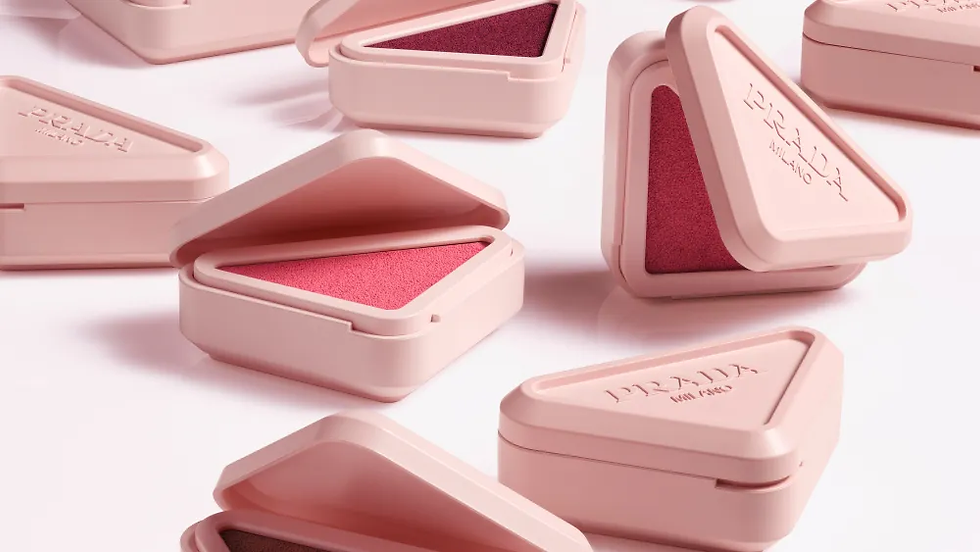
Designer beauty's rise: Prada Beauty and Armani Beauty in the global top 5 signal that luxury is learning TikTok's language without sacrificing positioning.
Accessible fragrance wins: Victoria's Secret and Gisou ranking alongside Chanel confirm that price point is no barrier to fragrance EMV dominance.
European acceleration: France's 61% EMV growth marks the beginning of TikTok's European beauty moment — markets to watch in 2026.
YouTube's irrelevance: Ranking a distant third confirms that long-form video has lost the discovery race to short-form and live commerce formats.
Creator economy as primary distribution: Organic creator content is driving the majority of beauty's $40B EMV — making creators the industry's most valuable channel.
Summary of Trends: Beauty's Power Has Shifted to Whoever Controls the Algorithm
TikTok Platform Dominance — short-form video has replaced editorial aspiration as beauty's primary discovery engine; brands that don't generate organic TikTok traction are structurally invisible.
Earned Media as Brand Currency — EMV is the most honest measure of brand health; the brands winning on TikTok are winning the category.
Fragrance's Social Awakening — scent is becoming beauty's fastest-growing TikTok category; brands that crack fragrance content will own the next EMV wave.
Algorithm-Native Brand Model — Rhode, Medicube, and Rare Beauty prove that creator ecosystems and platform nativity outperform heritage and distribution in 2026.
Global Market Democratization — K-beauty and European markets are entering TikTok acceleration phases; the next billion in beauty EMV will come from markets currently underpenetrated.
Cross-Industry Expansion: The Algorithmic Discovery Era — When the Platform Becomes the Market
Every industry built on consumer desire is facing beauty's TikTok moment. Fashion, food, wellness, home, and entertainment are all watching the same structural shift — earned media replacing paid reach, algorithmic discovery replacing editorial authority, and creator ecosystems replacing brand-controlled narratives. The brands that adapted earliest in beauty are now the template every other category is trying to replicate.
The deeper implication is architectural. The platform is no longer a distribution channel — it is the market itself. Brands in every category must now compete for algorithmic favor the way they once competed for shelf space. Discovery, trial, and purchase are collapsing into a single platform moment — and the brands that engineer for that moment will compound returns while brands that broadcast at consumers will lose relevance regardless of budget.
Expansion Factors: Why Algorithmic Discovery Will Reshape Every Consumer Category
Trend: Algorithmic earned media is replacing paid reach as the primary driver of brand awareness across all consumer categories.
Why: Attention fragmentation and platform-native commerce are making traditional advertising structurally less efficient than creator-driven content.
Impact: Brands generating organic platform traction will compound discovery, trial, and loyalty simultaneously — brands relying on paid media will face diminishing returns.
Industries: Beauty, fashion, food, wellness, home, entertainment — any category where identity and desire drive purchase.
Strategy: Build creator affiliate ecosystems, in-platform commerce integrations, and LTO content calendars that reward algorithmic favor over production value.
Consumers: Digitally native, discovery-motivated adults 18–40 who trust peer and creator validation over brand claims.
Demographics: Gen Z and millennials leading — but algorithmic discovery is rapidly expanding to Gen X as TikTok broadens its user base.
Lifestyle: High-frequency platform users who shop within content sessions and share discoveries as social currency.
Buying behavior: Impulse-driven, creator-validated, community-confirmed — the purchase decision happens inside the platform, not after it.
Expectation shift: Consumers now expect every brand in every category to have an organic platform presence — absence signals irrelevance, not exclusivity.
Insight: Algorithmic discovery is not a beauty trend — it is the new architecture of consumer attention across every category.
This shows that platform nativity has replaced distribution and paid media as the primary source of brand competitive advantage.
It matters because every consumer category is one viral creator moment away from a discovery surge — or one algorithm shift away from irrelevance.
The value created is a compounding earned media flywheel — organic traction attracts creators, creators generate EMV, EMV drives purchase, purchase funds more creator investment.
The implication is that brands must be engineered for algorithmic discovery from product development through to content strategy — or be outpaced by smaller, more platform-native competitors.
Innovation Platforms: TikTok Has Made Every Brand a Media Company Whether They're Ready or Not
The infrastructure enabling beauty's TikTok dominance is not a social media strategy — it is a fully integrated discovery-to-commerce operating system. TikTok Shop, creator affiliate programs, live shopping events, and algorithmic content distribution have collapsed the traditional funnel into a single platform loop where awareness, consideration, and purchase happen simultaneously. Brands that have built inside this infrastructure are compounding returns; brands that haven't are spending more on paid media to achieve less.
The most significant platform innovation is the elimination of brand gatekeeping. Any creator, any product, any market can achieve global scale through organic content — as Medicube's 286% surge and Rhode's 83% growth demonstrate. The brands winning are not the ones with the biggest budgets — they are the ones that have engineered their products, packaging, and narratives for algorithmic shareability from the moment of conception.
Innovation Drivers: Why the Brands That Built for TikTok First Are Now Impossible to Catch
TikTok Shop integration: In-app checkout eliminates every friction point between discovery and purchase — the funnel is now a single tap.
Creator affiliate programs: Performance-based creator economics incentivize authentic content at scale — brands get distribution; creators get income.
Live shopping events: Real-time product demonstrations with instant purchase links convert entertainment into immediate commerce.
Algorithm-native product design: Products engineered for visual demonstration (texture, transformation, color payoff) generate organic content without brand prompting.
Founder-as-creator model: Rhode and Rare Beauty prove that founder authenticity on TikTok is the highest-EMV content strategy available to a beauty brand.
EMV tracking infrastructure: Tools like WeArisma give brands real-time earned media intelligence — turning content performance into strategic decisions.
Cross-market creator seeding: Sending products to creators across multiple geographies simultaneously accelerates international EMV at fraction of traditional launch cost.
Fragrance content innovation: Brands cracking scent storytelling on video — describing smell through visual metaphor and reaction — are unlocking beauty's last analog category.
K-beauty's algorithm playbook: Korean brands like Medicube built TikTok-native content systems before Western brands noticed — their growth is a blueprint, not an anomaly.
Community validation loops: Save rates, comment sentiment, and duet culture function as real-time product feedback and social proof simultaneously.
Summary of the Trend: What TikTok's Beauty Dominance Is Really Building
Trend essence: TikTok has become beauty's primary market — not a marketing channel — where discovery, purchase, and loyalty are built inside a single algorithmic ecosystem.
Key drivers: Creator affiliate economics, TikTok Shop commerce, algorithm-native product design, founder-brand authenticity, and earned media compounding.
Key players: TikTok, Rhode, Rare Beauty, Medicube, L'Oréal Paris, Prada Beauty, Gisou, WeArisma, Sephora, Maybelline.
Validation signals: $18.1B TikTok EMV surpassing Instagram, Rhode +83%, Medicube +286%, K-beauty doubling to $1B, France +61% — all confirming accelerating platform migration.
Why it matters: The brands building TikTok-native ecosystems now are creating compounding advantages in discovery, loyalty, and international expansion that will be structurally difficult to close.
Key success factors: Algorithm-native content, creator relationship depth, TikTok Shop integration, product designed for shareability, and real-time EMV intelligence.
Where it is happening: U.S. ($19B EMV) leading, France fastest-growing (+61%), K-beauty scaling globally — TikTok beauty is a worldwide phenomenon with uneven market maturity.
Audience relevance: Gen Z and millennials who discover, validate, and purchase entirely within platform sessions — brand loyalty is earned algorithmically, not advertised into existence.
Social impact: TikTok has democratized beauty brand building — a founder with a great product and a TikTok strategy can outperform a conglomerate with a traditional marketing budget.
Insights: TikTok hasn't disrupted beauty's marketing — it has replaced beauty's entire brand-building model. Industry Insight: The $18.1B EMV gap TikTok opened over Instagram in one year is a structural realignment, not a trend. Brands still optimizing for Instagram are misallocating resources as TikTok's commerce infrastructure matures. The window to build a TikTok-native brand ecosystem is open now — it will not stay open. Consumer Insight: The TikTok beauty consumer has made creator trust more valuable than heritage, distribution, or paid reach. They discover through entertainment, validate through community, and purchase without leaving the platform. Brands that earn creator advocacy earn the consumer — brands that buy it are ignored. Social Insight: TikTok has made brand building participatory — consumers amplify, debate, and co-create brands, not just buy them. Rhode's 83% EMV growth was a community outcome, not a marketing outcome. The strongest brands are the ones consumers feel they own. Cultural/Brand Insight: Beauty is the proof of concept for a broader shift — the platform is becoming the market in every consumer category. Fashion, food, wellness, and retail will spend the next decade following the playbook beauty wrote on TikTok. Algorithmic nativity is the new brand equity — and it compounds faster than any traditional advantage.


Comments