


Participatory Food Events Turn Everyday Consumption Into Social, Creative Experiences
- InsightTrendsWorld

- Mar 29
- 8 min read
From Passive Food Consumption To Community-Driven, Experience-Led Gatherings
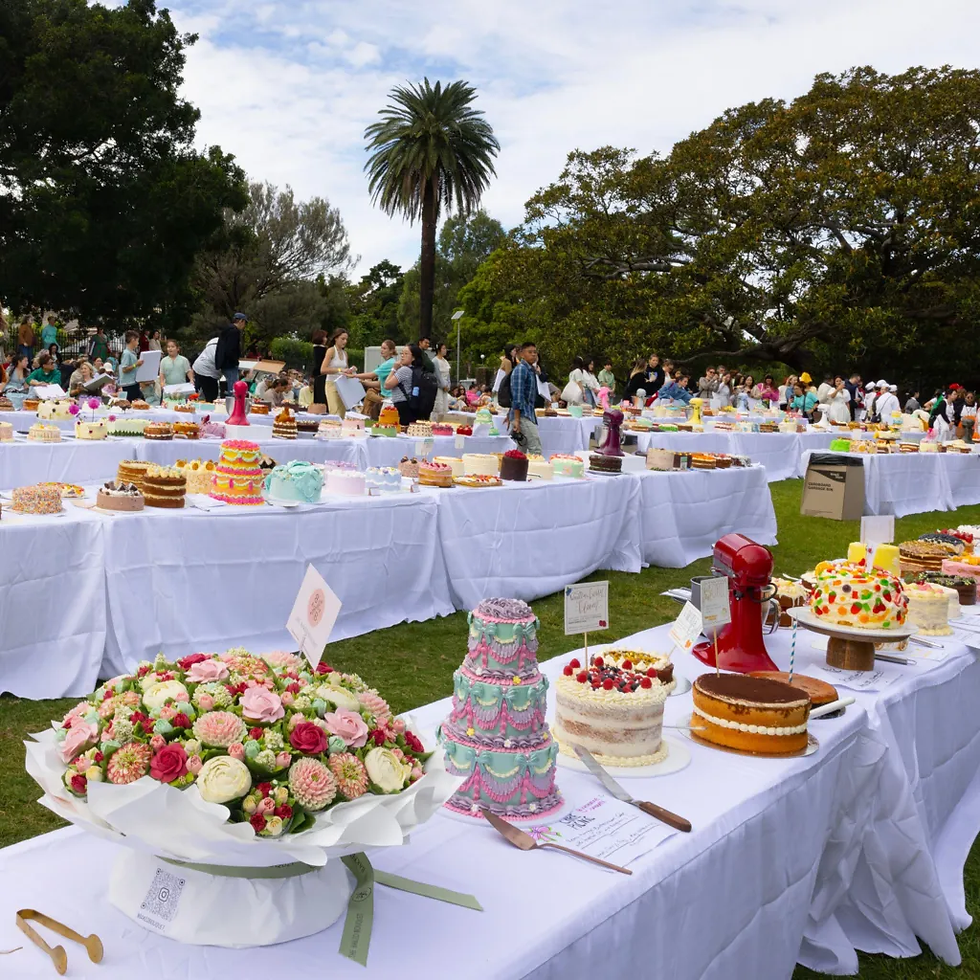
The rise of viral events like Cake Picnic—founded by Elisa Sunga—signals a shift where food is no longer just consumed, but co-created and shared as part of a collective experience. What began as a small gathering has evolved into a global phenomenon, with cities like Sydney hosting large-scale events where hundreds of participants bring homemade cakes to share.
Unlike traditional food festivals or dining experiences, these events are participatory by design—every attendee contributes, turning the audience into creators. This transforms food into a medium for creativity, expression, and connection rather than just consumption. The act of baking, presenting, and sharing becomes as important as eating itself.
At the same time, the format emphasizes inclusivity and non-competition. From amateur bakers to professionals, influencers to families, participants contribute equally, creating a space where creativity is celebrated without pressure. This democratization of food culture aligns with broader shifts toward community-led experiences.
The result is a new kind of food event—one that blends social gathering, creative expression, and viral shareability into a single, scalable format.
Why The Trend Is Emerging: Consumers Are Seeking Real-World Connection And Creative Participation
As digital interactions dominate daily life, consumers are increasingly seeking offline experiences that feel tangible, social, and emotionally rewarding. Participatory food events meet this need by combining creativity, community, and sensory enjoyment into one shared moment.
• Digital fatigue is driving demand for in-person, real-world social experiences.
• Food provides a universal, accessible medium for connection across age groups and backgrounds.
• Participatory formats allow consumers to shift from spectators to active contributors.
• Creative activities like baking offer emotional relief and self-expression.
• Non-competitive environments encourage inclusivity and broader participation.
• Social media amplifies these events, turning them into viral, must-attend experiences.
• The rise of “experience over ownership” culture increases demand for memorable gatherings.
• Community-driven events create stronger emotional engagement than traditional festivals.
Virality of Trend (Social Media Coverage):Cake Picnic events spread rapidly through visually rich content—rows of colorful cakes, behind-the-scenes baking, and group experiences shared on TikTok and Instagram. The scale, creativity, and inclusivity make them highly shareable, encouraging replication across cities worldwide.
Where it is seen (in what industries):
Food & Beverage: Community-led food events and gatherings.
Events & Experiences: Participatory, user-generated formats.
Social Media: Viral, visually driven food content.
Hospitality & Leisure: Experience-based social activities.
Creative & DIY Culture: Hobby-based community engagement.
This trend is accelerating because it fulfills both social and emotional needs. It matters because it transforms food into a shared experience rather than an individual act. It creates value through participation and connection. And it signals that the future of food culture will increasingly be shaped by community, creativity, and real-world interaction.
Description Of The Consumers: Community-Oriented, Experience-Seeking Individuals Who Value Creativity And Connection
The consumers driving participatory food events like Cake Picnic are not just food lovers—they are social, creative, and experience-driven individuals looking for meaningful ways to connect with others. They are drawn to activities that combine self-expression, community, and sensory enjoyment, making events like those in Sydney particularly appealing.
• Community-Driven Creators are individuals who seek social connection through shared, creative activities rather than passive consumption.
• They typically range from 18–55, spanning Gen Z, millennials, and older hobbyists who enjoy baking, crafting, or social gatherings.
• They are drawn to inclusive, low-pressure environments where participation matters more than perfection.
• They value experiences that allow them to contribute something personal, such as a homemade cake or creative idea.
• Their emotional driver is connection—wanting to bond with others through shared activities and experiences.
• They are influenced by social media, community trends, and word-of-mouth, often discovering events through viral content.
• They seek balance between digital and real-world interaction, using offline events as a way to disconnect and recharge.
• Creativity plays a central role, with baking and presentation acting as forms of self-expression.
• They often attend in groups—friends, families, or communities—enhancing the social aspect of the experience.
This audience is reshaping how people engage with food and events. Their behavior shifts value from consumption to participation. It encourages brands and organizers to design experiences that involve the consumer directly. And it reinforces a broader movement where community and creativity are becoming central to lifestyle choices.
Main Audience Motivation: Seeking Joyful, Shared Experiences That Combine Creativity, Connection, And Real-World Interaction
At the core of this trend is a desire to reconnect—with people, creativity, and tangible experiences. Consumers are increasingly looking for activities that feel joyful, participatory, and emotionally rewarding, especially in contrast to the passive and often isolating nature of digital life. Events like Cake Picnic transform something simple—cake—into a shared, celebratory experience rooted in contribution and community.
• The primary motivation is connection—spending meaningful, in-person time with others in a shared environment.
• A secondary motivation is creative expression, where baking and presentation allow individuals to showcase personality and skill.
• There is a tension between digital interaction and real-world experience, with consumers seeking more offline engagement.
• Participatory formats resolve this by turning attendees into contributors rather than spectators.
• The act of bringing something (e.g., a cake) creates a sense of ownership and belonging within the group.
• Joy and escapism play a key role, offering a break from everyday stress and negative news cycles.
• Consumers are motivated by inclusivity, valuing spaces where all skill levels and backgrounds are welcomed.
• The sensory experience—visual, taste, and atmosphere—enhances emotional satisfaction and memorability.
• Social sharing adds another layer, allowing participants to document and extend the experience digitally.
In simple terms, consumers want to feel part of something joyful and real. This shift increases the importance of designing experiences that are interactive and inclusive. It also means events must offer emotional as well as functional value. And it reinforces that in modern lifestyles, shared experiences are becoming a key source of happiness and connection.
Trends 2026: The Rise Of Participatory Experiences And Community-Led Food Culture
Food culture is evolving from consumption-based experiences to participation-driven events where consumers actively contribute to the experience. The global spread of Cake Picnic—from San Francisco to Sydney—demonstrates how simple concepts can scale when they tap into creativity, community, and shareability. This reflects a broader shift where experiences are designed with consumers, not just for them.
• What is influencing the shift:Consumers are seeking more meaningful, interactive experiences rather than passive consumption.
• Macro trends influencing the shift:The experience economy, creator culture, and community-driven engagement are shaping demand.
• Is it bringing novelty or innovation to consumers?Yes—by turning attendees into contributors, it redefines what a food event can be.
• Can it create meaningful competitive differentiation?Yes—participatory formats create stronger emotional engagement and memorability.
• How can brands operationalize this shift in daily business?By designing experiences that involve user participation, creativity, and social interaction.
Trend Table: From Consumption-Based Events To Participatory Food Experiences
Trend Name | Description (Insight-Led Explanation) | Strategic Implications |
Main Trend — “Participatory Food Events” | Consumers co-create experiences. | Increases engagement |
Social Trend — “Community Experiences” | Shared activities drive connection. | Builds loyalty |
Industry Trend — “Experience Economy” | Events focus on interaction. | Expands value |
Main Strategy — “User-Generated Experiences” | Attendees contribute content. | Enhances scalability |
Main Consumer Motivation — “Connection & Creativity” | Consumers seek shared joy. | Drives participation |
Related Trend 1 — “DIY Culture” | Creation becomes central. | Encourages involvement |
Related Trend 2 — “Offline Social Revival” | Real-world interaction grows. | Increases demand |
Related Trend 3 — “Viral Experience Design” | Shareability drives growth. | Amplifies reach |
These trends matter because they redefine how experiences are created and consumed. Together, they shift focus from product to participation. The opportunity lies in designing events that involve the consumer directly. And the brands that do this well will build stronger emotional connections. It also signals that the future of food and events will increasingly be shaped by community, creativity, and co-creation.
Final Insights: The Most Meaningful Experiences Are Those We Create Together
We are seeing a shift where the value of an experience is no longer defined by what is provided, but by what people contribute to it. Events like Cake Picnic—originating from San Francisco and expanding globally to places like Sydney—show that participation transforms ordinary moments into memorable, emotionally rich experiences. This reframes food culture—not as consumption, but as collaboration.
Insights The most engaging experiences are those where consumers actively participate and contribute. This creates stronger emotional investment and lasting memories.Industry Insight Events and food experiences are evolving toward co-creation models that increase engagement and scalability. This shifts value from production to participation.Consumer Insight People are seeking connection, creativity, and joy through shared, real-world activities. This increases demand for interactive experiences.Social Insight Community-driven events amplify organically through social sharing and word-of-mouth.Cultural/Brand Insight Brands that enable participation and creativity can become platforms for community rather than just providers of products. This positions them as facilitators of connection and experience.
This shift highlights that participation is becoming a core driver of value. It reinforces the importance of community in experience design. It also creates opportunities for scalable, user-generated formats. And ultimately, it shows that in a world dominated by digital interaction, the most powerful experiences are the ones we build together.
Innovation Platforms: Building Scalable Participatory Experience Ecosystems
As participation becomes central to experience design, brands and organizers need systems that consistently enable consumers to contribute, create, and connect. This requires designing frameworks where user input is not optional, but essential to the experience itself. The focus is on turning audiences into co-creators at scale. The following platforms show how this can be operationalized.
• User Contribution FrameworksEvents are structured so that each participant brings or creates something, making them part of the experience.
• Scalable Event FormatsSimple, repeatable concepts (like “bring a cake”) allow events to expand globally with consistency.
• Community-Building PlatformsSpaces—both physical and digital—are designed to foster interaction and connection among participants.
• Experience Amplification SystemsEvents are optimized for shareability, encouraging organic promotion through social media.
• Inclusive Design ModelsExperiences are accessible to a wide range of skill levels, ensuring broad participation.
Together, these platforms create a system where experiences grow through participation, not just promotion.
These innovation platforms allow brands to scale engagement through community. They increase emotional connection by involving consumers directly. They also enhance visibility through organic sharing. And ultimately, they position participatory design as a key driver of future experience innovation.
Cross-Industry Expansion: From Food Events To The Rise Of “Participation Economies”
The “Participation Economy”: Where Value Is Created Through Contribution And Co-Creation
The rise of participatory food events reflects a broader shift where consumers are no longer passive recipients of products and experiences—they are active contributors. This extends across industries where value is increasingly created through involvement, creativity, and shared ownership. Instead of consuming experiences, people are helping to build them.
• What is the trend: Consumers actively participate in creating products and experiences.This shifts value from consumption to contribution.
• How it appeared: It emerged alongside creator culture and social platforms that encourage user-generated content.As participation became normalized online, it expanded offline.
• Why it is trending: People want more meaningful, engaging experiences.At the same time, participation increases emotional connection and ownership.
• What is the motivation: Consumers seek connection, creativity, and a sense of belonging.This makes participation a key driver of behavior.
• Industries impacted:
Food & Beverage: Community-driven events and experiences.
Events & Entertainment: Interactive and participatory formats.
Retail: Customization and co-creation.
Technology: Platforms enabling user-generated content.
Education & Workshops: Hands-on learning experiences.These industries benefit from participation-driven engagement.
• How to benefit from the trend:
Design experiences that require user input
Encourage creativity and contribution
Build community around shared activities
Leverage user-generated contentThis increases engagement and loyalty.
• What strategy should be to benefit:
Shift from delivering to facilitating experiences
Create scalable, repeatable participation models
Prioritize inclusivity and accessibility
Enable both online and offline engagementThis ensures sustained growth.
• Who are the consumers targeted:
Community-oriented, experience-driven individuals
Typically 18–55, socially engaged and creative
Value connection, creativity, and shared experiences
Motivated by belonging and participationThese consumers drive participation economies.
The Participation Economy builds directly on the main trend of participatory food events by applying its logic across industries. It shows that involvement is becoming a primary source of value. This makes the model highly scalable and engaging. It also creates opportunities for deeper connection and innovation. And looking ahead, brands that empower people to participate—not just consume—will define the future of experiences.


Comments