


Real Ownership: Consumers Want More Control Over What They Buy

Consumers increasingly want products they can repair, change and personalize themselves, creating opportunities for brands that give control back to the owner.
Why This Trend Matters Right Now: Consumers Want Products They Can Control
Buying a product does not always mean having complete control over it. Software restrictions, sealed components and fixed interfaces can leave manufacturers deciding how products are repaired, modified or used long after consumers have paid for them. This can make ownership feel limited rather than permanent.
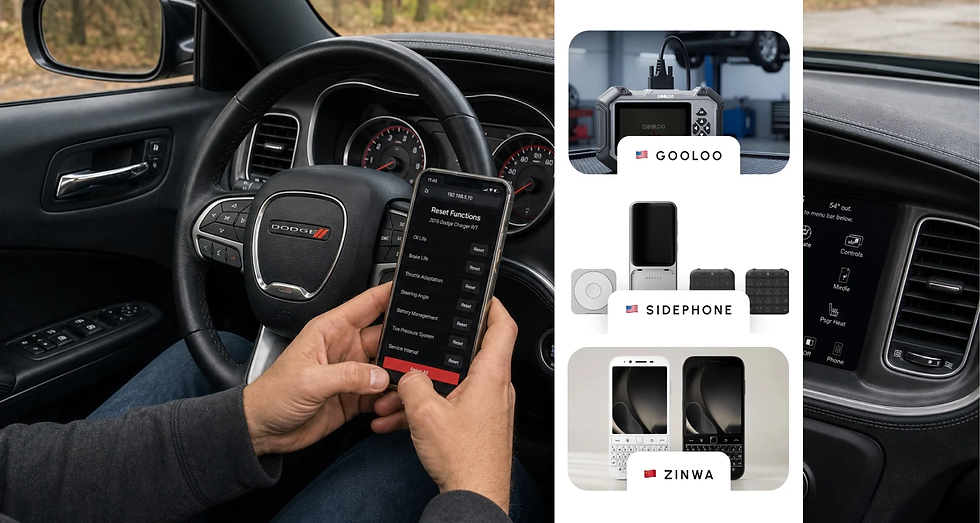
Gooloo, Sidephone and Zinwa approach the problem from different directions. Gooloo opens access to vehicle diagnostics, Sidephone lets owners swap physical keypads, and Zinwa restores a physical keyboard largely abandoned by mainstream smartphones. Each gives consumers more control over something they own.
➡️ Why It Matters: Consumers increasingly value products that give them the freedom to repair, change and use them on their own terms.
Why Consumers Are Changing: Ownership Is Becoming More Active
Consumers are becoming more aware that digital technology can restrict what they can do with physical products. A vehicle may belong to its owner while important diagnostic functions remain locked behind manufacturer software. A smartphone may be powerful while offering little ability to change its controls or interaction style.
This is creating demand for a more active form of ownership. Consumers want to make choices after purchase: repair something themselves, replace a component, customize an interface or choose a feature that mainstream brands have removed. Greater control can make products feel more personal and useful for longer.
➡️ Consumer Insight: Ownership feels more valuable when consumers have meaningful choices about what happens to a product after they buy it.
Who Is Driving This Trend: Control-Seeking Product Owners
Control-Seeking Product Owners are consumers who value independence, customization and long-term usefulness. They are more willing to question manufacturer restrictions and look for alternatives that give them direct access to the products they have purchased.
The audience extends beyond technology enthusiasts. Independent mechanics can benefit from accessible diagnostics, digitally conscious consumers may want simpler customizable phones, and physical-keyboard fans can choose an interaction style mainstream smartphones no longer provide. What connects them is the desire for products that respect individual preferences after purchase.
Core Audience: Consumers who want greater control over repairing, modifying and using their products.
Secondary Audience: Independent repairers, technology enthusiasts, digital-minimalism consumers and users underserved by standardized product design.
Age: Broad adult audience, particularly consumers comfortable making deliberate choices about technology and product ownership.
Lifestyle: Independent, practical and increasingly conscious of how technology shapes everyday choices.
Shopping Behaviour: Looks beyond specifications and price to consider repairability, customization, flexibility and long-term product usefulness.
Core Motivations: Having Control After Purchase Matters Most
Control: Consumers want to decide how products they own are used, maintained and changed.
Independence: Consumers value being able to solve problems without relying entirely on the original manufacturer.
Customization: Consumers want products they can adapt around their individual preferences and routines.
Repairability: Consumers want greater freedom to diagnose, maintain and extend the useful life of their purchases.
Choice: Consumers value having different interfaces, components and features available to suit their needs.
Longevity: Consumers want products that can change with them instead of becoming unnecessarily obsolete.
➡️ Key Insight: Control-Seeking Product Owners see greater freedom after purchase as part of the value of ownership itself.
Why Everyone Is Talking About It: Consumers Recognize the Frustration of Locked Products
The topic has strong conversation potential because restricted ownership is easy to understand. Consumers recognize the frustration of buying something and discovering that repairing, changing or accessing part of it remains difficult or controlled by the manufacturer.
The three products make that tension tangible. A sub-$300 Gooloo tablet opens vehicle diagnostic functions normally associated with dealership software. Sidephone turns the keypad into a replaceable choice. Zinwa brings the physical QWERTY keyboard back as a modern option. Each provides a simple demonstration of what greater ownership can look like.
➡️ Conversation Driver: Products generate conversation when they expose the gap between paying for something and having real control over it.
Viral Potential: Giving Control Back Creates an Immediate Story
These innovations have a simple before-and-after story that works well socially: a function was restricted, fixed or disappearing — now the consumer can choose again. That contrast makes the benefit immediately understandable without requiring complicated technical explanations.
They also invite personal responses. Drivers can debate who should control vehicle diagnostics, smartphone users can discuss physical versus touchscreen keyboards, and consumers can question why more components are not replaceable. The products therefore become starting points for wider conversations about what ownership should actually mean.
➡️ Viral Insight: Greater product control becomes shareable when consumers can immediately see a choice being returned to them.
Marketing Strategy: Make Consumer Control a Product Benefit
Brands can turn ownership into a stronger selling point by showing consumers what they will be able to control after purchase. Repair access, replaceable components and interface choices can become visible product benefits instead of technical details hidden behind the purchase decision.
Business Area | Strategy | Description |
Product | Build in control | Give owners meaningful ways to repair, replace, customize or change important product functions. |
Pricing | Value long-term ownership | Show how greater control can reduce dependence on replacements, proprietary servicing or unnecessary upgrades. |
Promotion | Show what owners can do | Demonstrate clearly how consumers can repair, customize or interact differently with the product. |
Distribution | Support independent access | Make components, tools and compatible products easier for consumers and independent specialists to obtain. |
Innovation | Open restricted functions | Identify controls, components or features consumers want access to and turn that freedom into a product advantage. |
➡️ Strategic Insight: Brands can strengthen ownership value by giving consumers useful choices that continue long after the initial purchase.
Trend Snapshot: Ownership Is Becoming More Hands-On
Gooloo, Sidephone and Zinwa point toward a wider consumer shift in which ownership means having greater freedom to shape what happens after purchase. Hardware is one expression of a broader desire for autonomy across products, services and everyday consumer relationships.
Trend Area | Insight |
Broad Trend – Consumer Control | Consumers increasingly want more power over the products and services they pay for. |
Industry Trend – Repair Right Revolt | Hardware alternatives are opening diagnostics, components and interfaces traditionally controlled by manufacturers. |
Lifestyle Trend – Active Ownership | Consumers increasingly expect to repair, personalize and manage purchases on their own terms. |
Strategy – Ownership by Design | Brands create value by building meaningful consumer control into the product experience. |
Consumer Motivation – Control After Purchase | Consumers seek control, independence, customization, repairability, choice and longevity. |
Business Opportunity – Ownership Freedom | Greater consumer access can turn previously restricted functions into valuable product benefits. |
Innovation Outlook – Open Hardware | More products can differentiate through accessible software, replaceable components and greater interface choice. |
➡️ Trend Snapshot Insight: Consumer Control turns greater freedom after purchase into a new source of product value.
Final Thought: Ownership Means More When Consumers Can Change Something
Gooloo, Sidephone and Zinwa demonstrate three different ways to return control to consumers: open something, replace something or restore something. The products challenge the idea that hardware needs to remain fixed or manufacturer-controlled throughout its useful life.
The bigger opportunity reaches beyond automotive and consumer electronics. Appliances, mobility, home technology, digital services and other categories can reconsider how much control remains with the brand after purchase. Products that provide meaningful autonomy can make consumers feel that ownership genuinely belongs to them.
➡️ Final Insight: Real ownership becomes more valuable when consumers have the freedom to repair, personalize and shape the products they buy.


Comments