


Function First: Why Consumers Want Technology That Works Better, Not Just Does More

Technology keeps getting smarter, but consumers are still prioritising something much simpler: products that perform their core functions better. While smartphone brands push AI, foldable designs and new features, US consumers say price, longer battery life and more storage are the strongest reasons to consider upgrading. It reflects a broader Functionality trend in which consumers increasingly judge innovation not by how much technology can do, but by how effectively it solves the problems they already have.
Why Everyone Is Talking About It: More Technology Isn't Necessarily Better Technology
Smartphone innovation is moving quickly. AI can generate messages, edit photographs and screen calls, while manufacturers continue experimenting with foldable devices, thinner designs and new form factors. Yet consumers appear considerably less excited by novelty than the technology industry might expect.
Price motivates 55% of US smartphone owners to consider upgrading, followed by longer battery life at 52% and more storage at 38%. Only 13% say a new phone concept such as a foldable or flip device would motivate an upgrade. The same three practical priorities — price, battery and storage — also occupied the top positions in 2025.
➡️ Viral Insight: Consumers aren't necessarily asking technology to do more — they're asking it to do what matters better. The growing gap between what brands can add and what consumers actually value is making functionality a much more important measure of innovation.
Why Consumers Are Changing: What Does It Actually Do for Me?
As technology becomes more sophisticated, consumers have more features available than ever. But having more capabilities doesn't automatically create more value. A feature becomes meaningful when consumers can clearly connect it with an improvement in their own lives.
That changes how innovation is evaluated. Battery capacity matters because consumers can go longer without charging. Storage matters because they can keep more photos, files and apps without constantly managing space. Price matters because the benefit still needs to justify the cost. Consumers increasingly translate technical capability into a much simpler question: What does this actually do for me?
➡️ Consumer Insight: A feature tells consumers what a product has; function tells them what the product does for them. Consumers increasingly value technology when the benefit is immediate, understandable and useful.
Who Is Driving This Trend: The Function-First Consumer
The Function-First Consumer isn't anti-technology or anti-innovation. They can appreciate AI, new designs and advanced capabilities, but those additions have to compete with more immediate needs. A technologically impressive device becomes harder to justify if it still struggles with something as fundamental as lasting through the day.
This consumer therefore evaluates technology from the outcome backwards. Instead of starting with specifications and asking what they might do with them, they start with their own frustrations and ask whether the new product actually solves them.
Core Motivations: Just Make It Work Better
Reliability – Work When I Need YouConsumers want to depend on technology throughout the day without constantly managing its limitations.
Convenience – Remove the HassleConsumers want to reduce charging, deleting, waiting and other small frustrations that interrupt everyday use.
Performance – Do the Core Job BetterConsumers want to see meaningful improvement in the functions they already rely on most.
Value – Make the Improvement Worth Paying ForConsumers want to understand why better performance justifies the cost of replacing something they already own.
Simplicity – Give Me Benefits I UnderstandConsumers want to recognise immediately how a feature will improve their experience without needing technical explanation.
Control – Let the Technology Work Around MeConsumers want to spend less time adapting their behaviour around the limitations of their devices.
➡️ Audience Insight: The Function-First Consumer doesn't reject new technology; they demand a reason to care about it. Innovation becomes valuable when it turns directly into reliability, convenience, performance or value.
Why This Trend Matters Right Now: Function Is Becoming the Proof of Innovation
The technology industry has spent years competing through capability: more processing power, more cameras, more AI, new designs and increasingly sophisticated software. But as mature categories become saturated with features, simply adding another capability becomes less likely to create an obvious reason to upgrade.
Functionality offers a different innovation model. Instead of asking what else can be added, brands can ask which existing consumer frustration can be removed. That matters particularly as technology becomes more embedded in everyday life: when consumers depend on a device constantly, basic reliability can become more valuable than occasional novelty.
➡️ Why It Matters: Innovation increasingly needs to prove itself through function. The more technology consumers already have, the more important it becomes for something new to deliver an improvement they can actually feel.
Viral Potential: Fix the Battery First
Battery life makes the Function First trend particularly easy to understand. More than half of smartphone owners are frustrated with their battery life, while almost one-third say their phone no longer holds a charge as well as when it was new. Against that backdrop, another advanced feature can feel secondary to fixing a problem consumers encounter repeatedly.
That creates an intuitive contrast between the industry's innovation story and the consumer's innovation story. A foldable screen can demonstrate what technology is capable of. A phone that comfortably lasts all day demonstrates what technology can do for the consumer.
➡️ Viral Potential: PROBLEM → FUNCTION → BENEFIT → VALUE. Innovation becomes easiest to understand and share when consumers can immediately say, “That solves something that annoys me.”
Marketing Strategy: Turn Features Into Benefits
Function First creates an opportunity to move technology marketing away from feature accumulation and toward visible consumer outcomes. The strongest propositions can show not simply what has changed inside the product, but why that change makes the consumer's experience meaningfully better.
Strategy Area | Opportunity |
Product – Fix the Friction First | Prioritise improvements to reliability, battery, storage, durability, speed and other functions consumers repeatedly encounter in everyday use. |
Pricing – Make Better Worth Paying For | Connect price increases to functional improvements consumers can clearly recognise, experience and value. |
Promotion – Turn Specifications Into Outcomes | Translate technical features into simple consumer benefits such as lasting longer, working faster, storing more or requiring less management. |
Distribution – Let Consumers Experience the Difference | Use retail, demonstrations, reviews and comparison tools to make functional improvements tangible before purchase. |
Innovation – Solve Before You Add | Start innovation with existing consumer frustrations and build technology around removing them rather than assuming novelty itself creates demand. |
➡️ Strategic Insight: Don't start with what technology can do; start with what consumers need it to do. Function-first innovation turns technical capability into a benefit consumers can immediately understand and justify paying for.
Trend Snapshot: Function Becomes the New Innovation
The smartphone market illustrates a wider change in how consumers judge products. As technological capability expands, innovation increasingly competes not only on novelty but on usefulness. The winning feature is the one that translates most clearly into a better consumer outcome.
Trend Dimension | Insight |
Broad Trend – Functionality | Consumers increasingly value products according to how effectively they perform meaningful roles and solve real problems in their lives. |
Industry Trend – Function First | Technology innovation shifts attention from adding capabilities toward improving the functions consumers value most. |
Lifestyle Trend – Technology That Works | Consumers want technology that integrates reliably into life without demanding constant charging, managing, troubleshooting or compromise. |
Strategy – Turn Features Into Benefits | Translate technical innovation into clear improvements consumers can immediately understand and experience. |
Consumer Motivation – Just Make It Work Better | Consumers want meaningful improvements to the functions they already depend on before being asked to value additional capabilities. |
Business Opportunity – Solve the Problems Consumers Already Have | Existing frustrations create innovation opportunities that can be more commercially relevant than entirely new technological concepts. |
Innovation Outlook – Useful Innovation | Successful innovation increasingly begins with a consumer problem and works backwards toward the technology required to solve it. |
➡️ Trend Snapshot Insight: FEATURE → FUNCTION → BENEFIT → VALUE. Technology becomes meaningful when consumers can clearly connect what has been added or improved with something that makes their lives better.
Final Thoughts: Useful Beats New
The smartphone industry demonstrates an important distinction between technological progress and consumer value. Brands may be capable of adding AI, changing form factors and introducing entirely new experiences, but consumers continue prioritising battery, storage, price and other fundamentals because these affect how the product performs in their lives every day.
That could make functionality increasingly important across mature consumer categories. As products accumulate more features, innovation may become less about finding another capability to add and more about identifying the frustrations that still haven't been solved. The next competitive advantage may therefore come not from making products do the most, but from making the things consumers already depend on work noticeably better.
➡️ Final Insight: Consumers aren't losing interest in innovation — they're raising the bar for what deserves to be called innovation. Function First shifts value from what a product can technically do toward what it meaningfully does for the consumer. In a feature-rich world, the most powerful innovation may simply be the one that works better.


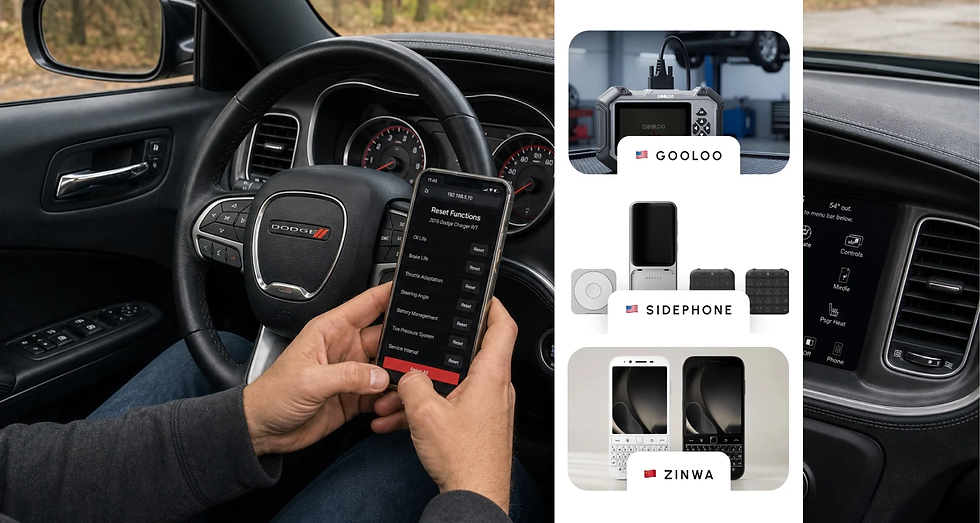
Flashy AI tools and foldable gimmicks mean very little when my phone barely survives a full workday commute and afternoon errands. What I truly care about is robust battery health, seamless charging, and snappy performance that never lags. While searching for dependable magnetic charging banks to keep my devices powered during travel, checking https://magfast.pissedconsumer.com/review.html gave me practical insights into charging accessories. Real convenience always beats bloated specs that nobody actually uses.