


The Romantasy Revolution: How Fantasy Romance Became Publishing's Most Powerful Cultural Force
- InsightTrendsWorld

- Mar 27
- 14 min read
The Genre That Refused to Be Niche Has Taken Over the Bestseller List
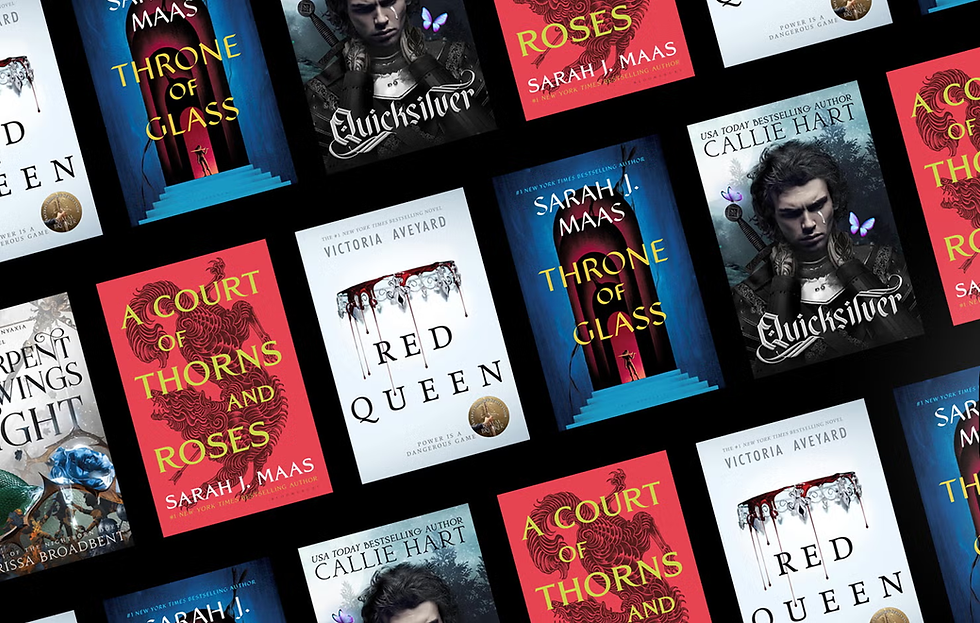
Romantasy — the genre fusion of high fantasy world-building and emotionally intense romance — has become the dominant commercial force in publishing, powered by BookTok, Sarah J. Maas's continued reign, and a 2026 release slate so packed that Goodreads lists 70 most-anticipated titles before the year is half over. Romantasy speaks to a collective longing for magic, myth, legend, and romance made manifest in novels where, although impossible odds may impede you, you will always have someone by your side — it is a hope-forward subgenre that has established a foothold in the cultural zeitgeist. The shift is structural: romance readers have permanently moved into fantasy settings, fantasy readers have embraced emotional depth and romantic stakes, and publishers are responding with unprecedented volume and investment. Sarah J. Maas's A Court of Thorns and Roses 6 is the current number one bestseller on Apple Books, with a seventh book announced shortly after — confirmation that the genre has its own superstar IP ecosystem that rivals any franchise in entertainment.
Why The Trend Is Emerging: Escapism, Emotional Depth, and the BookTok Machine
Romantasy's commercial dominance is driven by a convergence of reader psychology, social media discovery, and a publishing industry that has learned to serve demand rather than resist it.
Escapism Has Never Been More Commercially Urgent — Romance and romantasy continue to power the publishing industry, offering plenty of swoon-worthy escapism from the horrors of the real world. In a high-anxiety cultural moment, fiction that guarantees a happily-ever-after within a world of dragons, fae, and magic offers emotional safety that no other genre provides with the same reliability.
BookTok Has Democratized Discovery at Scale — Fourth Wing took the world by storm in 2023, and two more books later with another two on the way, the hype has only grown — a trajectory only possible through BookTok's ability to turn a single passionate recommendation into millions of sales. Social media has made romantasy discovery simultaneously personal and mass-scale.
Enemies-to-Lovers and Morally Gray Heroes Are Genre Superpowers — The most commercially reliable romantasy tropes — enemies-to-lovers, forced proximity, touch-her-and-die, found family — deliver the emotional intensity that romance readers crave within the dramatic stakes that fantasy settings amplify. The combination is structurally more emotionally satisfying than either genre alone.
The Subgenre Is Maturing Into Genuine Creative Diversity — Now that the subgenre is more established, authors have a chance to play within the space and take chances with new ideas, from funny cozy concepts to darker plots. The 2026 slate ranges from dark gothic romance to cozy enchanted bookshop settings — a creative breadth that expands the addressable readership significantly beyond the core ACOTAR fan.
Serialized IP Creates Compounding Commercial Value — Multiple 2025 bestsellers are already in development at Amazon MGM Studios with major production talent attached — confirming that romantasy IP is being treated by the entertainment industry as the next major franchise pipeline, adding screen adaptation anticipation to already-powerful book community momentum.
Virality of Trend: Romance and romantasy dominate publishing's most anticipated lists across every major platform, with BookTok, Bookstagram, and Goodreads driving discovery cycles that move from debut release to bestseller status within weeks. Collectible physical editions — sprayed edges, deluxe hardbacks, foiled cases — are generating unboxing and shelfie content that treats books as luxury objects worth displaying and documenting. Series continuation announcements from major authors generate the same social media spike as entertainment franchise reveals.
Where It Is Seen: Traditional and indie publishing, BookTok and Bookstagram communities, audiobook platforms (Audible, Spotify), streaming adaptation development pipelines, specialty bookshops, and the broader entertainment industry's literary IP acquisition strategy.
Last year saw the first instalments of a host of great new romantasy series, and the great news is that almost all of them return in 2026 with superb sequels — confirmation that the category is building sustained franchises rather than isolated hits. Commercially, romantasy is now publishing's highest-margin, highest-velocity genre segment, with collectible editions, audiobook licensing, and screen adaptation rights multiplying revenue per title. Strategically, the publishers, authors, and platforms that have invested in community-first marketing and serialized storytelling are compounding their advantages with each new release cycle. The romantasy revolution is not a trend cycle — it is a permanent genre category that has earned its commercial dominance through genuine reader loyalty.
Description Of The Consumers: The Emotionally Invested Reader Who Lives for the Slow Burn
Audience Definition — Primarily women 18–40 who are deeply invested in character-driven emotional narratives, use reading as both escapism and community participation, and make book purchases based on trusted peer recommendation within BookTok, Bookstagram, and Goodreads communities.
Demographics — Romantasy has a foothold in the zeitgeist that extends well beyond its original YA and New Adult core — adult women in their 30s and 40s are among the genre's most commercially active readers, particularly for darker, more complex romantasy series. Genuinely global — UK, US, Australian, and international markets all showing strong demand across the 2026 release calendar.
Behaviour — Pre-orders collectible editions immediately upon announcement. Tracks series continuation news obsessively. Participates in community reading events, buddy reads, and book club discussions. Creates and consumes vast quantities of social media content around favorite characters, ships, and plot theories. Rereads beloved series while waiting for sequels.
Mindset — Emotionally intelligent and trope-fluent. They are not consuming romantasy passively — they are active participants in a genre community with sophisticated preferences, strong opinions, and the social infrastructure to make or break a book's commercial trajectory through collective advocacy or critique.
Emotional Driver — The guaranteed emotional payoff. Romantasy's central love story with a Happily Ever After or Happily For Now ending provides the emotional safety net that literary fiction and darker fantasy deliberately withhold — the reader invests in knowing they will be rewarded. The fantasy stakes amplify the emotional intensity; the romance guarantee provides the resolution.
Cultural Preference — Complexity, darkness with hope, and characters who suffer before they are loved. They respond most powerfully to morally gray male leads, competent and emotionally complex heroines, and magic systems that carry genuine narrative weight rather than decorative function.
Decision-Making — Trust-network driven. A recommendation from a trusted BookTok creator or Goodreads friend outperforms any publisher marketing. Collectible physical edition quality, series completion status, and confirmed HEA/HFN endings are the primary decision variables for high-investment readers.
This consumer is publishing's most commercially valuable active reader — high purchase frequency, premium willingness to pay for collectible editions, strong platform advocacy, and fierce series loyalty that generates compounding sales across every new installment. As romantasy's demographic broadens with genre maturation and adaptation development, the readership will expand significantly — but the core community's taste-making influence will define commercial success for the foreseeable future.
Main Audience Motivation: Feel Everything, Risk Nothing
Primary Motivation — Guaranteed emotional intensity without real-world emotional cost. Romantasy delivers the full spectrum of longing, tension, betrayal, and love within a fictional framework that guarantees resolution — the reader experiences maximum emotional engagement with zero personal risk. This is the genre's most commercially powerful design feature.
Secondary Motivation — Community participation and cultural belonging. Reading romantasy is increasingly a social act — the shared language of tropes, the collective anticipation of series releases, and the BookTok community discussion transform individual reading into group cultural experience.
Emotional Tension — The desire for dark, morally complex, sometimes explicit content balanced against the need for emotional safety and romantic resolution. The best romantasy navigates this tension precisely — featuring a heroine full of rage, a deftly executed enemies-to-lovers romance, and lots of spice, standing out from the pack while still delivering the emotional resolution the genre promises.
Behavioural Outcome — Series completion compulsion, immediate sequel pre-order upon announcement, collectible edition upgrade purchasing, platform advocacy through reviews and content creation, and introduction of the genre to new readers within personal networks — creating the organic growth engine that has made romantasy publishing's most sustainable commercial category.
Identity Signal — Being a romantasy reader signals emotional intelligence, cultural fluency within a powerful community, and the self-aware embrace of fiction that prioritizes feeling over prestige. It is an identity that has shed its guilty pleasure framing and now carries genuine cultural credibility among its community.
The motivation driving romantasy's commercial dominance is structurally the most durable in fiction publishing — rooted in universal emotional needs (love, longing, resolution) delivered through a genre combination that maximizes both the intensity of the experience and the community dimension of sharing it. Publishers, platforms, and adaptation developers that serve this motivation with consistent quality, community respect, and emotional integrity will generate the most loyal and commercially productive reader relationships in the industry.
Trends 2026: Romantasy Matures Into a Multi-Format Entertainment Ecosystem
Drivers: Publishers are not leaving anything on the table in 2026 — now that the subgenre is more established, authors are playing within the space and taking chances with new ideas. Screen adaptation development is accelerating, with multiple 2025 bestsellers already in production at major studios — adding entertainment franchise anticipation to book community momentum. Genre diversification — cozy romantasy, dark romantasy, queer romantasy, non-Western fantasy romance settings — is expanding the addressable reader demographic significantly beyond the original core.
Macro Trends: Top authors like Sarah J. Maas and Jennifer L. Armentrout have created unforgettable stories that continue to captivate readers — their series have earned their place among the top fantasy and paranormal romance books of all time. Collectible physical book culture is intensifying — sprayed edges, foiled cases, deluxe editions, and signed exclusives have transformed romantasy books into luxury objects that drive premium purchasing behavior. AudioBook and Spotify integration is expanding romantasy's reach into commuter and lifestyle listening contexts that extend the genre's daily penetration beyond dedicated reading time.
Innovation: Non-Western romantasy settings — medieval India, ancient Rome, Moroccan-inspired worlds — are emerging as the genre's most creatively exciting frontier, expanding both cultural representation and world-building novelty for readers ready for fantasy beyond the European medieval default.
Differentiation: Authors who develop genuinely distinctive magic systems, morally complex characters, and emotionally unpredictable story architecture within the genre's structural conventions will build the most loyal and commercially durable fan communities.
Operationalization: The winning publishing strategy combines serialized IP development (multi-book series with confirmed continuation), collectible edition investment (physical luxury objects that drive community sharing and premium pricing), BookTok community integration, and proactive screen adaptation positioning that adds franchise anticipation to book release momentum.
Trend Table: The Romantasy Revolution and the Eight Forces Defining Publishing's Most Powerful Genre in 2026
Trend | Description | Strategic Implications |
Main Trend — Romantasy as Publishing's Commercial Engine | Fantasy romance has become the dominant commercial genre in fiction, driven by BookTok, serialized IP, and collectible edition culture — generating franchise-level loyalty and revenue | Publishers must treat romantasy series as long-term IP investments requiring community-first marketing, collectible edition strategy, and proactive screen adaptation positioning |
Social Trend — BookTok as Primary Discovery and Sales Infrastructure | BookTok's community-driven discovery has turned titles like Fourth Wing from debut releases into multi-book franchises with production deals and sustained bestseller status | Every romantasy launch strategy must center BookTok community integration — trusted creator partnerships and reader community activation outperform traditional publishing marketing at every stage |
Industry Trend — Screen Adaptation Amplifying Book Demand | Multiple 2025 romantasy bestsellers are already in development at major studios, creating adaptation anticipation that compounds book community momentum | Publishers should pursue screen adaptation deals early and publicize them actively — adaptation news generates second-wave discovery among readers who would not otherwise engage with the source material |
Main Strategy — Collectible Editions as Premium Revenue Layer | Sprayed edges have become a standard feature for first edition print runs — it has become far more accessible to have beautiful books in your collection | Invest in collectible physical edition quality as a core revenue strategy — deluxe hardbacks, signed editions, and specialty formats command premium pricing and generate powerful unboxing and shelfie content |
Main Consumer Motivation — Guaranteed Emotional Payoff | Readers invest in romantasy for emotionally intense experiences with confirmed resolution — the HEA/HFN guarantee is the genre's primary commercial value proposition | Never compromise the emotional resolution promise — romantasy readers will accept darkness, complexity, and suffering but require that love ultimately wins |
Related Trend 1 — Genre Diversification Expanding Demographics | Cozy romantasy concepts to darker plots signal creative expansion that widens the genre's addressable readership beyond the core ACOTAR demographic | Develop distinct romantasy sub-categories — cozy, dark, queer, non-Western — each requiring distinct marketing, community, and author development strategies |
Related Trend 2 — Non-Western Settings as Creative Frontier | Medieval India, ancient Rome, Moroccan, and South Asian-inspired romantasy settings are generating significant anticipation among readers seeking world-building beyond the European medieval default | Publishers should actively develop and market non-Western romantasy settings — both as genuine creative investment and as demographic expansion into under-served readerships |
Related Trend 3 — Audiobook and Digital Format Integration | Multiple 2025 romantasy titles won Audible and Spotify best audiobook awards — audio format is a primary consumption channel for the genre, not a secondary one | Invest in audiobook production quality — narrator selection and production value directly impact the listening experience for a format that is as commercially significant as print |
Romance and romantasy continue to power the publishing industry — and 2026's release slate confirms that the genre's commercial momentum is not decelerating but diversifying. The publishers, authors, and platforms that have built genuine community relationships around romantasy IP will compound their advantages with each new release cycle, while those still treating the genre as a marketing execution problem rather than a community relationship investment will continue to miss the conversion that loyalty-first strategies consistently deliver. The romantasy revolution has permanently restructured publishing's commercial architecture — and the industry is still learning the full extent of what that means.
Final Insights: Romantasy Has Not Peaked — It Has Built the Infrastructure to Sustain Its Dominance
Insights: Romantasy continues to be a big hit on the shelves, and in 2026, publishers are not leaving anything on the table — the genre's commercial maturation means it is now generating franchise-level IP value, screen adaptation pipelines, and community infrastructure that will sustain its dominance for years beyond any individual title's success.
Industry: The publishers that treat romantasy series as long-term community IP investments — with collectible editions, adaptation strategies, and BookTok integration built in from launch — will generate compounding commercial returns that transactional publishing approaches will never match. The genre has proven it rewards loyalty and punishes exploitation. Audience/Consumer: This reader is not a passive consumer — she is a community participant, taste-maker, and commercial amplifier whose organic advocacy is the genre's most powerful marketing asset. Publishers and authors that engage with her community genuinely and consistently will build the most durable commercial relationships in fiction publishing. Social: BookTok's romantasy community has demonstrated that peer recommendation within a trusted network consistently outperforms professional review and publisher marketing in driving sales. The brands and platforms that earn genuine credibility within this community will have access to the most efficient marketing infrastructure in publishing. Cultural/Brand: Romantasy's cultural legitimacy has permanently shifted — it is no longer a guilty pleasure but a confident, community-validated genre identity. The authors and publishers that honor this shift by investing in quality, representation, and genuine reader community will build the most enduring brands in the category.
Romantasy is not a trend waiting to peak — it is a genre category that has built the community, the IP infrastructure, and the multi-format ecosystem to sustain commercial dominance for the decade ahead. The question is not when it will decline but which new creative directions within it will define the next phase of its evolution.
Innovation Platforms: Five Business Models the Romantasy Revolution Has Unlocked
The genre's commercial maturation has created underserved platform opportunities across community, collectible culture, adaptation, and creator development. Five models emerge from this moment.
Romantasy IP Development Studios Specialist literary development companies identifying early-stage romantasy series with franchise potential — providing editorial development, community launch strategy, and screen adaptation positioning to authors before traditional publishing deals. Revenue through advance recovery, royalty participation, and adaptation deal commission. Defensibility through early-stage author relationships, community intelligence, and the editorial expertise to identify franchise-scale romantasy IP before the market does.
Collectible Book Edition Platforms Luxury book edition businesses specializing in romantasy collectibles — sprayed edges, signed editions, exclusive cover variants, deluxe slipcases — bridging the gap between publisher standard releases and the premium physical product the community actively purchases. Revenue through direct sales, publisher partnership, and limited edition subscription. Defensibility through collector community trust, production quality reputation, and the first-mover scale that makes exclusivity genuinely exclusive.
BookTok Creator Partnership Networks Dedicated talent platforms managing and monetizing BookTok romantasy creators — connecting publishers with the trusted community voices that drive genre discovery and sales conversion. Revenue through publisher campaign fees and creator revenue share. Defensibility through creator relationship depth, genre community credibility, and the data infrastructure that measures actual sales impact of creator partnerships.
Romantasy Audiobook Production Studios Premium audiobook production companies specializing in romantasy — investing in narrator development, multi-voice casting, and production quality that matches the genre's emotional intensity for a format that consistently places among the top audiobook bestsellers across every major platform. Revenue through production licensing and publisher partnership contracts. Defensibility through narrator talent relationships, production quality reputation, and the growing streaming platform distribution partnerships that expand beyond traditional audiobook channels.
Romantasy Fan Experience Businesses Event and community platforms — conventions, reading retreats, author meet-and-greets, and subscription fan boxes — building physical community infrastructure around the genre's deeply social readership. Revenue through event ticketing, subscription, and brand partnership. Defensibility through community loyalty, author relationship exclusivity, and the irreplaceable value of physical community events in a genre that is fundamentally about connection and belonging.
The five models map a commercial ecosystem that romantasy's dominance has validated but the industry has not yet fully organized around. As the genre continues to mature and its multi-format infrastructure deepens, the platforms supporting community, collectible culture, creator partnerships, and premium production will generate compounding value across every new series launch and adaptation announcement. The most defensible position is owning the community trust layer — the platform that the romantasy reader genuinely believes understands and serves her passion, not just her purchase. The next great publishing business will not be a traditional publisher — it will be the community infrastructure that makes every romantasy reader feel seen, served, and part of something bigger than a single book.
Cross-Industry Expansion: The Guaranteed Feeling Economy — When Emotional Resolution Becomes the Most Valuable Product Promise in Any Market
The Guaranteed Feeling Economy
The commercial logic behind romantasy's dominance — consumers paying premium prices for an experience that guarantees specific emotional outcomes — is not a publishing story. It is the most powerful consumer proposition in any category where the gap between what a product promises emotionally and what it reliably delivers has become the primary purchase driver.
What is the trend: Consumers choosing products, services, and experiences that guarantee specific emotional outcomes — love, joy, resolution, safety — over those that offer possibility without promise. The guaranteed feeling is worth more than the uncertain feeling, regardless of category.
How it appeared: It crystallized in romantasy through the HEA/HFN genre contract — the reader's guarantee that love will win regardless of how dark the journey — then expanded into every entertainment and experience category where emotional outcome certainty can be credibly offered.
Why it is trending: Uncertainty is the defining experience of contemporary life — economic, political, social, and personal instability has created a consumer base actively seeking experiences that offer emotional certainty. The Guaranteed Feeling Economy is the commercial response to a world that has stopped feeling safe.
What is the motivation: The core human need is emotional resolution — the experience of narrative, relational, or experiential closure that satisfies rather than prolongs the uncertainty. The Guaranteed Feeling Economy is what happens when that need becomes so urgent that consumers pay premium prices for the promise of it.
Industries impacted: Publishing, streaming entertainment, hospitality, food and drink (comfort food and ritual beverages), wellness, gaming, music, and any consumer category where emotional outcome predictability can be credibly built into the product promise.
How to benefit from the trend: Identify the emotional outcome your product can reliably guarantee. Make that guarantee explicit and central to your brand promise. Design the experience to deliver on it consistently — the first breach of the emotional contract destroys the trust that makes the guarantee commercially valuable.
What strategy should be: Lead with emotional resolution as the core brand value. The strategic frame is the Guaranteed Feeling Economy — brands that can credibly promise and consistently deliver specific emotional outcomes will command premium pricing, fierce loyalty, and the organic advocacy of consumers who found what they were looking for and want everyone they know to find it too.
Who are the consumers targeted: Emotionally intelligent, experience-seeking adults across demographics who have experienced enough uncertainty in their real lives to place extraordinary commercial value on the products and experiences that reliably deliver the feelings they need most — regardless of category.
The Guaranteed Feeling Economy is the macro expression of what romantasy represents at the genre level — a consumer base so hungry for emotional resolution that they have built an entire publishing category around a genre contract that guarantees it. It scales across industries because emotional resolution is a universal human need that uncertainty, complexity, and instability have made more urgent and more commercially valuable than at any point in recent history. Commercially, the brands that make credible emotional guarantees and consistently honor them will generate the deepest loyalty, the most powerful advocacy, and the strongest pricing power in their categories — because they are offering something that no competitor without the same commitment to emotional delivery can replicate. The Guaranteed Feeling Economy does not reward the most impressive product — it rewards the one that makes you feel exactly what you came for, every single time.

Comments