


The Vault: How Goodyear Just Turned 128 Years of History Into a Commerce Platform
- InsightTrendsWorld

- Apr 4
- 14 min read
Heritage Brands Are Monetising Their Archives
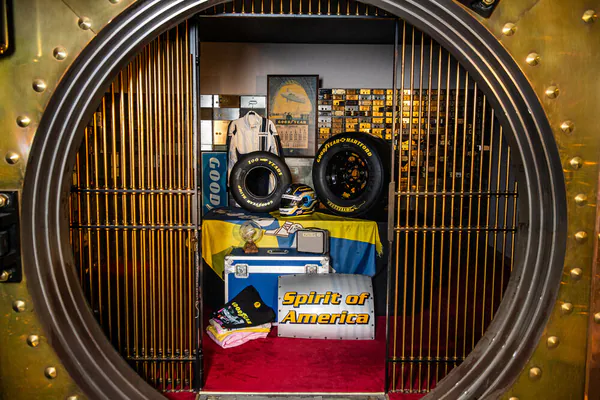
Goodyear has launched The Vault — an online marketplace offering rare artifacts, signed memorabilia, limited-edition merchandise, and experiences drawn from its 128-year history, including a section of the Spirit of America Blimp engine, an 1899 tire, and race-used tires from the 2025 NASCAR Cup Series Championship. The launch includes a gamified digital riddle offering thirty cryptex vaults with prizes including a private Goodyear Blimp flight. The shift it represents is significant: heritage brands are discovering that their corporate archives are not just PR assets but genuine commercial platforms — and that the collector economy, the experience premium, and the gamified commerce format can transform institutional history into direct-to-consumer revenue.
Why The Trend Is Emerging: Heritage Commerce, Collector Culture, and the Experience Premium
The Vault's commercial logic is driven by converging forces across the authenticated collectibles market, brand heritage monetisation, and the gamified commerce formats that have proven commercially powerful across luxury, sports, and entertainment categories.
Corporate Archives Are Undermonetised Commercial Assets — Every major heritage brand has warehouses of historically significant artifacts that generate zero commercial return. The Vault demonstrates that authenticated corporate archive items — a tire from 1899, a race-winning wheel — carry the provenance credentials that command significant collector premiums without requiring new product development investment.
Authenticated Provenance Is the Collector Economy's Most Commercially Powerful Signal — Race-used tires from a NASCAR championship winner and a blimp engine section carry the specific provenance documentation that separates genuine collectibles from commemorative merchandise. The authentication credential is the commercial foundation that justifies premium pricing and creates the scarcity economics that drive collector market value.
Gamified Commerce Converts Passive Audience Into Active Participants — The cryptex vault riddle challenge is not just a promotional mechanic — it is the Return Economy and Participation Narrative Economy applied to brand commerce. Thirty prizes including a Blimp flight creates genuine urgency and community engagement that a conventional product launch cannot generate.
The Goodyear Blimp Is One of America's Most Emotionally Resonant Brand Icons — A private Blimp flight experience is not a prize — it is access to one of the most culturally embedded brand experiences in American sports history. The experiential premium attached to the Blimp transforms The Vault from a merchandise store into a genuine experience commerce platform.
Heritage Brand Collectibles Are Completing Their Transition to Mainstream Commerce — Sports memorabilia, NASCAR racing artifacts, and brand heritage items have established collector markets with authenticated valuation infrastructure. The Vault is applying this existing commercial framework to a brand archive rather than a sports team, creating a new collector category with significant untapped demand.
Virality of Trend: The cryptex vault riddle generates exactly the participation-driven social content that brand launches rarely achieve organically — the challenge format creates community solving behavior, winner announcement content, and the "I got a Blimp flight" advocacy that money cannot buy. The Goodyear Blimp's cultural resonance ensures that Blimp-adjacent content performs strongly across automotive, sports, and nostalgia communities simultaneously.
Where It Is Seen: Direct-to-consumer brand commerce, authenticated collectibles markets, NASCAR and motorsport memorabilia, brand heritage activation, experiential prize marketing, and the broader Heritage Commerce Economy that has made brand archive monetisation one of direct-to-consumer's most commercially interesting emerging categories.
Insight: The Vault's most commercially significant innovation is not the marketplace — it is the proof that a 128-year corporate archive is a direct-to-consumer revenue asset waiting to be activated, and every heritage brand watching is now auditing their own warehouse.
The heritage brand marketplace trend is accelerating as collector culture deepens and authenticated provenance becomes mainstream consumer commerce rather than specialist auction territory. Commercially, The Vault's combination of artifact scarcity, experience premium, and gamified engagement creates the most complete brand commerce launch format currently operating in automotive. Strategically, the heritage brands that build authenticated archive commerce platforms now will establish the collector community relationships that compound in commercial value as archive inventory depletes and provenance credentials appreciate.
Description Of The Consumers: The Brand Loyalist Who Wants More Than Merchandise
Audience Definition — Auto enthusiasts, NASCAR fans, brand heritage collectors, and Goodyear loyalists 28–55 who have followed the brand across decades of motorsport and cultural presence — and who are seeking ownership of genuine artifacts rather than commemorative replicas.
Demographics — Primarily male, 30–55, with strong motorsport community overlap and disposable income sufficient for premium collectibles. Secondary segment: brand heritage collectors across categories who value authenticated corporate archive items as alternative collectibles to sports cards and signed memorabilia.
Behaviour — Actively participates in collector markets, follows NASCAR and motorsport closely, engages with brand heritage content, and responds to limited-edition and time-sensitive purchase opportunities with higher urgency than conventional retail. The cryptex riddle format specifically activates the puzzle-solving and community participation behavior that collector communities exhibit.
Mindset — Provenance-obsessed and experience-seeking. An 1899 Goodyear tire is not a product — it is a piece of automotive history with irreplaceable documentation. A Blimp flight is not a prize — it is access to one of America's most culturally significant aviation experiences.
Emotional Driver — Ownership of authentic history and exclusive access. The collector who acquires a race-used NASCAR Championship tire owns something that existed at a singular moment in sporting history — the emotional value of that provenance compounds rather than depreciates.
Cultural Preference — Americana, motorsport heritage, and the specific brand loyalty that Goodyear's 128-year automotive history has built across generations of drivers, mechanics, and racing fans.
Decision-Making — Provenance documentation and scarcity drive premium item purchase; gamification and prize mechanics drive participation; Blimp experience drives aspiration and advocacy regardless of whether the consumer wins.
Insight: The Vault consumer is not buying Goodyear merchandise — they are buying authenticated access to American automotive history, and the provenance credential makes the price premium not just acceptable but commercially logical.
This consumer is brand commerce's most commercially committed segment — high purchase intent, strong advocacy within specialist communities, and the repeat engagement behavior that builds The Vault into a destination rather than a one-time purchase occasion. Heritage brands that build genuine collector community infrastructure around their archive platforms will generate the compound loyalty that conventional merchandise programs cannot sustain.
Main Audience Motivation: Own a Piece of Something That Actually Happened
Primary Motivation — Authenticated provenance ownership. A race-used tire from the 2025 NASCAR Cup Series Championship winning car is not reproducible — its value derives entirely from the singular moment it participated in. The collector who owns it owns something that cannot be manufactured, replicated, or improved upon.
Secondary Motivation — Gamified access to extraordinary experiences. The private Blimp flight prize is as commercially valuable as any physical artifact — it offers access to an experience so singular that money alone cannot conventionally purchase it. The riddle format makes that access feel earned rather than simply bought.
Emotional Tension — The authentication risk. Collector markets are sensitive to provenance credibility — the consumer who pays a premium for a race-used artifact requires absolute confidence in the documentation chain. The Vault's commercial success depends entirely on the authentication infrastructure Goodyear builds around each item.
Behavioural Outcome — Premium artifact purchase, riddle challenge participation, community sharing of the cryptex challenge, winner content creation, and sustained The Vault engagement as new inventory enters the platform.
Identity Signal — Owning a Vault artifact signals automotive cultural depth, brand loyalty, and collector sophistication — the ability to distinguish between genuine provenance and commemorative approximation that defines the serious collector's identity within automotive communities.
Insight: The cryptex riddle's thirty prizes are not the campaign's primary commercial output — they are the engagement mechanism that generates the awareness, participation, and community advocacy that converts the broader audience from observers into buyers.
The motivation driving The Vault's commercial potential is structurally aligned with the most durable forces in collector culture — authenticated scarcity, experience premium, and the emotional value of genuine provenance. The platform that consistently delivers these credentials will build the collector community loyalty that appreciates in commercial value as inventory depletes and the archive's cultural significance compounds.
Trends 2026: Heritage Brand Archive Commerce Emerges as Direct-to-Consumer's Most Commercially Interesting New Category
Drivers: The authenticated collectibles market's mainstream commercial maturation — from specialist auction houses to accessible platforms — has created the consumer infrastructure that makes corporate archive commerce commercially viable at scale. The experience economy's premium intensification has elevated brand-adjacent experiences (Blimp flight, behind-the-scenes access, factory tours) to the highest-value commercial offering available to heritage brands. Gamified commerce formats proven in gaming, luxury drops, and limited-edition releases are now being applied to brand heritage activation — creating the community engagement that archive content alone cannot generate.
Macro Trends: The Legacy IP Economy and Return Economy trends operating across entertainment (Euphoria, Super Mario) are equally applicable to brand heritage — consumers respond to the emotional weight of genuine history with the same commercial enthusiasm as fictional franchise nostalgia. NASCAR and motorsport's growing mainstream cultural appeal — confirmed by Netflix's Drive to Survive expanding formula racing audiences and NASCAR's own streaming growth — is expanding the addressable collector market for race memorabilia beyond the traditional motorsport enthusiast into mainstream sports and entertainment audiences. The DTC brand platform model is maturing beyond product retail into experience, community, and content — The Vault is the automotive sector's most complete expression of the fully realised DTC brand ecosystem.
Innovation: The cryptex vault as a physical prize object — a lockable container with combination puzzle — is a genuinely creative format innovation that makes the prize itself a collector artifact rather than merely a delivery mechanism for the actual prize.
Differentiation: Goodyear's 128-year archive depth and the Blimp's specific cultural resonance create a provenance and experience credential combination that no automotive competitor can replicate — the archive is genuinely irreplaceable, and the Blimp experience is genuinely singular.
Operationalization: The winning heritage brand commerce strategy combines authentic archive inventory, rigorous provenance documentation, experience premium pricing, gamified limited-time launch activation, and ongoing community building that makes The Vault a destination rather than a campaign.
Trend Table: The Vault and the Eight Forces Defining Heritage Brand Commerce in 2026
Trend | Description | Strategic Implications |
Main Trend — Corporate Archive Monetisation as DTC Commerce Category | Goodyear's Vault demonstrates that 128-year brand archives are direct-to-consumer revenue platforms not yet activated by most heritage brands | Every major heritage brand should audit their archive for authenticated collectible inventory — the commercial infrastructure exists and the collector market is ready |
Social Trend — Gamified Challenge Driving Community Participation | The cryptex riddle converts passive brand audience into active participants — the challenge format generates organic social engagement that a conventional product launch cannot replicate | Embed participation mechanics into every heritage brand platform launch — the challenge that requires solving generates more community engagement than any giveaway that requires only entering |
Industry Trend — Experience Premium as Heritage Commerce's Highest-Value Offering | A private Blimp flight transforms The Vault from a merchandise store into an experience commerce platform — the experience tier commands the highest price premium and the strongest advocacy | Identify and package the singular brand experience that money cannot conventionally purchase — the experience that only the brand can provide is the most commercially defensible heritage commerce offering |
Main Strategy — Provenance Documentation as Commercial Foundation | Race-used, historically dated, celebrity-signed — each provenance credential is a commercial premium multiplier that separates The Vault from conventional brand merchandise | Invest in authentication infrastructure before launching any heritage commerce platform — the provenance documentation chain is the commercial foundation that justifies every premium and builds collector trust |
Main Consumer Motivation — Authenticated History Ownership | The collector paying a premium for a race-used NASCAR Championship tire is buying authenticated access to a singular historical moment | Lead heritage commerce with provenance specificity — "race-used tire from the 2025 NASCAR Cup Series Championship winning car" is more commercially powerful than "NASCAR Championship tire" |
Related Trend 1 — Motorsport's Mainstream Cultural Expansion | NASCAR and motorsport's growing streaming and cultural audience is expanding the addressable collector market for race memorabilia beyond traditional enthusiast demographics | Position motorsport heritage items for the mainstream sports fan entering the collector market — the authentication and provenance story is the educational infrastructure that converts new collectors |
Related Trend 2 — Blimp Cultural Resonance as Commercial Asset | The Goodyear Blimp is one of American culture's most emotionally resonant brand icons — its experience premium is extraordinary precisely because it is so universally recognised and so rarely accessible | Package and price Blimp access experiences as The Vault's highest-tier commercial offering — the cultural resonance of Blimp adjacency commands premium pricing that no physical artifact can match |
Related Trend 3 — Collector Community as Platform Loyalty Infrastructure | The collectors who purchase from The Vault become the community advocates whose provenance knowledge, acquisition stories, and social content sustain the platform beyond the launch campaign | Build collector community infrastructure alongside the commerce platform — forums, authentication discussion, acquisition storytelling, and new inventory announcements will make The Vault a destination that compounds in value |
Insight: The Vault's most commercially significant consequence is not the revenue it generates from its current inventory — it is the proof of concept that corporate archives are collector market assets, which will trigger a wave of heritage brand platform launches from every industry that has been sitting on 50+ years of unaccessioned history.
The heritage brand commerce trend is at its earliest commercial stage — Goodyear's Vault is the category-defining launch that will be studied by every automotive, consumer goods, and industrial brand with significant heritage depth. The brands that move quickly to audit, authenticate, and platform their own archives will capture first-mover collector community positioning that late entrants will find expensive to acquire.
Final Insights: The Vault Proved That History Is Goodyear's Most Valuable Unmonetised Asset
Insights: The Vault is not a merchandise store — it is the proof that 128 years of authentic brand history, properly authenticated and experientially packaged, is a more commercially compelling direct-to-consumer proposition than any new product launch Goodyear could make.
Industry: Every heritage brand watching The Vault's launch should be asking the same question: what is sitting in our archive that the collector market would pay a premium for? The authentication infrastructure and the collector community already exist — the inventory is the only missing piece, and most heritage brands have more of it than they realise. Audience/Consumer: The Vault consumer is not a casual brand fan — they are a committed collector whose provenance literacy makes them the most commercially valuable heritage brand customer available. Building the platform that earns their trust is worth more than any conventional loyalty program. Social: The cryptex riddle's thirty prize mechanics will generate more authentic brand advocacy content than any campaign budget could purchase — the winner who earns a Blimp flight through puzzle solving will create the most compelling brand story Goodyear has produced in years, and it will cost them a flight. Cultural/Brand: The Vault transforms Goodyear from a tire manufacturer into a cultural institution — a brand whose 128-year history is worth preserving, accessing, and owning. That transformation is worth more commercially than any product category extension the brand could pursue.
The Vault has done what the best heritage brand activations always do — it has made the brand's history feel like something worth owning rather than merely worth knowing. Every brand with a century behind it should be building their equivalent.
Innovation Platforms: Five Business Models the Heritage Brand Commerce Trend Has Unlocked
The Vault's launch and the broader heritage brand archive monetisation trend have created underserved commercial opportunities across authentication, platform development, and experience commerce.
Corporate Archive Authentication Services Specialist authentication agencies providing provenance documentation, historical verification, and collector-grade certification for corporate archive artifacts — building the authentication infrastructure that makes heritage brand commerce commercially credible. Revenue through authentication fees and ongoing certification subscription. Defensibility through historical research expertise, collector market credibility, and the institutional relationships with brands and auction houses that make authentication credentials commercially trusted.
Heritage Brand Commerce Platform Development Technology and strategy agencies building end-to-end heritage brand marketplace platforms — combining inventory management, provenance documentation, collector community infrastructure, and gamified commerce mechanics into turnkey DTC archive commerce solutions. Revenue through platform development fees and ongoing revenue participation. Defensibility through heritage commerce UX expertise, authentication integration capability, and the compound platform knowledge of building multiple successful heritage brand marketplaces across different industry categories.
Brand Experience Premium Packaging Services Specialist agencies identifying, packaging, and pricing the singular brand experiences that heritage companies can offer — Blimp flights, factory access, archive tours, racing experiences — as the highest-value tier within heritage commerce platforms. Revenue through experience design fees and premium revenue participation. Defensibility through experience logistics expertise, brand relationship depth, and the pricing intelligence that maximises revenue from genuinely singular experiences without commoditising their scarcity.
Motorsport and Brand Memorabilia Authenticated Marketplace Collector platforms specifically aggregating authenticated race-used, historically documented, and celebrity-signed automotive and motorsport memorabilia — building the trusted secondary market infrastructure that makes heritage brand artifacts commercially liquid after initial platform purchase. Revenue through transaction commission and authentication fees. Defensibility through motorsport community relationships, authentication expertise, and the liquidity infrastructure that makes collector purchase decisions more confident when resale value is transparent.
Gamified Brand Heritage Engagement Platforms Technology platforms providing the challenge, riddle, and cryptex-format gamification mechanics that convert brand heritage launches into community participation events — building the engagement infrastructure that transforms passive brand audiences into active collectors. Revenue through platform licensing and campaign management. Defensibility through gamification design expertise, collector community psychology knowledge, and the compound engagement data of running multiple successful heritage brand challenge campaigns across different categories.
Insight: The most commercially valuable heritage brand asset is not the rarest artifact in the archive — it is the authentication infrastructure and collector community trust that makes any artifact from that archive worth paying a premium for.
The five models map a commercial ecosystem that The Vault has proven is real but the broader brand world has not yet systematically built. As heritage brand commerce matures from innovation to category expectation, the infrastructure supporting authentication, platform development, and experience packaging will generate compounding value. The most defensible position is owning the authentication credential layer — the trusted provenance documentation that makes the difference between a piece of history and an interesting old object.
Cross-Industry Expansion: The Provenance Economy — When Where Something Came From Becomes More Commercially Valuable Than What It Is
The Provenance Economy
The commercial logic behind The Vault — a 1899 tire worth infinitely more than its material value because of its documented origin, and a race-used NASCAR Championship wheel commanding a premium because of the singular moment it participated in — is not a brand merchandise story. It is the defining commercial principle of the authenticated goods era: the documentation of origin, use, and ownership history has become more commercially powerful than the physical object itself.
What is the trend: Consumers paying significant premiums for products whose value is anchored in authenticated origin, documented use history, and verified provenance chain — where the story of where something came from and what it participated in is the primary commercial asset.
How it appeared: It crystallised in automotive through Goodyear's Vault, but the Provenance Economy is equally visible across wine (single-vineyard vintage documentation commanding auction premiums), fashion (authenticated vintage with ownership history), art (provenance chain determining auction value), sports memorabilia (game-used authentication multiplying value), and food (single-origin credentials commanding category premiums across coffee, chocolate, and olive oil).
Why it is trending: Digital authentication technology has made provenance documentation commercially scalable — the blockchain-verified, certificate-authenticated, chain-of-custody documented object can now carry its provenance credentials permanently and transparently. The infrastructure that makes provenance commercially reliable is now mature enough for mainstream consumer markets.
What is the motivation: The core human need is genuine encounter — the experience of owning something that participated in a real moment, was made in a specific place, or passed through documented hands. The Provenance Economy is what happens when that desire meets authentication infrastructure capable of credibly delivering it.
Industries impacted: Automotive, fashion, art, wine, food and drink, sports memorabilia, consumer electronics, furniture, and any category where the documented history of an object creates commercial value beyond its physical attributes.
How to benefit: Audit your category for provenance premium opportunities. Build authentication infrastructure before launching provenance-premium products. Design the documentation chain from origin to consumer. The provenance premium compounds with time — the brand that builds authentication credibility early will command the premiums that authenticated late-entrants cannot justify.
What strategy: Lead with authenticated provenance as the core commercial value proposition. The frame is the Provenance Economy — the brands that can credibly document where their products came from, what they participated in, and how they arrived in the consumer's hands will command the premiums, the collector loyalty, and the cultural authority that undocumented alternatives permanently forfeit.
Who are the consumers: Provenance-literate adults across demographics who have developed the collector intelligence to distinguish authenticated history from commemorative approximation — and who will pay significant premiums for the genuine article when the documentation chain is credible and complete.
Insight: The Provenance Economy rewards the brands patient enough to build authentication infrastructure before launching heritage commerce — because the collector who trusts a provenance claim will pay a premium the casual consumer never would, and that trust takes years to build and seconds to destroy.
The Provenance Economy scales because genuine authenticated origin is a fixed supply in a world of expanding collector demand — the 1899 Goodyear tire will never be reproduced, and its commercial value can only increase as the authentication infrastructure that validates it matures and the collector market that desires it grows. Commercially, the Provenance Economy produces the most durable premiums, the most loyal collector relationships, and the most defensible brand positioning available in any category where documented origin creates value that the product itself cannot justify alone. The Provenance Economy belongs to the brands that understand that history, properly authenticated, is the most valuable thing they will ever sell.


Comments