


The Cape Is Losing: Hollywood's Summer Has a New Opening Act and It's Not a Superhero
- InsightTrendsWorld

- May 2
- 15 min read
The Devil Wears Prada 2 Opens Summer 2026: When Comedy Replaces Capes as the Box Office's Most Reliable Weapon
Trend Category Framing: Post-Superhero Summer Cinema — the shift from action-first summer programming to genre diversity as the primary box office strategy, where comedies, dramas, and family films are reclaiming the cultural calendar that superheroes monopolized for two decades.
Avengers: Doomsday was supposed to open summer 2026. Instead, Meryl Streep is wearing heels.
The contradiction is structural: action movies haven't gotten worse — they've gotten less essential. Even critically praised superhero films are pulling fewer dollars than pre-pandemic equivalents, while The Devil Wears Prada 2 is tracking for $70–100M opening weekend in a slot Marvel vacated. The audience didn't leave action. Action left the audience.
This is not a superhero fatigue story — it is a genre rebalancing story. Summer's first weekend has featured a superhero film or action tentpole for 20 consecutive years. That streak ends May 2, 2026 — not because Hollywood planned a strategic pivot, but because Disney needed more time and a comedy stepped into the vacuum and immediately outperformed expectations. The accident is the signal.
Trend Overview: Summer 2026 Is the First Evidence That the Box Office's Genre Hierarchy Has Permanently Shifted
Action's 20-year monopoly on summer cinema is ending — not with a collapse, but with a steady statistical erosion that has finally become impossible to ignore.
What is happening: Action/adventure films fell to 35% of top-100 domestic box office in 2025 — the lowest share since 2010 and the third consecutive year in the mid-30% range — while The Devil Wears Prada 2 opens summer 2026 in a slot Marvel vacated, tracking $70–100M.
Why it matters: Action peaked at 56% of domestic box office in 2022 (Top Gun: Maverick) and has declined every year since — the erosion is structural, not cyclical, and the data confirms it extends even to critically praised films.
Cultural shift: The superhero as default summer tentpole is being replaced by genre diversity as the programming strategy — comedies, family films, horror, and dramas are reclaiming calendar real estate action once owned exclusively.
Consumer relevance: Family films (Lilo & Stitch, Zootopia 2, Super Mario Bros) and horror are rising simultaneously — audiences haven't stopped going to cinemas, they've stopped going specifically for superhero films.
Market implication: Prada 2's opening weekend performance will either confirm genre diversity as a viable summer strategy or be dismissed as an anomaly — theater owners and studios are watching it as a proof of concept for the entire programming model.
Trend Description: How the Summer Box Office Is Redistributing Power Away From Action
The genre shift is not a creative movement — it is a market correction responding to audience behavior data that studios have been resisting for three years.
Context: Marvel and Fast & Furious dominated the 2010s summer box office — action's 56% peak in 2022 masked the structural decline already underway; Prada 2 opening summer 2026 is the first visible break in the pattern.
How it works: Disney's Avengers: Doomsday delay created an accidental programming experiment — a comedy filling the summer's most prestigious opening slot with no superhero competition, revealing latent audience demand for genre alternatives.
Key drivers: Superhero franchise fatigue, post-pandemic audience behavior shifts, the rise of family and horror as consistent performers, and theater owners actively calling for more dramas and comedies.
Why it spreads: Prada 2's commercial success — purse-shaped popcorn buckets, themed cocktails, fashion emergency kiosks — demonstrates that theatrical event culture works for genres beyond action when studios commit to the experience.
Where it is seen: The Devil Wears Prada 2 (comedy, $70–100M projection), Lilo & Stitch, Zootopia 2 (family), horror genre rise — all gaining share as action declines from 56% to 35%.
Key Players & Innovators: Disney (accidental pivot), Fandango's Shawn Robbins, TD Cowen analyst Doug Creutz, The Marcus Corporation — and theater chains actively building genre-diverse food and merchandise experiences.
Future: Short-term — Prada 2's opening weekend sets the benchmark for comedy as summer tentpole; long-term — studios that diversify summer slates away from action dependency will outperform those that double down on the declining genre.
Insight: The summer box office's genre shift is not superhero fatigue — it is audiences reclaiming the right to choose what a summer film looks like.
This shows that action's cultural monopoly on summer cinema was always audience tolerance, not audience preference — and that tolerance has been exhausted.
It matters because the decline persists even for critically praised action films, confirming the problem is structural genre saturation rather than individual film quality.
The value created by genre diversification is a more resilient summer box office — multiple genre peaks across a season outperform single-genre dependency that rises and falls with franchise health.
The implication is that studios programming summer 2027 and beyond must treat genre diversity as a commercial strategy, not a creative concession — Prada 2's opening weekend is the data point that makes that argument undeniable.
Why it is Trending: Hollywood's Most Profitable Season Just Lost Its Most Reliable Genre
Action's decline has crossed the threshold from industry concern to structural emergency — three consecutive years in the mid-30% range, down from 56% in 2022, is not a correction. It is a trend line. The timing is precise: Avengers: Doomsday's delay didn't just create a programming gap — it created an accidental controlled experiment proving that summer audiences will show up for non-action films when given the option. Prada 2 tracking $70–100M in Marvel's vacated slot is the most commercially significant data point in Hollywood's genre conversation since Top Gun: Maverick briefly masked the decline in 2022. Theater owners are not waiting for studio consensus — they are already building comedy-themed food experiences and fashion emergency kiosks, betting on the genre shift with their own capital.
Elements Driving the Trend: Why Action's Box Office Decline Is Structural, Not Cyclical
The core driver is audience saturation, not quality failure — even critically praised action films are underperforming pre-pandemic equivalents. The narrative hook is statistical: 35% action share in 2025 vs. 56% in 2022 is a 21-point collapse in three years, and no single franchise revival has reversed it. The supply side has not adjusted — approximately 25 action films reach theaters annually, a figure unchanged for over a decade — meaning the market is oversupplied with a product audiences are consuming less of. Family and horror filling the gap confirms audiences haven't abandoned cinemas — they have abandoned the genre that dominated them.
Virality of Trend: The Popcorn Bucket That Launched a Genre Conversation
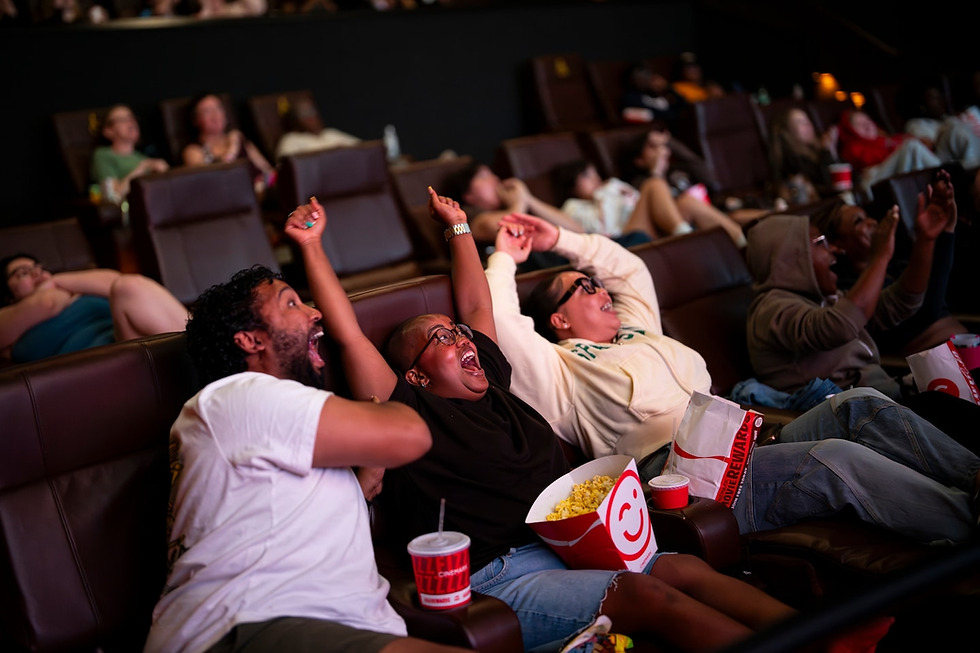
Prada 2's theatrical experience — purse-shaped popcorn buckets, themed cocktails, fashion emergency kiosks — is generating the kind of social media content that superhero merchandise rarely produces. The novelty of a comedy opening summer's most prestigious slot is itself the story — every trade publication, analyst, and theater chain is covering the genre shift, creating earned media that amplifies the film's cultural moment beyond its marketing spend. The emotional trigger is relief — theater owners, studios, and audiences are all rooting for Prada 2 to succeed because its success validates the genre diversity argument everyone in the industry has been making privately for three years.
Consumer Reception: The Summer Moviegoer Has Been Waiting for Permission to Watch Something Different
The audience driving Prada 2's opening weekend is not replacing their superhero consumption — they are filling a demand that superhero films were never serving.
Consumer Description: The Genre-Diverse Summer Moviegoer
Demographics: Broad, Underserved, Theatrically Committed
Age: 25–60 — adults whose theatrical preferences extend beyond action but whose options have been structurally limited by summer programming
Sex: Skews female — the comedy and fashion audience that action-dominated summers consistently underserved
Education: Broadly mixed — genre diversity appeal crosses all education levels
Income: £30,000–£80,000 — regular theatrical attendees willing to pay premium for experiences designed specifically for their taste
Lifestyle: Culturally Active, Experience-Oriented, Genre-Loyal
Shopping behavior: Books tickets for specific films rather than generic summer moviegoing — genre fit is the primary purchase driver
Media behavior: Follows entertainment news, cast reunion coverage, and industry genre conversations — aware of Prada 2's cultural significance beyond the film itself
Lifestyle behavior: Treats summer cinema as social occasion rather than solo consumption — the themed food, cocktails, and kiosks amplify the communal dimension
Decision drivers: Cast quality, cultural relevance, theatrical experience design, and the social identity value of attending a culturally significant opening weekend
Values: Genre diversity, authentic storytelling, and the principle that summer cinema should reflect the full range of audience taste
Expectation shift: No longer accepts action-dominated summers as inevitable — Prada 2 opening May 2 signals that alternatives are commercially viable and studios should provide them
Consumer Motivation: This Audience Is Not Just Watching a Film — They Are Voting for a Different Summer
The Prada 2 opening weekend attendee understands their ticket purchase is a genre diversity argument made in the most persuasive language Hollywood understands.
Motivated by cast and cultural nostalgia — Streep, Hathaway, Blunt, and Tucci reuniting is a theatrical event independent of genre considerations
Driven by genre relief — a comedy opening summer's biggest slot after 20 years of action dominance feels genuinely novel and worth supporting
Responds to theatrical experience design — purse-shaped popcorn buckets and fashion kiosks signal that the studio and theater understand this audience specifically
Values cultural conversation participation — attending Prada 2's opening weekend places the viewer inside the industry's most watched genre experiment of the year
Seeks the communal female moviegoing experience that action-dominated summers have consistently failed to provide at scale
The Trend Is Gaining Popularity Because: The Industry's Most Profitable Season Finally Has Data It Cannot Ignore
Statistical evidence is now undeniable — three consecutive years of action decline to 35% box office share, combined with Prada 2 tracking $70–100M in a vacated action slot, gives every studio executive a commercially defensible case for genre diversification
Theater infrastructure is already adapting — themed food, merchandise, and in-lobby experiences built around Prada 2 confirm that exhibition chains are betting on the genre shift with capital, not just endorsing it rhetorically
Audience demand is structurally unmet — theater chain CEO Greg Marcus's statement that "nobody goes to dramas or comedies because they aren't making anything to go to" is the most commercially significant quote of the summer season
Insight: Prada 2 opening summer 2026 is not a scheduling accident — it is the moment the box office finally reflected what audiences have been trying to tell Hollywood for three years.
This shows that action's summer dominance was sustained by supply, not demand — when the slot opened for a comedy, the audience was already there waiting.
It matters because the decline persists even for quality action films, confirming structural genre saturation rather than individual franchise failure.
The value created is a commercially validated alternative summer template — if Prada 2 delivers $70–100M, every studio has a data point justifying genre-diverse summer programming going forward.
The implication is that summer 2027 slates are being reconsidered in real time — the studios that move fastest on genre diversification will capture the audience that action has been losing for three consecutive years.
Trends 2026: Hollywood's Genre Hierarchy Is Redistributing and Summer Cinema Is the Proving Ground
Action's structural decline has created the first genuine genre power vacuum in summer cinema since the superhero era began. Family films and horror are already filling the gap — Lilo & Stitch, Zootopia 2, and Super Mario Bros confirming that non-action franchises generate comparable theatrical enthusiasm when studios commit to them. Prada 2's opening weekend will determine whether comedy joins that list as a viable summer tentpole format. The remaining summer slate — Spider-Man: Brand New Day, The Mandalorian and Grogu, and Avengers: Doomsday in December — confirms action hasn't disappeared, but its position as sole genre anchor has been permanently challenged. 2026 is the year Hollywood stops treating genre diversity as a creative concession and starts treating it as a commercial strategy.
Trend Elements: The Data Points Proving That Summer Cinema's Genre Monoculture Is Breaking Down
Action's 21-point collapse: 56% to 35% domestic box office share in three years — the steepest genre decline in modern Hollywood history within a single programming window.
Quality irrelevance of the decline: Even critically praised action films underperforming confirms audience saturation, not quality failure — the problem is structural.
Comedy filling Marvel's slot: Prada 2 opening in Avengers: Doomsday's vacated position and tracking $70–100M is the single most commercially significant genre experiment of the decade.
Family film consistency: Lilo & Stitch, Zootopia 2, Super Mario Bros delivering reliable returns confirms family is summer's most structurally resilient non-action genre.
Horror's year-round rise: Horror expanding beyond Halloween into summer programming reflects genre audience loyalty that doesn't require seasonal justification.
Theater chain advocacy: Greg Marcus calling for more dramas and comedies is exhibition infrastructure endorsing genre diversification — the chains are ahead of the studios.
Themed experience design: Purse-shaped popcorn buckets and fashion kiosks confirm theatrical experience can be engineered for non-action genres with equivalent commercial creativity.
Supply-demand mismatch exposure: 25 action films annually for a decade against declining audience appetite confirms studios have been programming for habit, not demand.
Action's selective survival: Spider-Man, Mandalorian and Grogu, and Avengers: Doomsday still expected to perform — confirming franchise-specific loyalty persists within overall genre decline.
Summer's 40% box office weight: The season generating 40% of annual box office dollars means genre programming decisions here have outsized annual impact — getting summer right is getting the year right.
Summary of Trends: Summer 2026 Is the Box Office's Most Important Genre Rebalancing Moment Since the Superhero Era Began
Main Trend: Post-Action Summer Programming — genre diversity is replacing action dependency as summer cinema's primary commercial strategy; Prada 2's opening is the proof of concept.
Social Trend: Audience Genre Liberation — moviegoers are actively choosing non-action alternatives when studios provide them; the audience wasn't lost, it was underserved.
Industry Trend: Exhibition Chain Genre Advocacy — theater owners are ahead of studios on genre diversification, building themed experiences for comedies and lobbying publicly for drama and comedy production investment.
Main Strategy: Accidental Experiment as Strategic Template — Avengers: Doomsday's delay created an unplanned genre diversity proof of concept; studios that replicate it intentionally in 2027 will capture the audience action has been losing.
Main Consumer Motivation: Genre Relief Over Genre Loyalty — the summer moviegoer is not abandoning action, they are demanding alternatives that studios have been failing to supply; Prada 2 is the release valve.
Cross-Industry Expansion: The Genre Diversification Era — When Monoculture Dependency Becomes the Entertainment Industry's Most Dangerous Strategic Risk
Every entertainment category that allowed a single format to dominate its programming is facing the same structural correction Hollywood is processing through action's decline. Streaming platforms over-indexed on prestige drama; gaming platforms over-indexed on open-world action; music streaming over-indexed on hip-hop and pop. The pattern is consistent — monoculture dependency creates short-term commercial efficiency and long-term audience fragmentation as the dominant format saturates and alternatives emerge to serve unmet demand.
The deeper implication is architectural. Audience taste is naturally diverse; programming monocultures are industry-imposed constraints. When those constraints loosen — through a delayed Avengers film, a streaming platform's creative pivot, or a gaming genre's commercial exhaustion — the suppressed demand for alternatives emerges immediately and powerfully. Prada 2's $70–100M projection in Marvel's vacated slot is not an anomaly — it is the sound of 20 years of suppressed comedy demand finding its first major summer outlet.
Expansion Factors: Why Genre Diversification Will Become the Primary Programming Strategy Across Every Entertainment Category
Trend: Genre monoculture dependency is being replaced by diversity-first programming across cinema, streaming, gaming, and music as dominant formats saturate.
Why: Audience taste has always been diverse — monocultures are programming decisions, not audience preferences — and saturation exposes the gap between the two.
Impact: Entertainment categories that diversify programming before saturation peaks will retain audiences that monoculture competitors lose to alternative platforms and formats.
Industries: Cinema, streaming, gaming, music, live entertainment, podcasting — any category where a single dominant format has suppressed investment in alternatives.
Strategy: Treat genre diversity as commercial infrastructure, not creative concession — Prada 2's themed theatrical experience demonstrates that non-action genres can be programmed with equivalent commercial ambition.
Consumers: Broad adult audiences 25–60 whose taste was never exclusively action but whose theatrical options have been structurally limited by monoculture programming.
Demographics: Skews toward female and family demographics most underserved by action dominance — but genre diversity appeal broadens to all demographics as alternatives become available.
Lifestyle: Theatrically committed cultural consumers who treat cinema as social occasion — genre diversity expands the addressable audience for each theatrical event beyond the action core.
Buying behavior: Driven by genre fit and theatrical experience design — audiences proven willing to pay premium for experiences specifically designed for their taste rather than the dominant demographic.
Expectation shift: Audiences now expect summer cinema to reflect genre diversity — the 20-year action monopoly has been identified as a programming failure, not a natural state, and the expectation of alternatives is permanent.
Insight: Hollywood's genre rebalancing is not a trend — it is the inevitable correction of a 20-year programming monoculture finally running out of audience tolerance.
This shows that action's dominance was always a supply decision masquerading as a demand signal — Prada 2 in Marvel's slot reveals the suppressed demand that monoculture programming had been preventing.
It matters because summer generates 40% of annual box office revenue — genre programming decisions here have the highest commercial stakes of any programming window in the calendar.
The value created is a more resilient summer box office built on multiple genre peaks rather than single-genre dependency that rises and falls with franchise health.
The implication is that studios diversifying summer slates now will compound advantages as action continues its structural decline — the window to capture genre-diverse audiences is open and the data is unambiguous.
Innovation Platforms: Theater Chains and Studios Are Building the Infrastructure That Makes Genre Diversity Commercially Viable
The most significant innovation in summer 2026 cinema is not a film — it is a purse-shaped popcorn bucket. Theater chains building themed food experiences, fashion emergency kiosks, and cocktail menus around Prada 2 are demonstrating that theatrical event culture is genre-agnostic. The infrastructure that made superhero openings feel like cultural events — merchandise, themed food, immersive lobby experiences — is fully transferable to comedy, drama, and family films. The exhibition chains figured this out before the studios did.
The deeper innovation is programming courage as commercial strategy. Disney's accidental genre experiment — delaying Avengers: Doomsday and replacing it with Prada 2 — has inadvertently produced the most valuable data point in Hollywood's genre conversation in years. The studios that convert this accident into an intentional 2027 programming strategy will capture the structural advantage. The experiment has already been run. The results are coming in real time.
Innovation Drivers: The Systems Making Genre Diversification a Commercially Viable Summer Strategy
Themed theatrical experience design: Purse-shaped popcorn buckets, fashion kiosks, and cocktail menus confirm event culture infrastructure transfers to any genre — the superhero playbook works for comedy.
Accidental programming experiment: Avengers: Doomsday's delay created an unplanned controlled test of comedy in summer's premier slot — the results will be cited in studio programming meetings for years.
Exhibition chain genre advocacy: The Marcus Corporation CEO publicly calling for more dramas and comedies gives theater chain infrastructure actively supporting genre diversification — distribution is ready before production catches up.
Box office analytics infrastructure: Fandango's Shawn Robbins and TD Cowen's Doug Creutz providing granular genre share data gives studios the statistical framework to justify genre diversification to shareholders.
Family franchise consistency: Lilo & Stitch, Zootopia 2, and Super Mario Bros establishing reliable non-action returns lower the risk perception of genre-diverse summer programming.
Horror's year-round expansion: Horror moving beyond seasonal programming into summer slots demonstrates genre audience loyalty that doesn't require calendar justification — a template comedy can follow.
Selective action franchise survival: Spider-Man and Mandalorian and Grogu still expected to perform confirms franchise-specific loyalty within overall genre decline — studios can reduce action dependency without eliminating it.
$70–100M comedy projection: Prada 2's opening weekend tracking gives studios a commercially defensible benchmark for premium comedy investment — the number makes the argument no creative case could.
Cast reunion as cultural event architecture: Streep, Hathaway, Blunt, and Tucci together generates pre-release cultural activation equivalent to superhero ensemble announcements — comedy can manufacture the same anticipation infrastructure.
Summer's 40% annual box office weight: The season's outsized annual revenue contribution means genre diversity innovations here compound across the entire calendar — summer is where programming decisions have maximum financial leverage.
Summary of the Trend: What Prada 2 Opening Summer 2026 Is Really Telling Hollywood
Trend essence: Action's structural decline has created the first genuine genre power vacuum in summer cinema in 20 years — and Prada 2 is proving comedy can fill it with equivalent commercial results.
Key drivers: Action's 21-point box office share collapse, Avengers: Doomsday's accidental delay, theater chains building genre-diverse experience infrastructure, family and horror's consistent rise, and Prada 2's $70–100M projection validating the commercial case.
Key players: Disney (accidental pivot), The Marcus Corporation, Fandango's Shawn Robbins, TD Cowen's Doug Creutz — and Meryl Streep, Anne Hathaway, Emily Blunt, and Stanley Tucci whose reunion generates cultural activation no marketing budget can manufacture.
Validation signals: 35% action box office share — lowest since 2010 — Prada 2 tracking $70–100M in Marvel's slot, theater chains building themed comedy experiences, and Greg Marcus publicly demanding more dramas and comedies from studio production slates.
Why it matters: Summer generates 40% of annual box office revenue — genre programming decisions here have higher commercial stakes than any other window — and the data now supports diversification unambiguously.
Key success factors: Theatrical experience design matching genre identity, cast cultural activation, analytics-backed programming decisions, exhibition chain partnership, and the willingness to treat comedy as a tentpole investment rather than a filler choice.
Where it is happening: US and Canadian theatrical market — but the genre rebalancing signal will influence global studio programming as international markets face equivalent action saturation dynamics.
Audience relevance: Adults 25–60 — particularly female and family demographics most underserved by action dominance — whose theatrical demand has been structurally suppressed by monoculture programming for two decades.
Social impact: Prada 2 opening summer 2026 is normalizing genre diversity as a commercial expectation — the 20-year action monopoly on summer cinema has been identified as a programming failure, and audiences, theater chains, and analysts are all aligned on the correction.
Insights: Prada 2 opening summer 2026 is the moment Hollywood's genre monoculture produced its own corrective — and the industry is watching in real time. Industry Insight: The accidental experiment has already been run — Disney delayed Avengers and comedy filled the slot at $70–100M. Studios that convert this accident into intentional 2027 programming will capture structural advantage. Theater chains are already ahead — exhibition infrastructure is built, themed experiences are deployed, and the CEO of America's fourth-largest chain is publicly demanding more comedies. Consumer Insight: The Prada 2 audience was never lost to action — it was underserved by it. Twenty years of suppressed demand for genre alternatives is finding its first major summer outlet. The audience showing up this weekend is not replacing superhero consumption — they are finally being given something they wanted all along. Social Insight: Purse-shaped popcorn buckets are doing what no superhero merchandise has done in years — generating genuine social media novelty. The themed theatrical experience is the content; the film is the occasion. Every fashion kiosk photograph posted online is earned media that a $200M marketing budget couldn't purchase. Cultural/Brand Insight: The summer box office's genre rebalancing is the entertainment industry's most commercially significant proof that monoculture dependency is a strategic risk, not a competitive advantage. Prada 2 in Marvel's slot is not an anomaly — it is the correction. Every studio, streaming platform, and exhibition chain watching this weekend's numbers is receiving the same message: the audience was always more diverse than the programming assumed.



Comments